


On Jan. 20, President Donald Trump signed an executive order directing the federal government to prioritize individuals and small investors over large institutional ones such as Blackstone in the purchase of single family homes.
Trump’s order builds on the admirable rhetoric of Vice President JD Vance on this front, and it is clearly aimed at shoring up his (and his party’s) populist bona fides. As it stands, the GOP is heading into the midterm elections with virtually no demonstrable progress in resolving the historic Biden affordability crisis.
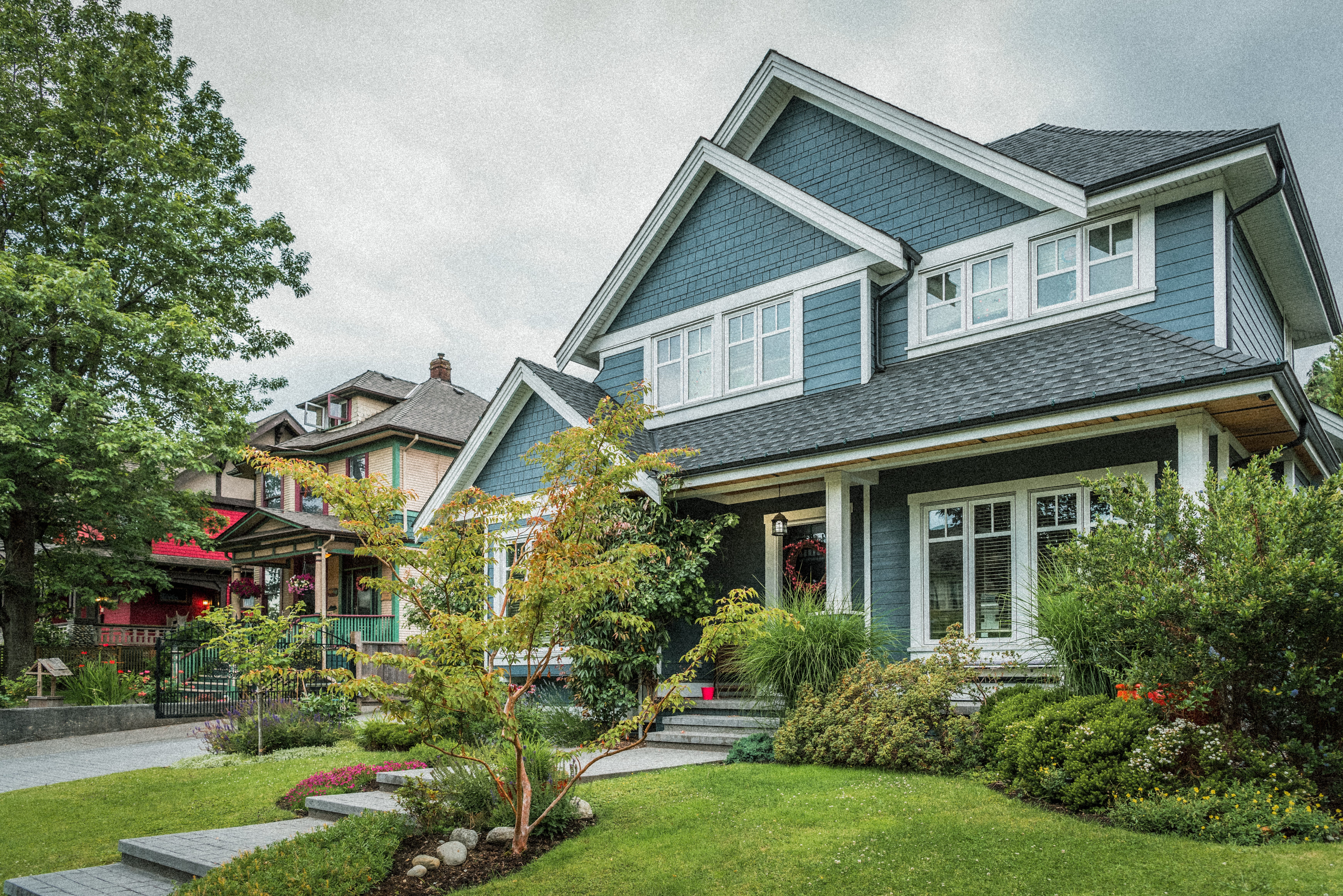
But there’s a larger issue at play that could make a much bigger impact for aspiring homeowners. Blackstone bidding against young parents for a three-bedroom ranch is indeed likely to jolt that house out of their price range. However, a couple of retirees keeping that ranch as a vacation home, or staying in a four-bedroom house long after their kids have grown up and moved into cramped apartments, has exactly the same effect on available supply.
A simple and more effective solution would thus be to raise property taxes—by a lot. Until it becomes prohibitively expensive to own a single-family home for any purpose other than that suggested by the name, the situation in America will not meaningfully improve.
Doing so will be a hard sell to Republicans—both to the engaged base (which skews noticeably older) and to the politicians (who answer, above all, to those hyper-invested Boomers). Indeed, we already see things trending in the opposite direction. Ron DeSantis, the governor of heaven’s waiting room, recently floated the idea of eliminating the state of Florida’s property taxes entirely, and he has pushed more practical measures in the state legislature to pursue substantial cuts. This kind of thing plays well in a state dominated by the AARP lobby, but it is incredibly short-sighted for a politician who professes real interest in American renewal.
A better approach would be to restructure property taxes with strong exemptions for the primary homes of families with children under the age of 18. Consider a hypothetical reform program in Florida, where the effective property tax rate in 2023 was 0.74%, per the Tax Foundation. That puts DeSantis’s state in the middle of the pack with the nation’s 30th-highest rate, and it means the tax bill on a $410,000 home (the state median that year) would be $3,034.
If the effective rate were, say, 5% instead of 0.74%, then that tax bill would jump to $20,500. Suddenly, that single-family home would become an unattractive investment for Blackstone and other institutional investors. If, however, the property served as the primary residence of its owner, then it would be eligible for an exemption of up to (for example) 70% of the median home value, reducing the taxable value to $123,000 and the actual bill to $6,150. That means a rise in the costs of ownership for this group, but it still provides owner-occupants a big leg up over Wall Street. And if the property served as the primary residence of its owners and the household included one or more children under the age of 18, then the exemption would increase to 90% of median home value. That would bring the taxable value down to just $41,000 and the tax bill to $2,050—lower than it would be under the current system.
It is manifestly fair, and practically efficient, for the burden of ownership on a family home to be different depending on whether it is borne by Blackstone, by a well-off retiree, or by a working couple with two kids in every bedroom. A scheme like this would incentivize empty nesters and institutional investors to bring housing stock to market at competitive prices without any direct federal intervention (though it would require an enterprising GOP governor to spearhead both a state exemption plan and model rate reform for local taxing authorities). Homestead exemptions are already well established by law in many states, though tailoring them to families with children would break new legislative ground.
At present, in fact, many states’ exemptions run in exactly the opposite direction, providing additional tax breaks to senior homeowners—who are least likely to need the assistance and least likely to need the full use of a single-family home.
These numbers are purely hypothetical. In practice, the rates and exemptions would have to be set carefully to ensure that, when all is said and done, municipalities still have the revenue necessary to maintain their schools, streets, sewers, and public safety apparatus. Property tax is and always will be the primary source of funding for such essential services at the local level. And that’s fair: Families should have skin in the game, and they should have a hand in paying for the public services, like schools, that benefit them the most. But for them to get skin in the game at all will require a massive realignment of incentives.
This proposal may seem impractical or even extreme, but it’s necessary if we’re going to make real progress in homeownership rates for younger people. The actual effects of Trump’s executive order are likely to be negligible, because the administration’s role in this area is extremely limited. The prospects, for instance, of the Federal Trade Commission bringing successful antitrust actions against any institutional investor (as apparently floated in the order) are virtually nil.
What’s more, institutional investors, while objectionable in principle, are a relatively small part of the problem. In a 2024 report on the subject, the Government Accountability Office relied upon a 2022 estimate by Urban Institute researchers, which found that roughly 450,000 single-family homes across the United States were held by owners with 1,000 or more homes. That’s about 3% of all single-family rental homes in the country, and less than one half of one percent of all single-family homes.
That’s not nothing, and removing Wall Street from the demand side of the housing equation would move things slightly in the right direction. But what about the other 85 million houses?
According to the U.S. Census, there are about 56 million Americans over 65, more than 78% of whom own their homes. Even if a relatively small proportion of those 44 million senior homeowners are living in houses mismatched to their actual needs, that constitutes a far, far greater quantity of prime housing stock made unavailable to young homebuyers than the 450,000 units owned by large investors.
The causes of this imbalance are largely innocent. The longer a person has lived and worked, the more opportunity he has had to save. The more market cycles he has lived through, the more chances he has had to buy at a decent price. It is self-evidently sensible that older generations will be over-represented in the property-owning class.
But it is also true that young families today are in a markedly worse situation than today’s seniors were at a comparable age. Per Census data, in 1982 the homeownership rate among Americans aged 25-29 was 38.6%; among those aged 30-34, it was 57.1%; and among those aged 35-39, it was 67.6%. By 2024, those figures had dropped to 33.5%, 47.4%, and 57.9%, respectively—a roughly 5-point drop for the youngest cohort, and 10 points for the latter two. Similar declines have occurred in the middle age brackets. In fact, the only age group that has a higher rate of homeownership today than in 1982 is those over 65.
The extent to which older generations’ lifestyle has been funded by mortgaging the futures of the young—what Russ Greene has coined “Total Boomer Luxury Communism”—is a secondary matter. The issue at hand is that the Baby Boomers are not downsizing; they are forgoing the historically usual sale or transfer of housing stock from one generation to another that their parents’ generation (and virtually every generation before) undertook when the time came.
The path I’ve laid out is made doubly attractive by the fact that it solves both the problem of institutional investors and the problem of delayed generational transfer.
Unpopular though it may be among certain demographics, property tax reform is arguably the most delicate option available to address the housing crisis. More direct intervention from the federal government will likely be perceived as heavy-handed, and—once a few hundred thousand units are wrestled away from the Blackstones of the world—Trump is likely to find that other potential targets play far more sympathetically to the press and public. Trump indicated in his Davos remarks that he understands this predicament well, and that the prospect of picking losers is one reason he has been slow to act on housing.
“Every time you make it more affordable for somebody to buy a house cheaply, you’re actually hurting the value of those houses,” Trump said, explaining that he doesn’t want to hurt existing homeowners. “If I want to really crush the housing market, I could do that so fast, and people could buy houses. But you would destroy a lot of people that already have houses.”
The answer may be not to tackle the crisis head-on, but to offer a choice to those caught on both sides of an inefficient market: a great flip, nudged along by a clever tax incentive, in which millions of young families find good, spacious homes suddenly dropped onto the market, and millions of empty-nesters (after a bit of grumbling) rediscover the charm of cozy apartment living.

Declan is 27, and it really shows here.
Property taxes should generally be borne by those who own property for investment purposes, and as the easiest taxes to levy, I would favor significantly higher rates and a corresponding rise in the homeowner exemption (let's say, any home up to 150% of the median price in a given MSA is tax free to an owner occupant.) Mr. Leary has a point there. This combination would skew the tax burden toward investors and away from families, for whom their property is not an investment but a home.
However, his added complication of children living at home is hard to enforce and just plain dumb. Using tax policy to force empty nesters out of their 4 bedroom homes could only be justified if there were some constraint on the number of 4 bedroom homes. There is not.
If you want to make homes more affordable for families, relax zoning laws and environmental requirements so you can build more of them. Everyone who has ever been involved in real estate development (as I have) knows this. Forcing grandma to move out of her home of 30 years is just plain wrong. Only someone in their 20's could think that's a good idea.
Build cheap houses. Small, less than 1,000 square feet, on a postage stamp lot. With no building codes. Under $100,000 so someone on the median income which is about $45K now, can buy it. Easy peasy.
Running water, sewer, electricity, a heating system. It doesn't take much.
Our governor passed a law allowing Accessory Dwelling Units everywhere. So potentially every house can become two. Building code is still a pain, and permit departments, but there are more places to live.
Also deport. Rents here are way down. 10% in the metro area. There are ways other than taxes. What I'd like to know is a way to make second home less attractive. They sit empty or the primary residence does. One way or another with a second home you got an empty house.