


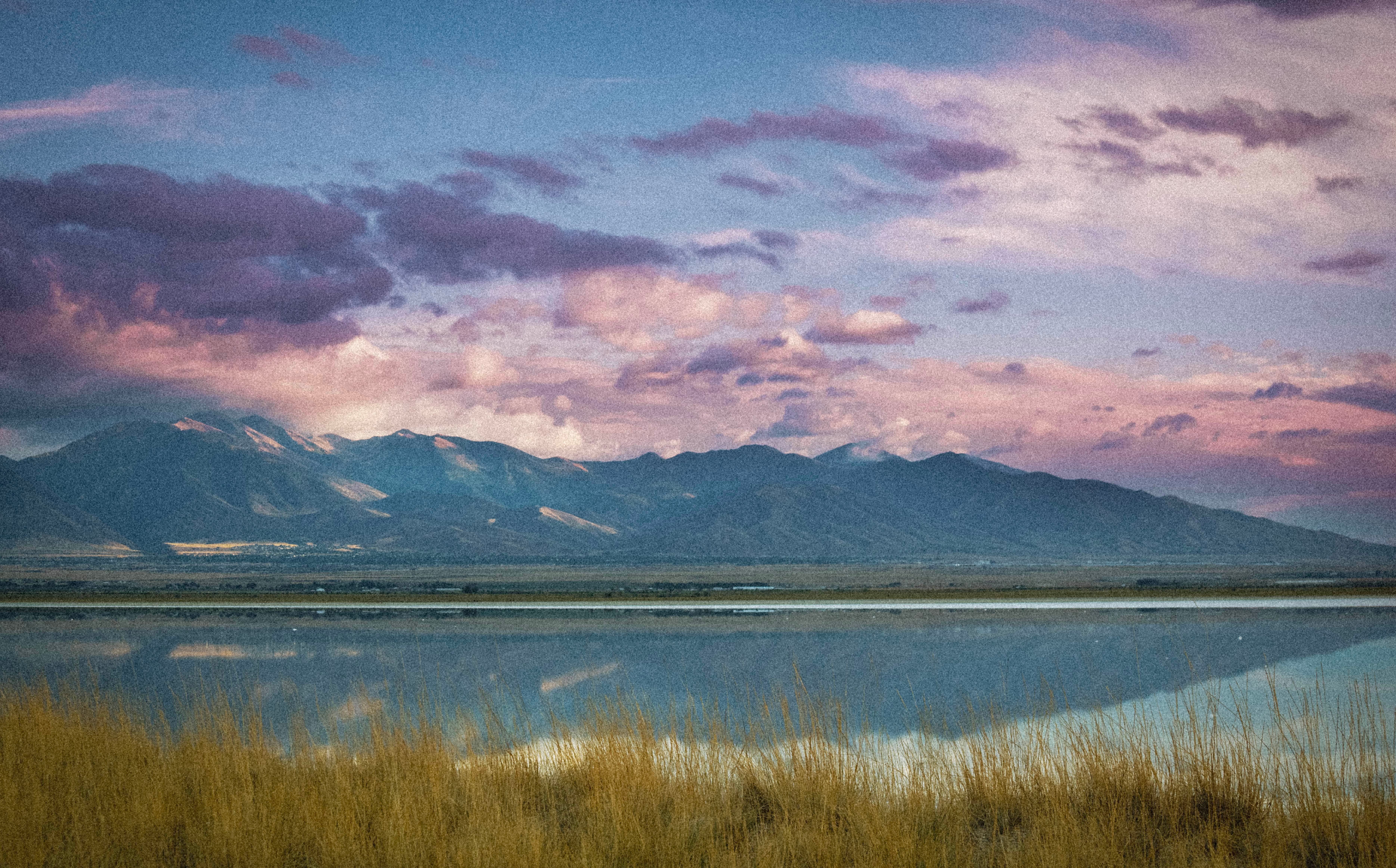
In a Truth Social post last month, President Donald Trump declared restoring Utah’s rapidly diminishing Great Salt Lake a personal priority. He then doubled down on that pledge at the National Governors Association dinner, saying that “We’re going to save the Great Salt Lake.”
It’s an ambitious goal. No country has ever restored a saline lake. From the Caspian Sea to the Dead Sea, these types of water bodies are declining worldwide. Water is a precious resource in regions with saline lakes, and decreasing precipitation combined with increased demand has threatened their future. If successful, recovering the Great Salt Lake would earn President Trump a place in history alongside Theodore Roosevelt, and it could even define a new conservation vision for this century. But doing so will require serious commitment and effective delivery.
If done correctly, Trump’s conservation actions could establish a new nature philosophy for the Right: Conservation means increasing the abundance, beauty, and vibrancy of nature by actively managing landscapes for the good of everyday people. Unlike the environmentalism of yesteryear, it’s fundamentally pro-human and pro-technology, and it focuses on the local, tactile world. As my colleague Danielle Franz wrote, conservation requires a love for the particular: “this river, this forest, this town, this land”—and this lake, too.
A Conservation Vision for the Right
This isn’t Trump’s first foray into conservation politics. In July of last year, he signed the “Make America Beautiful Again” executive order, creating a policy commission to recover wildlife and increase outdoorsmen access on federal land. Since then, his administration has taken admirable steps to expand hunting and fishing opportunities and raise money for the national parks via an international visitor fee. It has even celebrated ambitious conservation biotechnologies designed to restore America’s endangered and extinct species.
These policies built on the success of the Great American Outdoors Act of Trump’s first term, which financed conservation with $900 million in energy revenue and provided almost $2 billion for national park maintenance. Because of these decisions, more Americans will enjoy the fruits of America’s natural landscape for decades to come.
To be sure, the administration’s conservation policy has had its shortcomings. In a blow to megafauna nationalism, the Bureau of Land Management has canceled bison grazing permits, and the Forest Service made premature staff cuts last year, though they were later partially reversed. But unlike the Great Salt Lake, neither of these missteps were public directives directly from the president. On this issue, Trump has an opportunity to focus on meaningful conservation policy and deliver a historic win while advancing a distinctly American, and distinctly conservative, approach.
Saving the Great Salt Lake would be the crown jewel of the MABA agenda. Growing up in Salt Lake City, I saw my home’s namesake diminish year after year. Increased demand for water and sustained drought reduced lake inflows. Over the decades, the lake has shrunk in size by 60%. On successive trips to Antelope Island to hike among bison, pronghorn, and some of the world’s largest mule deer, I watched as the island turned into a peninsula.
It wasn’t until 2022, when the New York Times highlighted Utah’s “environmental nuclear bomb,” that the lake’s decline reached national awareness. Federal and state leaders began to recognize that if nothing changed, winter snow would diminish, habitat for millions of migratory birds would collapse, and toxic dust storms from the dry lakebed would inundate Salt Lake City.
If the lake fails, one of America’s most dynamic cities—which leads the U.S. in family flourishing, social mobility, and technological innovation—would be severely damaged, to say nothing of the awesome ecosystem the lake supports. This is an issue of national importance and one that will be on full display in 2034, when the whole world will again descend on Salt Lake City for the Winter Olympics.
Successfully saving the lake would rank among President Trump’s most impressive successes, along with Operation Warp Speed and negotiating a ceasefire in Gaza. But actually doing so will demand the same level of discipline, focus, and policy commitment.
A Great Salt Lake Agenda
The Great Salt Lake presents a challenge of supply and resource allocation: in short, not enough water is reaching the lake. The solution is to substantially increase water inflows sufficient to stabilize it. That means increasing the amount of water that’s available in the wider basin and routing more of it toward the lake.
Trump’s primary goal should be to deploy federal efforts and use his bully pulpit to advance effective policy, much of which Utah is already leading on. First, increase water on the landscape. Second, ensure water can reach the lake through voluntary leasing. Third, deploy sufficient capital to secure a long-term solution. The president should work directly with Utah to tackle each of these issues.
The first priority for the Great Salt Lake should be responsibly increasing the water supply as much as possible. More snow and rain on the landscape decreases the price of water and reduces difficult tradeoffs when negotiating over this scarce resource. It means more agriculture, less wildfire, and more skiing. Thankfully, we have the means available to do exactly that.
For decades, Utah has funded cloud-seeding technology that squeezes more snow out of winter storms, and the state has increased its investment in recent years. This has led to real success, with deployments increasing storm precipitation between 5% and 15% at incredibly low costs. And despite the conspiratorial concerns of former Rep. Marjorie Taylor Greene and company, 80 years of operations and research show that cloud seeding is safe.
The startup Rainmaker has built increasingly sophisticated technologies to target storm events and measure impacts with drones. Trump should direct agencies like the Bureau of Reclamation to work more closely with Utah and the private sector to deploy, study, and innovate water addition technologies like this and ask Congress to appropriate money to support it.
Of course, increasing rain and snow on the landscape is insufficient if that water never reaches the lake. Traditionally, water law in many Western states prevents rights-holders from dedicating their water to conservation purposes. But the Utah legislature has made tremendous progress in allowing entities to use their water for Great Salt Lake conservation through voluntary leasing programs.
However, as research from the Property and Environment Research Center shows, water leasing has been slow to take off, in large part because of difficulties ensuring the water actually reaches the lake. There’s room for policy to address this challenge, whether through pilot programs, increased cooperation from dam operators, or support in basin studies. To do so, partners must advance solutions that are good for rural communities and farmers, who own most water rights in the Great Salt Lake Basin.
The most important step will be deploying the capital to buy enough water for the lake over the long term, which the president has the power to facilitate. Already, we’ve seen an appetite from the federal government, the state, the Church of Jesus Christ of Latter-Day Saints, and conservation groups to seed lake restoration. Last fall, Utah Governor Spencer Cox announced a partnership between Ducks Unlimited, the state, and private philanthropy that committed $200 million for the lake. To his credit, President Joe Biden included $50 million for Great Salt Lake conservation in the Inflation Reduction Act, though Trump paused that program last spring for assessment. Now, Trump has an opportunity to deploy these dollars and raise more money to meet the challenge. His actions should be oriented toward long-term approaches informed by Utah’s leaders; Governor Cox has confirmed that the state is requesting $1 billion in investment for the lake. We need solutions that will last for decades.
The Tests Ahead
Addressing each of these issues will give substance to Trump’s promise, which is a natural addition to his agenda. “Make the Lake Great Again” represents the best of MAGA as a political concept. Despite the modern era’s gifts of liberty and abundance, many good things have decayed in recent decades—from the family to the local community to the industrial base to the Great Salt Lake. Renewing these institutions and places while preserving and expanding the goods of modernity is the test of our time.
Increasing the abundance of nature for the good of the American people is a tradition with deep roots. Teddy Roosevelt understood the importance of vibrant landscapes as a national imperative, and he acted on this conviction. Roosevelt met the challenges of his time by designating millions of acres of national forests, and he was pivotal in saving our national mammal, the American bison, from extinction. Trump would be wise to follow in his footsteps.
Pursuing policy to restore the Great Salt Lake as part of a wider commitment to national conservation will be the test of Trump’s promise. With willing partners in Governor Cox, Utah legislators at the federal and state levels, industry, nonprofits, farmers, philanthropists, and even elected Democrats, the president is primed for success. His next steps will determine if he can deliver a legacy-defining victory, or leave the issue for another leader to claim.

If the author were serious, he'd include the actions of Trump 2.0 in proper context, i.e. he's taken a wrecking ball to nearly anything related to 'conservation.' Actions speak louder than words, and actions include eliminating nearly all scientists working on endangered species, gutting protections on clean water, rolling back environmental regulations. Key actions include weakening mercury and toxic air emission standards for power plants, overturning the scientific "endangerment finding" for greenhouse gases, and reducing enforcement actions and emissions reporting requirements. For us, this means higher healthcare costs and reduced quality of life.
They must pass out rose colored glasses at Commonplace. Trump on par with Teddy Roosevelt? Pick any dimension you want and Roosevelt trounces Trump far and away.