


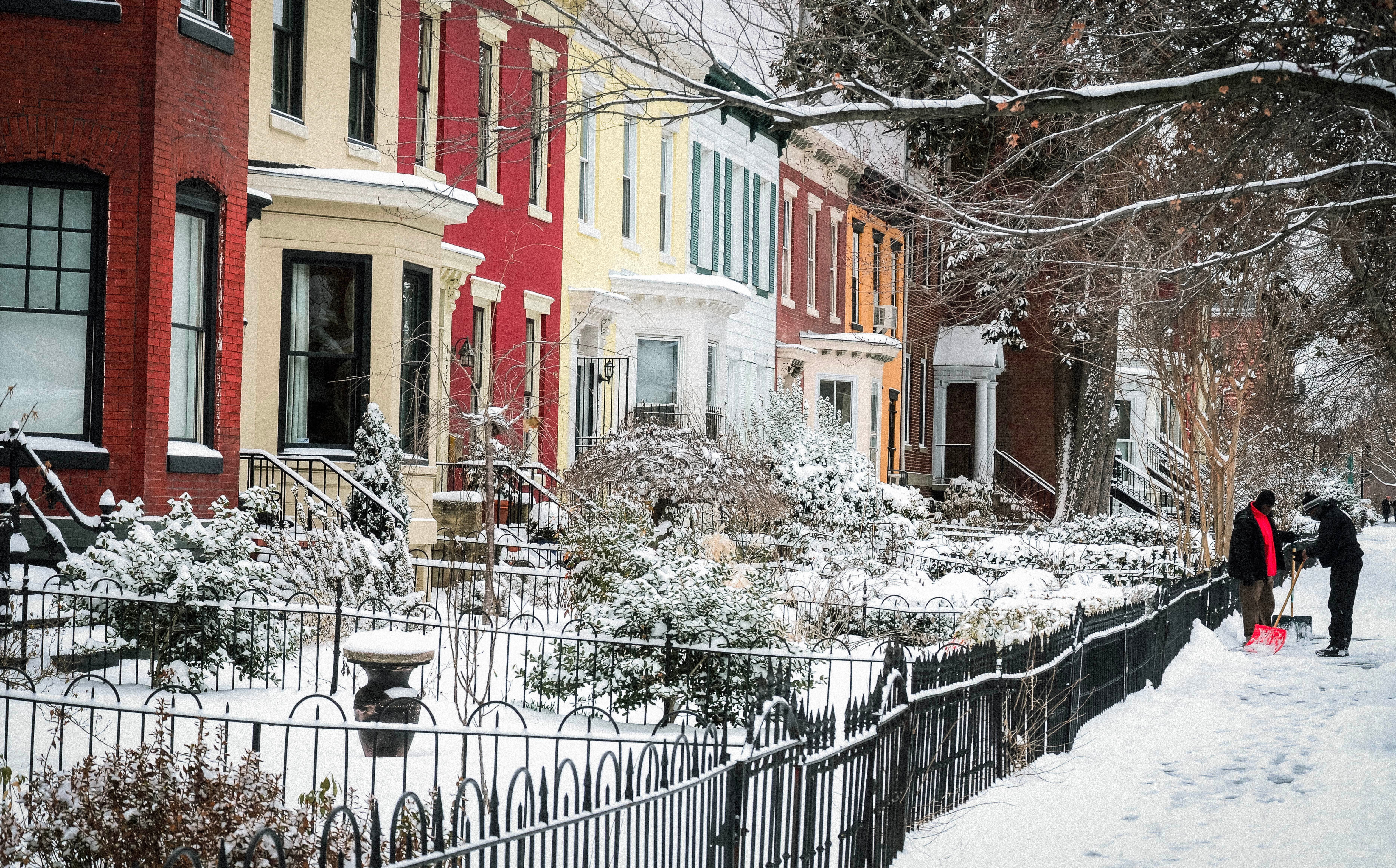
The end of January saw much of the United States blanketed in snow and ice. Snowfall broke records from Maine to Texas, airlines canceled thousands of flights, and stores struggled to keep supplies on the shelves.
Failing at snowstorm response dooms many political careers. Talk all you want about grand plans or inspiring rhetoric, but Americans expect you to handle the basics, which includes getting the plows out and the city reopened. Authorities must respond to all sorts of snow-related impacts. New Yorkers saw garbage piled on the streets thanks to delayed trash collection. Nashville residents suffered days-long power outages. Philadelphia police have responded to physical conflicts over freshly shoveled parking spots.
Washington, D.C., where I live, is no different. While you may think of it as the place of filibusters and foreign embassies, 700,000 people call Washington home. But it didn’t take long for us to realize that most recent snowstorm would be different. A better term for this was an icestorm: five or so inches of snow followed by a day of sleet that flash-froze the entire city in a thick layer of ice. On a conference call, someone casually mentioned that a mattock—a type of medieval-looking axe, I had to look it up—was coming in handy. Plastic shovels or pickup plows weren’t going to cut it.
The storm and its aftermath very publicly exposed issues many of us who follow city government have long worried about: a patchwork approach to winter operations that mainly relies on the sun doing our work for us, secrecy and talking points instead of honest communication, and indifference to pedestrians and those on alleys.
The following Monday played out like many of our past heavy snowfalls. Offices and government stayed closed. Most of us worked from home and did our civic duty to hack the ice away from our sidewalks and stoops. Workers from the restaurant next door to me used a heavy pipe to break up the floes and we had a little moment when our two shoveling paths linked up. Businesses stationed key workers overnight in hotels so they could quickly clear snow and reopen. That afternoon, Mayor Muriel Bowser announced that main roads were clear and plowing would begin on residential streets.
But that didn’t match what people saw with their own eyes. Neighbors emailed me that they hadn’t seen a plow once. According to the city, the Department of Public Works had 800 employees and 500 plows ready. But their own plow-tracking tools told a different story. At one point, I counted just 21 plows working citywide, far below what residents had been led to expect.
That gap matters because trust in government is built on visible performance and clear communication. If the operational reality is “we can’t field anywhere near the fleet we advertise,” residents deserve to know why—equipment breakdowns, contractor shortages, GPS not installed on every unit—because the difference between “we’re behind” and “we can’t” determines how families plan child care, how workers decide whether to commute, and whether seniors can safely leave home.
Instead, the message was repeated throughout the week that main roads were clear and plowing was underway on residential streets. The reality, revealed through shared photos and stories, was that main roads had a lane or two open while residential streets, crosswalks, and the pedestrian network remained hazardous.
A functioning city can’t define “cleared” as “cars can inch along.” People walk. Kids walk. Folks using wheelchairs and walkers need a continuous, navigable route. Even last Friday, my commute to work downtown involved climbing three snow berms and gingerly crossing an ice sheet.
One complication is D.C. pushing some of the hardest work on whoever happens to be adjacent to the problem, with the city taking no responsibility for sidewalks and alleys and leaving them to the nearby property owners and residents. Sidewalk rules and fines are real, but even in the best-case scenario they produce a bunch of disconnected segments separated by tundras. This storm’s conditions made even able-bodied shoveling far more difficult and expensive (private shovelers charging more, limited availability, and so on).
Here’s the part that makes residents feel like they’re losing their minds: sometimes the snow doesn’t get cleared because it’s everyone’s job, which means it’s nobody’s job. A clear example in Washington is the pedestrian bridge near Rhode Island Avenue-Brentwood station leading toward my neighborhood of Eckington and Edgewood, where confusion among Washington Metropolitan Area Transit Authority and multiple District agencies has often left this key connection uncleared after storms. (This storm was an exception; it was cleared quickly.)
But zoom out and you see the same issue everywhere. We have National Park Service-run spaces, from parks to small triangles, where clearing depends on federal choices and timelines rather than local needs. Responsibility for clearing protected bike lanes falls to different agencies than standard lanes. The transit system clears train stops but not bus stops, even though surrounding an access point with a wall of ice or a pile of snow determines whether transit is actually usable.
A city can survive one of these seams. D.C. has dozens.
If D.C. wants to stop re-litigating snow removal every winter, we should set—and publish—a straightforward operational standard that residents can measure:
Close the seams before the storm. Every recurring “no man’s land” (bridges, parks, odd lots) should be covered by a written public responsibility chart, so residents aren’t crowdsourcing after the fact.
One city, one map, one story. The plow tracker is helpful but residents need a dashboard that explains what “serviced” means, what assets are actually deployed, and what the next 24-48 hours will prioritize.
Priority pedestrian network. D.C.’s snow commander admitted recently that their plan prioritizes clearing every lane of the avenues Virginia and Maryland commuters need before they will even start on crosswalks and pedestrian connections. Instead, we should clear continuous routes to bus stops, schools, senior buildings, and grocery stores, then widen out. And routes that kids and teachers use must be reliably passable.
Tell the truth early. If storm conditions require heavy equipment that we don’t yet have, say so immediately and mobilize accordingly.
Plan for surge needs. D.C. budgets just $7 million on snow removal, but not all stand-by capacity needs to be city-owned equipment in garages and full-time staff on the payroll. What if the city’s modest “Snow Heroes” program—600 volunteers who shovel snow for seniors and others who can’t—became a reserve force of modestly paid people ready to be activated to supplement the city’s team and push snowblowers, drive plows, and shovel gaps?
Measure outcomes, not intentions. “We’re deploying resources” is not a metric. Publish targets like “X% of priority sidewalks cleared by T+24 hours” and “all curb cuts on priority routes cleared by T+36.” Then report the results.
Other cities will have their own lists. But several of these themes will be present throughout.
The best thing I’ve seen amid the snowcrete isn’t a press conference—it’s neighbors helping neighbors, and volunteers turning up to clear walkways for people who can’t. That civic spirit is real, and it’s worth honoring.
But civic spirit cannot substitute for city services. Not when the stakes are safety, mobility, and basic public confidence.
Our cities don’t need perfection. They need competence that residents can recognize: clear priorities, closed seams, and honest communication. Snowstorms don’t paralyze cities, systems do.
Joe Bishop-Henchman is an Advisory Neighborhood Commissioner in Washington, D.C., representing 2,000 residents of the Eckington neighborhood.

Never one to support just about anything government does, allow me to provide a slightly nuanced perspective.
Snow removal is a bitch.
My son owns a snow removal business in the northern MI snow belt. 39 commercial accounts. 50-60 residential. This year there have been multiple occasions where he and his crews have worked 36 hours straight. And with so much snow, eventually there is no place to put it. And that means renting a big dump truck and spending hours with a front end loader filling the dump truck with snow and taking it away, dumping it in the woods, and then doing it again. At one location it took them 18 hours to remove enough snow so they could plow and have enough room to put the newly plowed snow. They might have to do it again.
And equipment breaks down constantly which takes crews and plows out of service.
His stories about this year are legendary.
Oh. And there is zero salt. With two mild winters in a row, suppliers cut back on their salt order. He started the year with 200 tons. It was gone by mid January and there is no more to be had within 300 miles. What little remained at suppliers in late December was bought (at premium pricing) by the state.
None of this excuses a city or county with lots of workers and equipment and a budget for OT pay from getting it done. But it takes planning, reliable workers, good equipment. Government is not the best at any of those thing.
And some luck, a lot of salt, and a January thaw always helps. Those have also been in short supply in snow country.
All true, but let's not over-glamorize individual efforts. There were plenty of homes and businesses that had not opened passable lanes on the sidewalks adjacent to their property.
The best single suggestion is public notice of who is resposible for clearing public spaces, including sidewalks at intersections.