


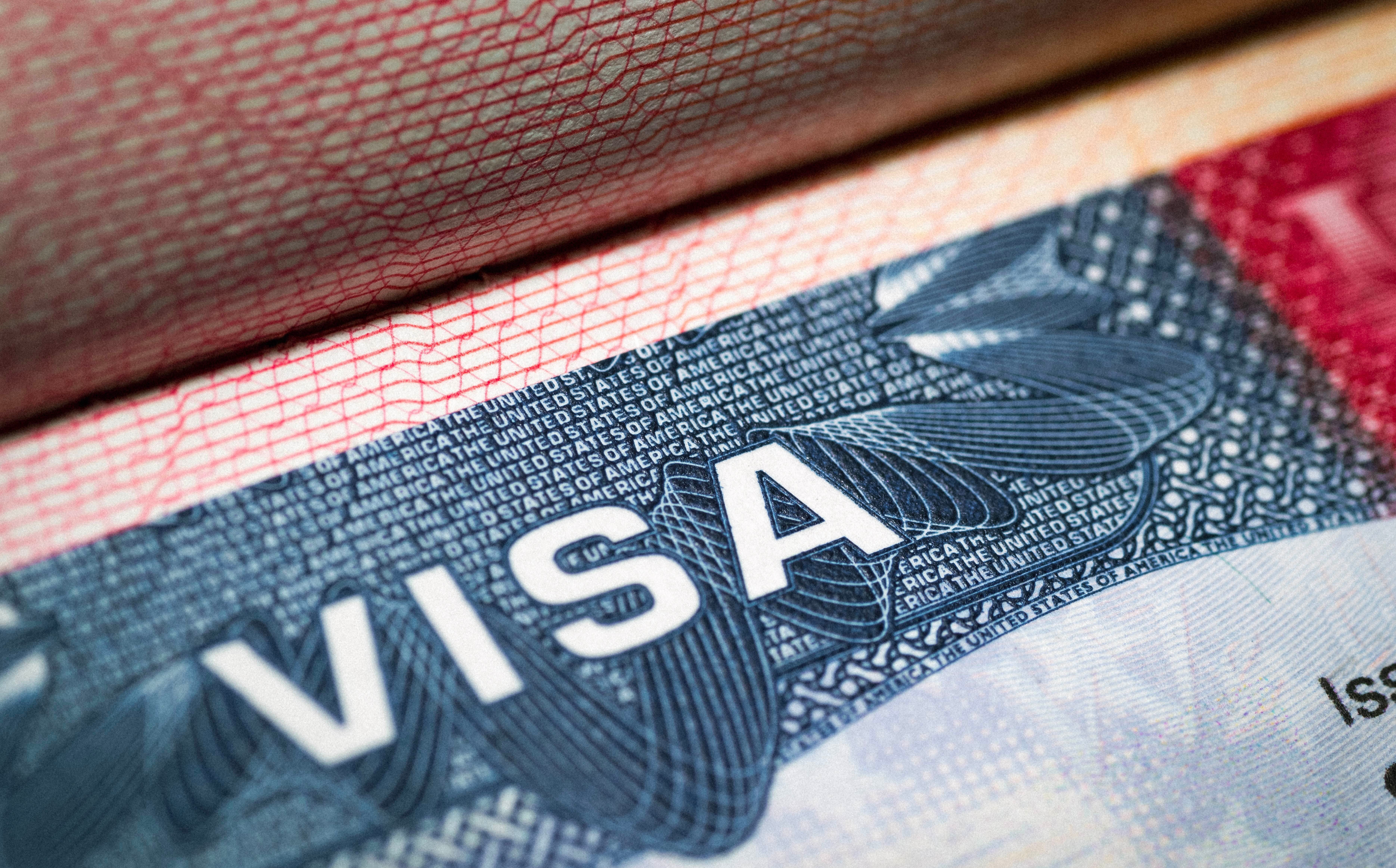
There is a certain nostalgia in the bourgeois Boomer mind for the era when great statesmen, like Bob Dole and Ted Kennedy, could vociferously debate critical issues on the Senate floor, then make backroom deals to pass legislation before going out to a nice—lobbyist-funded—steak dinner together. This immature understanding of our nation’s second “era of good feelings,” coinciding with American global hegemony at the end of the last millennium, forgets who was typically present in the backroom when these titans of American political history forged some of the most corrosive legislative deals that have led to our current national predicament: an unholy alliance of the nation’s worst lobbies.
Unsurprisingly, the steak dinners provided by business, immigration, and tech lobbies paid off for their clients when Congress passed the Immigration Act of 1990, the most successful major immigration reform bill of its generation, creating the H-1B visa. This legislation, sponsored by Sen. Ted Kennedy (who famously and wrongly predicted that the Hart-Cellar Act of 1965 would “not flood our cities with immigrants” or “cause American workers to lose their jobs”), fulfilled the wish list of not only the mass immigration lobby but also America’s burgeoning tech industry. It codified a rotten tree of corporate-friendly immigration reform that created extremely rotten fruit—the U.S. immigration crisis.
Tech corporations began booming in the two decades before the bill’s enactment in 1990. Silicon Valley alone experienced roughly 130% growth in high-tech jobs, the IT industry grew dramatically, and fears began to abound that there would soon be a worker shortage in this rapidly growing sector of the American economy.
Understandably, by the late 1980s, industry leaders wanted to see continued growth in a way that would keep labor costs low and profits high, leading them to sic an army of lobbyists on Capitol Hill to peddle the narrative that a labor shortage would soon arrive and cripple the industry. Congress fell—and, to this day, continues to fall—for this unproven industry narrative hook, line, and sinker.
Recently uncovered documents, first reported in American Affairs, show that Harris Miller, a former congressional aide turned lobbyist who helped advance pro-business immigration policies while on Capitol Hill, drew on his connections to shape the 1990 bill’s final conference text into what was “a series of victories for business groups.”
Unfortunately for the American worker, the crowning achievement in this “series of victories” was the formation of the H-1B visa program. Congress had previously created the H-1 visa, providing temporary work for individuals of exceptional abilities, backgrounds, and talents. However, business interests soon realized that the program could be gamed, and that the federal government was willing to “allow almost any professional worker” to qualify. Unshockingly, businesses wanted more cheap labor, and they began to use the program to hire foreign tech workers, mainly from India, for entry-level positions. They then set their eyes on creating a new program that could allow for even more industry growth—the H-1B visa.
The intent of the H-1B program was to allow U.S. companies to temporarily hire qualified and technically trained foreign workers to fill labor shortages that a company might face during a given period. But sadly, the legislative intent set in 1990 does not, has never, and will never match the program’s reality. By its design, it is incapable of doing so, and it must be abolished.
The industry’s lobbyists, led by Miller, radically transformed the bill’s final text. In a nod to concerned labor unions, Congress originally drafted a cap of 25,000 visas to be issued annually. Lobbyists got the cap raised to 65,000. They were also able to remove sections of the legislation that required tech firms to “recite the specific actions the employer had taken with respect to such recruitment [of American workers before hiring a H-1B recipient].”
However, this wasn’t enough for the tech industry and their allies. In the following years, representatives of the broader business industry combined forces in an unholy alliance with representatives from the Cato Institute, Ford Foundation, ACLU, and the National Council of La Raza to push pro-business, pro-mass migration policies. To further their narrative, Miller independently coordinated “studies that claimed a shortage of workers in the IT industry,” originally claiming “that there were 190,000 open positions.” Later reports “would inflate the number of positions upward, to 346,000 in 1998, then 843,000 in 2000.”
The alliance of industry and pro-mass migration NGOs, with its fangs deep into the ranks of congressional leadership, not only killed attempts to cut the program, they were able to grow the number of visas issued from 65,000 in 1990 to 195,000 annually by 2000. Even though there have been some reforms, especially during President Trump’s two terms, the program has not substantially changed in decades. The Biden administration approved 141,000 initial H-1B visas in fiscal 2024, and there were an estimated 680,000 H-1B workers living in the United States that year.
While the H-1B visa program was originally billed as a way for the business community to prevent the crippling of a booming industry, it is clear after 35 years of implementation that the real intent was always providing cheap labor for American-headquartered multinational corporations. The program wasn’t used to help American companies stay competitive in an increasingly global economy; it was used to commit labor arbitrage primarily against American tech workers. Even though the numerical cap on H-1B visas was reset at 65,000 annually in 2004, with an additional 20,000 for workers with advanced degrees, universities, some nonprofits, and research institutes are exempt from the limit, leading to the massive numbers that we still see today.
Additionally, firms are only required by statute to pay H-1B recipients “the prevailing wage,” the typical rate for a worker in a given area, but Congress has never determined a fixed way of measuring the metric, leaving it to agency discretion. Originally, firms were given great latitude to define the prevailing wage. In 2005, the Department of Labor formalized a payment structure effectively set a rock-bottom rate for most H-1B recipients, allowing companies to import foreign workers willing to accept lower salaries than comparable American workers.
The twentieth century’s rotten tree of corporate-friendly immigration reform continues to bear rotten fruit, visible across the nation in job notices today. Just look at higher education. In the last month alone, Wichita State University, a state-funded institution, filed notice of intent to hire an H-1B mental health counselor. Tufts University filed notice to hire an H-1B guidance counselor for their School of the Museum of Fine Arts. Iowa State University filed to hire a business analyst working remotely from Delaware under the H-1B program. Appalachian State University has filed to hire a coordinator of multicultural services and training under the H-1B program. Stanford University alone has 17 active H-1B hiring notices. These positions are not the highly technical jobs that a university might potentially need a foreign worker to fill due to inefficiencies in the current domestic job market, rather they are mostly low-skilled desk jobs that many Americans can—and are willing to— do.
Over the last few years, financial institutions and telecom firms like Citigroup and Verizon have hired and used thousands of H-1B workers, mainly as IT contractors rather than hire full-time employees, often to a greater degree than large tech firms like Nvidia, Amazon, or Google. Large institutional organizations like Citigroup hire contractors from the main users of the H-1B visa—outsourcing and staffing agencies. These agencies act as middlemen to procure thousands of mostly Indian tech consultants, with some firms even facing federal investigation into their hiring practices for allegedly discriminating against non-Indian nationals.
Recently, investigative reporters also began to uncover networks of H-1B fraud rings in major suburban areas of Texas. These rings, currently under investigation by the Texas Attorney General’s office, allegedly have created sham companies that advertise non-existent products and services online in order to create opportunities to fraudulently sponsor H-1B recipients. They exist not to import foreign workers to fill substantial gaps in America’s tech sector, but to allow fraudsters to import their fellow countrymen and use them as a form of cheap, indentured labor.
Regardless of whether one believes that it is valuable for an assortment of random, unconnected firms, including America’s public universities, to continue importing low-skilled tech workers at the expense of tens of thousands of Americans, the program is in need of serious reform at the very least.
Unlike previous administrations, the Trump administration has begun to take this issue seriously. Last year, the administration imposed a $100,000 fee on new H-1B petitions filed for beneficiaries still outside of the United States. The Department of Homeland Security also finalized plans to create a more weighted selection system for recipients, and the Department of Labor has increased compliance enforcement to investigate evidence of H-1B-hiring firms favoring foreign over American workers.
Reports have also circulated that the State Department has delayed interviews for thousands of H-1B applicants in India. Some potential recipients are worried that if their American employers decided to not “keep them on their payrolls, they would have to find new employers willing to pay a $100,000 fee for new H-1B visa holders.” And more rumors of pro-worker reforms continue to circulate across Washington.
The Trump administration’s reforms have already borne great success. Just this week, the corporate-friendly, pro-open borders Cato Institute released data showing that over the last year there has been an 87% decline in petitions for H-1B workers still residing outside of the United States, leading to roughly a 25% decline in total H-1B visas.
There are additional non-legislative ways to prioritize the interests of the American worker over cheap imported labor and the desires of the pro-mass migration lobby, including wise reforms articulated by Daniel Kishi at American Compass. But reforms by executive fiat are simply not enough. The next Democratic president—or Chamber of Commerce-endorsed Republican—can easily turn the ship in the other direction and halt the administration’s progress.
However, the New Right should recognize that there are very low odds that the legislative branch will be able to abolish the H-1B visa in the short term. But reform by executive order and the rulemaking process should never be the end goal.
Corporate interests may still maintain a stranglehold in some corners of the Republican conference on Capitol Hill today, but the party’s corporate-aligned old guard has been filtering out of Congress ever since President Trump rightly upset their Chamber of Commerce-endorsed views in 2016.
A rotten tree will never bear good fruit, no matter how long it stays in the ground. And the tree that sprouted at the outset of the H-1B program is truly rotten to its core. Instead of investing in the education and training of American workers, our leaders designed the program to give firms quick access to foreign labor, serve business interests, and enable the immigration lobby to import millions of workers with little regard for domestic industry or the working class. And they intentionally ensured that the federal government wouldn’t be able to verify whether any individual firm actually attempted to hire an American worker before using the H-1B system.
Because of these massive design flaws, attempts at reforming the program will not solve the problem. You cannot plug the holes created by the iceberg of mass migration, the tech industry, and the business lobby with bandaids. No matter how long it takes, the H-1B program must be abolished.
Good analysis, but who is listening? What lawmaker or political coalition is going to turn this around?
Also, the H-1B program is even worse than you lay out here. It has transformed—and as a result ruined—entire neighborhoods and cities, with the only benefit being that these supposedly intelligent people usually pay more for real estate than they should, giving the native sellers an easier exit strategy from the mess.
It is interesting that the those that praise China's Green "cost effective" technology ignore both the pollution issues (https://www.chathamhouse.org/2026/03/rare-earths-race-risks-environmental-disaster ) and the labor issues inside and now outside of China even by the top company BYD (see https://www.bloomberg.com/news/articles/2026-04-14/byd-accused-by-labor-rights-group-of-violations-at-hungary-plant and https://www.yahoo.com/news/articles/brazils-top-labor-inspector-fired-190110706.html. It may be that the entire full EV car growth is itself not sustainable.