


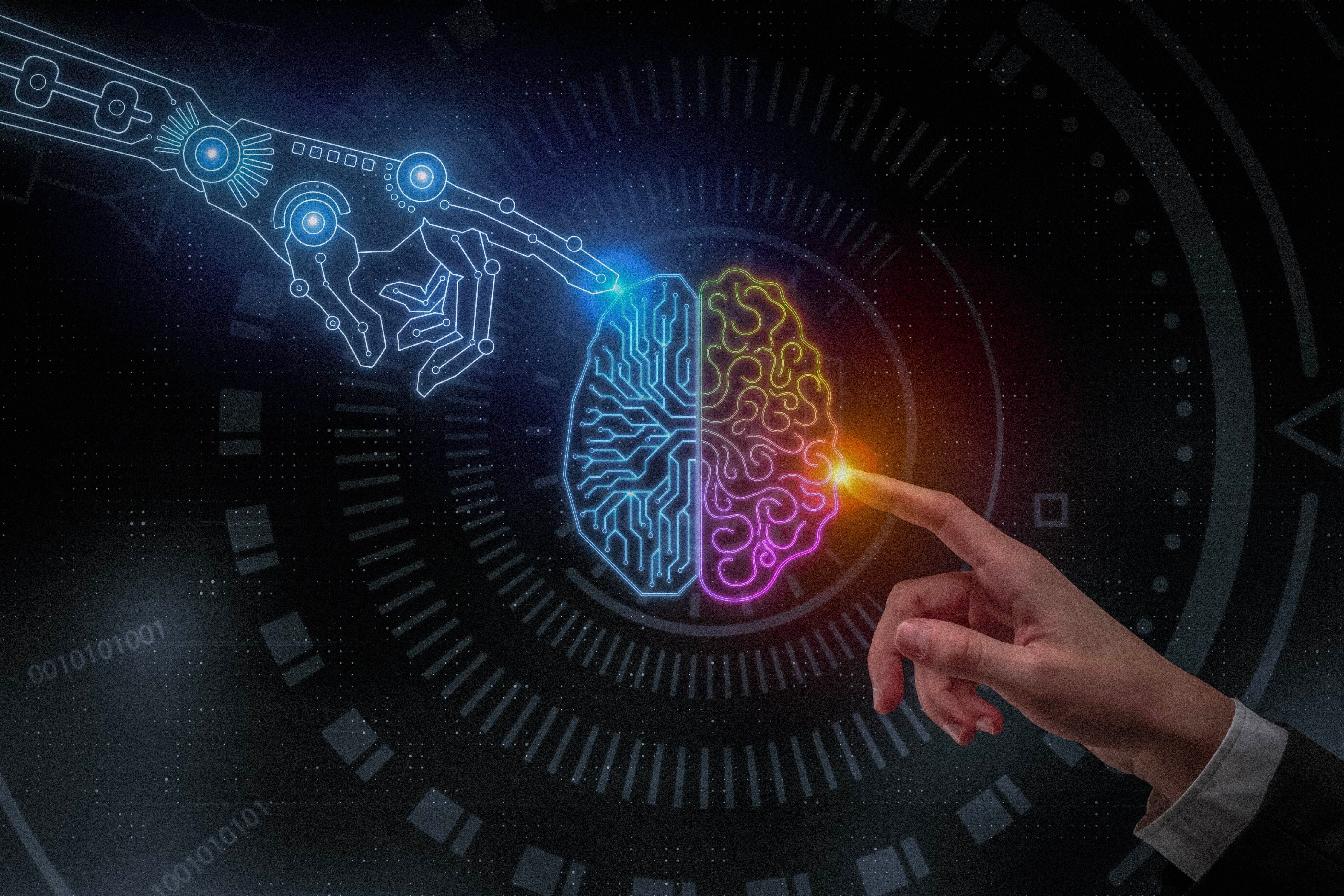
As near as one can tell, the business rationale for artificial intelligence rests on the hope that it will substitute for human judgment and discretion. Given the role of big data in training AI systems, and the enormous concentrations of capital they require to develop, the AI revolution will extend the logic of oligopoly into cognition. What appears to be at stake, ultimately, is ownership of the means of thinking. This will have implications for class structure, for the legitimacy of institutions that claim authority based on expertise, and for the credentialing function of universities.
Consider some recent developments that don’t pertain to AI per se, but show the power that comes with ownership of computational infrastructure.
When Amazon Web Services went dark in October of this year, thousands of institutions were paralyzed for a few hours. Banks went offline; hospitals were unable to access medical records. Platforms that people rely on to communicate, such as Signal, also became nonresponsive. The cloud hosts an increasing share of the services that make a society run, routing them through a small number of firms. Our own government is also dependent on this infrastructure, and therefore dependent on the continued solvency of a handful of business enterprises. The phrase “too big to fail” hardly begins to capture the situation.
Computers and internet connections have been embedded in many material things that were once simply mechanical, and this provides a further point of leverage for whoever is able to route basic functionality through a network. For example, Volkswagen and Mercedes have announced that the performance of their electric cars will be tiered, with the higher levels of performance made functional by ongoing subscription (i.e. the motors can be de-tuned remotely). Likewise, BMW announced that the seats on new cars will be heated only through a monthly ritual of submission. The very concept of ownership becomes clouded under a subscription model, in which the things we depend on become sites of continuing wealth-extraction.
With the Internet of Things, and more broadly the layering of networked computers into every interaction, the function of almost anything, or the availability of any service, can be made contingent on the provider and the customer keeping a good relationship, as your psychotic girlfriend used to say—subject to terms of service set unilaterally, revocable at will. “You will own nothing and be happy,” as the saying has it. As the Substacker AZ Mackay put it, “power flows through the architecture of what’s possible, and if you don’t control the architecture, you rent access to possibility itself.”
The rise of artificial intelligence would seem to invite this business logic deep into the human landscape. If the task of thinking is to be offloaded onto machines, and these machines will be embedded in an architecture that is to be owned by a handful of firms, what follows?
The Knowledge Class
A brief run through the last century and a half may provide some useful context. The classic Marxist concern is with ownership of the means of production: Is it owned by labor or by capital? The prescription that emerges from this way of thinking about the economy is class war. It was a prescription embraced by both parties. In 1941, James Burnham identified a new player in the dramatis personae of the economy: managers. Their claim to pre-eminence was based on neither their bodily labor, nor their accumulated wealth, but on knowledge. Their prescription, naturally enough, is that we should defer to certified expertise. Such expertise can optimize the labor process, for example through Frederick Winslow Taylor’s “time and motion studies” (the fruit of which was the assembly line), as well as detect patterns in the economy which, once identified, can optimize the allocation of capital and make it more productive. For the first time since the demise of ecclesiastical authority, the West had a class whose title to rule was basically epistemic. This is the political fact that is likely to be thrown into confusion by AI.
The knowledge class became politically salient under Wilsonian progressivism. The premise of their authority is that the world has become so complex that common sense and first-hand experience can have little standing in the deliberations of state, which require the application of intellectual technique. The Progressive era was a period when sovereignty (that is, the right to decide important things) was partially transferred from representative, parliamentary bodies to executive agencies, staffed by the new knowledge class.
The rule of this class came to span governments and private business firms alike. Its members, best exemplified by the management consultant, can move between firms in entirely different industries and sectors, or indeed between the private sector and government. Their competence is an omni-competence, based not on direct experience with the objects they manage but on their possession of an intellectual technology in which all qualitative differences can be captured in the universal language of quantity. Just as money is a representation of value that treats a unit of oranges and a unit of apples as equivalent and interchangeable, so the optimizer of widget-production may be indifferent to the particular widgets he treats. He may never have held one in his hand. This same level of abstraction can be applied to populations. We call the resulting regime technocracy.
The raw materials that the knowledge class uses to keep generating new expertise is “information.” Their position depends, not on hoarding this raw material, but on creating what is essentially a licensure requirement for turning it into expertise. This is maintained by a credentialing operation (academia) working in tandem with sanctioned bodies (the establishment media) to disseminate a highly curated, expert-ratified picture of reality. Generally it is a picture which, if adequately grasped (because you are not one of the stupid people), makes you want to hand over yet more of the world to the jurisdiction of the knowers. This is what it means to “believe in Science.”
But to the extent AI comes to stand in for human expertise and displace it, the raison d’etre of the knowledge class collapses. What then?
Overproduction of Elites
The term “overproduction of elites” is associated with Peter Turchin. He points out that, historically, when there are too many aspirants to the upper-middle zone of society and not enough spots for them, you get intra-elite conflict and social unrest. Revolutionaries generally come, not from the bottom, but from this stratum of society with frustrated expectations. Downwardly mobile and feeling betrayed, they come to hate their parents, and more broadly their own class of origin. They can harness popular resentments to their own sense of betrayal.
The rise of the Occupy movement and the Democratic Socialists of America would seem to fit this template. Further, the politics of denunciation, struggle sessions and cancellation that we call “woke” can be understood at least in part as a status competition played by people who feel the precariousness of their own position in some institution. As Reihan Salam noticed in 2018, woke is a somewhat anxious effort by “upper whites” to mark themselves off from “lower whites” by demonstrating their mastery of the subtle, class-signaling moral codes that circulate beneath the surface of institutional life, in the hope of securing their status. The point is that we have already seen significant political manifestations of elite overproduction, and the AI revolution is likely to take this logic to another level.
It is hard to know how this might play out. If the “politics of repudiation”—Hannah Arendt’s term for the revolutionary passion as it manifested in the 1960s—was previously most evident on the Left, at present it seems to be more prominent on the Right, where the Boomer-hating sense of inter-generational betrayal runs deep.
Higher Ed
If the function of universities is to credential the knowledge class, but AI is making such a class redundant, will this cause the universities to collapse? This is not clear. If their ostensible mission of educating is no longer required, this may not be dispositive of their fate, as the role they play at the nexus of state and corporate power has other dimensions. A college degree is required by employers for many positions that are fairly menial, for the simple reason that it serves as a signaling device for attributes that have little to do with intellectual accomplishment but are valuable to employers nonetheless: the ability to complete tasks, endure tedium, submit to supervision, and get along with others. Together, we might call these bourgeoise virtues “conscientiousness.” A degree also serves as a cost-free sorting device for employers: the universities did the sorting for them already, when they admitted a student. (What they learned in university, or whether they learned anything at all, is not especially important within this logic.) The appeal to employers of letting universities do the sorting of would-be employees is not simply a matter of laziness or cost-cutting.
Under civil rights law, it is illegal for employers to administer IQ tests to applicants, or indeed to apply any standard of assessment that would have a “disparate impact” on any protected class (unless they can demonstrate a direct relevance of the assessment to specific job tasks; the burden of proof is laid on employers, per Griggs v. Duke Power, 1971). This includes assessment for traits such as conscientiousness. The civil rights regime thus contributed to the rise of credentialism among employers, with the university degree serving as a politically innocent proxy for more substantive measures of employability that carry legal hazard.
One effect of this move to credentialism has been to make a university degree and associated debt almost mandatory for employment in the institutional economy (as opposed to small businesses, which escape oversight by the EEOC if they have fewer than 15 employees). This amounts to a transfer of wealth to the bloated apparatus of higher education. Universities collect rents by virtue of their structural position in the civil rights economy, as staffing agencies to corporations. That position aligns with their role of propagating state ideology (viz., anti-racism), without which the whole business model collapses.
Universities thus serve to coordinate corporations with state purposes, and to craft a citizenry that has internalized the ideas that underwrite both. Presumably these functions will still need to be carried out even as the ostensible mission of (real, substantive) education loses its economic rationale due to the widespread uptake of AI. But without that publicly affirmable mission, sincerely executed, it is not clear how universities can continue to sell their product. Nobody wants to be a tax cow who spends $80,000 per year merely to get socialized as a regime loyalist. Especially if that regime is collapsing.
The problems sketched above may be peculiar to the United States. But the AI revolution is also likely to usher in a political form that transcends the nation-state.
The Final Empire
As Mackay writes, “most nations won’t build sovereign AI infrastructure. The cost isn’t measured in billions for training runs. It’s measured in decades of technical talent development, rare earth mineral control, and the kind of patient capital that survives multiple election cycles.” For smaller countries, their national life will be dependent on cognitive infrastructure that they don’t own, subjecting them to the caprice of business decisions taking place elsewhere. The implications of this are not at all abstract.
It means your hospitals run on models that can be patched, upgraded, or discontinued based on quarterly earnings guidance. Your courts interpret law using systems trained on someone else’s corpus of what law means. Your schools teach using curriculum filtered through someone else’s judgment about what knowledge serves whom.
… We’re building toward a new world operating system. And operating systems don’t negotiate. They set terms. You accept them or your nation doesn’t boot.
If this can be understood as empire, it is empire of a radical kind, in which meaning-making is centralized. Some governing picture of what is important—of what is good and what is true—is operationalized somewhere other than here, wherever “here” may be. Indeed, every place will be the same place.
As we already see (in embryo) with the U.S. government’s dependence on AWS, and the embedding of proprietary, commercial AI into the functions of state, it won’t be the United States or any other conventional political entity that holds the keys to “the architecture of what’s possible.” What Mackay says of the little nations would ultimately seem to apply to the United States as well. One can entertain a scenario in which the cloud service providers and LLMs are nationalized, somehow. But what would this even mean, really? The line between state and corporate power has been blurry for a long time, and the U.S. government has proven loath to use its power against Big Tech, whether by antitrust enforcement or by regulation. To take but one example, the tech firms have (by regulatory omission) been given a free hand to deploy AI “companions” targeted at children, in what amounts to a society-wide, uncontrolled experiment on the foundations of childhood development.
We continue to refer to “the government,” yet that term refers to something bearing little resemblance to the entity described in our civics textbooks. Whatever we call the entity that controls it, the “world operating system” will seek to gather to itself the whole human field. This would bring to fruition what Hannah Arendt called “the rule of Nobody.” The Nobody is an entity that is not accountable and cannot be addressed.
To see our way out of this will require revisiting the basic suppositions that got us to the present.
Reclaiming the Human
Recall that the rise of the knowledge class to political preeminence was based on the conceit of an intellectual technology that confers omni-competence. At bottom, this rests on a tacit metaphysics in which everything that exists is assumed to be reducible to combinations of a common, generic material. According to this view, there are no “natural kinds” that are fundamentally heterogeneous, with their own ends and goods that are proper to them, to perceive which requires long and intimate acquaintance. If there were such natural kinds, they would place limits on our ability to treat the given facts of the world as raw material, fully available to be reshaped according to a plan that may be applied from afar, by remote control.
Heterogeneous natural kinds, if admitted into this picture, would be like lumps that impede the smooth and even spreadability of a peanut-flavored sandwich filling across the globe. One has to deny their existence to maintain the presuppositions of what you might call “replacism”: every particular thing can be replaced by its standardized double, and thus made more amenable to the application of machine logic. Among the natural demarcations erased in this worldview is that between man and machine: the substitution of artificial intelligence for human intelligence is simply a matter of swapping out carbon for silicon. The metaphysics that underwrote the authority of an omni-competent knowledge class, committed to replacism, has finally made that class liable to being replaced itself.
This touches the core of our politics. I don’t mean liberal democracy as elaborated in the written Constitution, but our actually existing political regime of technocracy, which became ascendant because it defined and elevated a social class whose fortunes are tied to its premises. Technocracy requires this sociological substate for its legitimacy. Like every regime-type, it provides an answer to the question “who rules?” If the answer is Nobody, then nobody will be committed to its defense.
We are in for real political turmoil. The establishment is afraid, and rightly so, that the most likely alternative to technocratic rule would be something atavistic. If there is a silver lining in the current confusion, it may be this: Without a social class whose material interests are tied to the homogenizing and reductive metaphysics of technocracy, it may become possible once again to entertain big metaphysical questions. We may become open, as the West has not been for centuries, to truths made available to us in the tradition that runs from classical antiquity through the Hebrew bible and into the Christian teaching. According to this tradition, the human being is something doubly distinct: a natural kind that is oriented beyond itself, indeed beyond nature altogether. Human beings participate in something transcendent, in the image of which they were made. This truth provides a basis—I suspect it may be the only solid basis—on which human possibility may be defended against erasure.

Once again I think of Frank Herbert’s Dune, the conceit of which is a distant post AI future where humans are again controlling their thinking. But that results in a homocidal religion sweeping the galaxy in service of a cultic messiah. Complete unreason in other words. Your optimism concerning a turn toward a metaphysics open to transcendence after the dark machine age gives one hope that genuine human reason can outlast the coming devastation. But only if enough of us preserve what we have and strive to teach it to those younger than ourselves who will actually be performing the recovery
The "business case for AI" is much simpler and older. The industrial revolution allowed capital to become physical labor. The digital revolution will allow capital to become intellectual labor.
The former upended the economies of Europe (and America) and depressed wages throughout the 19th century. It decoupled economic success from physical strength and skills. This was beneficial for capital but not so much for labor. (Luddites anyone?)
The latter will do the same, depressing wages for skilled mental labor (lawyers, analysis, programmers, etc...) in the 21st century. Between AI and robotics, the value of labor as an economic input is likely to fall to near-zero. The more interesting question to me is, who will the laptop-class Luddites be and what will they do?