


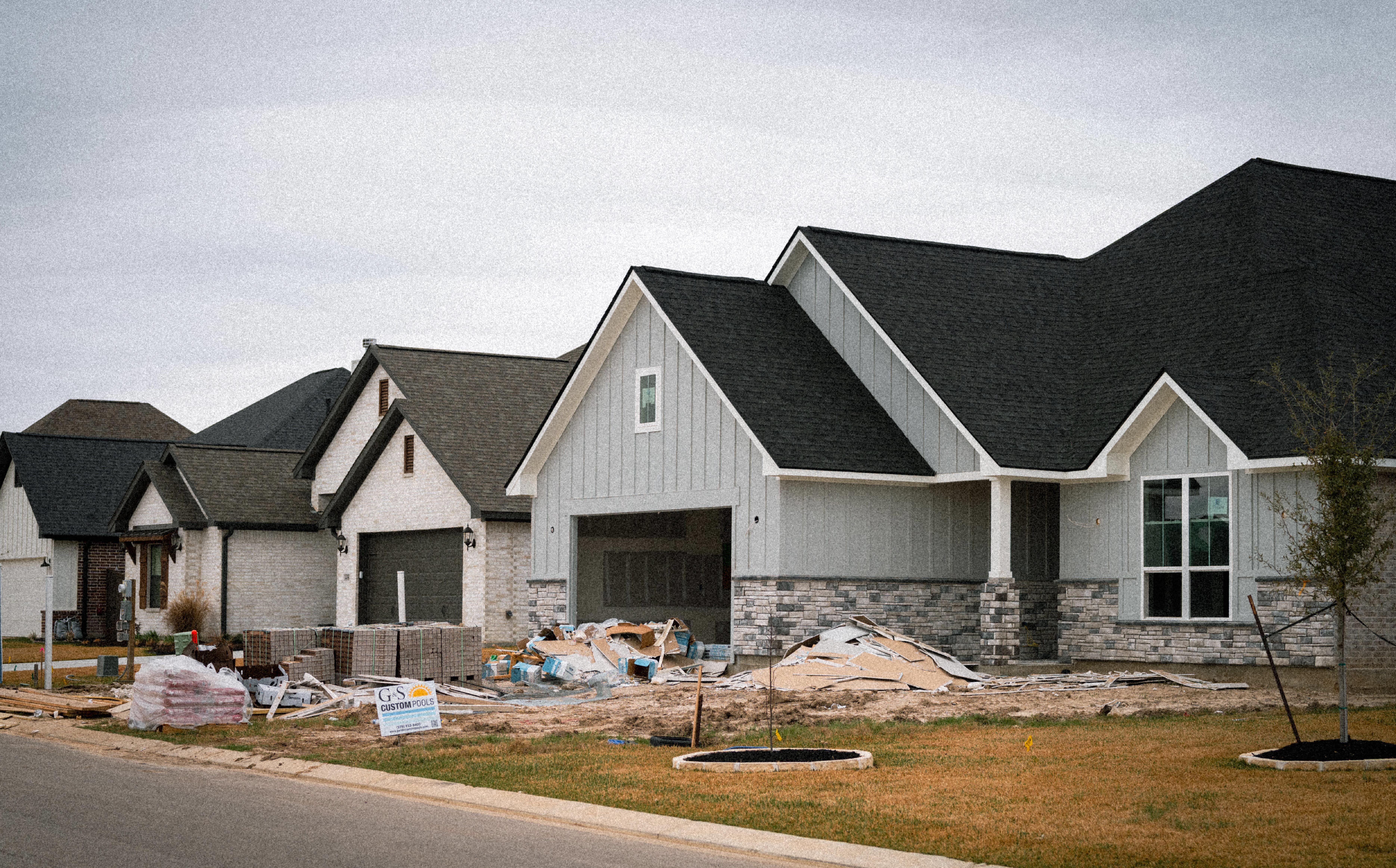
What if the populist Right and the tech Right, divided over issues ranging from data centers to protecting children online, could unite behind a single policy? And what if that policy could also win the support of progressives and academic economists?
Such a policy exists: it’s called the property tax.
This claim may seem outlandish in light of the fact that property taxes are among the most unpopular forms of taxation in the United States. But their unpopularity has more to do with how they are levied—once a year—than with what is taxed.
If we set politics aside for the moment, the case for retaining and increasing the share of government revenue that comes from property taxes is powerful. From Adam Smith to John Kenneth Galbraith and Milton Friedman, economists have often preferred the property tax to other kinds such as income, payroll, and consumption taxes. Unlike firms which derive profits from the goods they manufacture or the services they provide, landlords did not create the raw land they control; they merely own title to it in the form of a monopoly granted and enforced by the government.
This means that the income from the land itself, as distinct from any structures or improvements added to it, is pure unearned “rent” in the economic sense. Payroll taxes can discourage the use of labor, and corporate income taxes can discourage productive investment, but taxing land will not disincentivize the creation of new land. And while the legal locations of businesses can be moved to different jurisdictions to minimize or evade taxation, it is impossible to escape property taxes by moving your half-acre or city block to the Cayman Islands.
If the goal of tax policy in a dynamic and innovative industrial economy is to reward effort and promote productive enterprise, the case for property taxes is even more powerful. For this reason, the classical liberals of the late eighteenth and early nineteenth centuries favored taxing unproductive land-owning rentiers. Smith and other early classical economists thus distinguished landlords from capitalists and workers.
Unlike capitalists, who made profits from goods or services they produced, landlords were parasites who siphoned money from both capitalists and workers by extracting rents from land, a natural resource which they owned but did not create. “As soon as the land of any country has all become private property,” Smith wrote, “the landlords, like all other men, love to reap where they never sowed and demand a rent even for its natural produce.”
Another classical liberal, David Ricardo, shared Smith’s contempt for landowners who extracted rents from businesses and workers. “It follows then, that the interest of the landlord is always opposed to the interest of every other class in the community,” Ricardo wrote in 1815.
A generation later, in Political Economy (1848), John Stuart Mill pointed out that landowners could enjoy windfall fortunes without any personal effort merely as a result of local urbanization and commercial development. “Landlords grow rich in their sleep without working, risking or economizing,” wrote Mill. “The increase in the value of land, arising as it does from the efforts of an entire community, should belong to the community and not to the individual who might hold title.”
If infrastructure like a railroad, for example, suddenly made nearby farmland far more valuable, the increase in the railroad-adjacent property’s value could be taxed without discouraging productive investment or personal effort. The influential theorist and reformer Henry George took this line of reasoning to its logical conclusion in his tract Progress and Poverty (1879), promoting a “single tax” on the “unearned increment” of land value that could replace taxes on business and labor. “The tax upon land values is, therefore, the most just and equal of all taxes,” he wrote. “It is the taking by the community, for the use of the community, of that value which is the creation of the community.”
In the twentieth century, what became known as “land value taxation,” which taxes the unearned appreciation of land more than the value of any improvements on it, attracted the support of economic thinkers on both the Left and the Right. In The Affluent Society (1958), the liberal economist John Kenneth Galbraith wrote, “If a tax were imposed equal to the annual use value of real property ex its improvement, so that it would now have no net earnings and hence no capital value of its own—progress would be orderly and its fruits would be equitably shared.”
At the other end of the spectrum, Galbraith’s contemporary, the libertarian economist Milton Friedman, agreed. “So the question is, which are the least bad taxes?” Friedman said. “In my opinion the least bad tax is the property tax on the unimproved value of land, the Henry George argument of many, many years ago.”
Unfortunately, as the heterodox economist Michael Hudson has shown, the distinction of landlords from capitalists that was central to classical liberal economic thought was eliminated from neoclassical economics in the late nineteenth and early twentieth centuries. In neoclassical economics, landlords and also financiers, rather than being providers of scarce inputs to productive capitalists, are defined as capitalists themselves. According to Hudson, “The entire political focus of classical economics was to get rid of the fact that there was a landlord class, that anybody who occupied a building or lived in it or owned it had to pay rent to this hereditary landlord class that didn’t play any productive role at all, that made money in their sleep.”
Erasing the distinctions among productive industry profits, real estate rents, and financial rents meant that landlords and bankers could be considered “capitalists,” and that the FIRE (Finance, Insurance, Real Estate) economy could be seen as equal to or even superior to an economy based on manufacturing.
For today’s populist conservatives and tech libertarians alike, a policy of shifting the tax burden from wage earners and productive businesses to unearned rents from property ownership should be a no-brainer. A moral vision of work effort as the only legitimate source of income and wealth has always been central to American populism as well as to classical liberalism. The Populist Party Platform of 1892, quoting from St. Paul’s second letter to the Thessalians, declared, “If any will not work, neither shall he eat.”
Elsewhere the platform states, “From the same prolific womb of governmental injustice we breed the two great classes—tramps and millionaires.” Contrast that with the attitude of Greg Johnson, a contemporary personal finance guru, in a post titled Why I Love Being a Landlord. “So, while I may have to spend a few hours on a Saturday fixing a leaky faucet, the other 364 days of the year I am making money without having to do a thing,” Johnson writes. “I rarely even think about the fact that I own rental properties until my tenants drop off their rent payments on the first of the month. How much more passive can generating income get?”
Property taxes, then, can be supported on the Right by populists who despise non-working rentiers and seek lower taxes on necessary consumption and labor, by tech advocates who want lower taxes on productive investments, by libertarians for whom the property tax is the “least bad tax,” and by mainstream economists for whom property taxes distort economic decision-making and discourage effort less so than other taxes. Moderate progressives, meanwhile, might be attracted to a program that makes existing property taxes less regressive while shifting more taxation to unearned property rents.
They are also relatively minor. In the United Kingdom, which boasts the highest property taxes in the OECD, they amount to only around 3.7% of GDP. In the U.S., where property taxes are levied almost exclusively by local governments, they range from an effective 2.23% rate in New Jersey to 0.28% in Hawaii. Property taxes constitute just 2.7% of GDP in the U.S. overall. When it comes to housing costs, it is clear that factors other than property taxes are the major impediments for many Americans.
So, if property taxes offer something for almost every group in politics, and tend to be minor as well, why are they so unpopular in the U.S. and other countries? The answer is salience—a fancy term for “sticker shock.” Taxes on property and income, which are collected once a year, are likely to produce more taxpayer anger than sales or other consumption taxes which are collected intermittently and in small increments. Through withholdings on paychecks, governments have also tried to make income taxes as inoffensive as possible. Salience explains why revolts like California’s Proposition 13, which limited property taxes and required a two-thirds legislative majority to increase them, are more common than revolts against state or local sales taxes.
Salience also explains the failure of an idea pushed by some policy wonks for generations, the progressive consumption tax—an annual tax on all personal consumption derived by subtracting savings from income. The Hall-Rabushka tax, widely known as the flat tax, is a variant of this approach. Imagine the sticker shock if, instead of paying small sales taxes every time you made a purchase at the grocery store, the appliance store, or the gasoline pump, you had to pay a year’s worth of sales taxes all at once on April 15. Anti-sales tax descendants of California’s Howard Jarvis, the champion of Proposition 13, would appear overnight.
Milton Friedman, that hero of the libertarian Right, understood this problem with the property tax in its present form. His solution was to levy property taxes incrementally rather than all at once:
[W]ith respect to the income tax, we’ve arranged it so it’s taken off bit by bit and it’s almost painless. With respect to the sales tax, we pay a little bit of it each time. With respect to the corporate taxes and excise taxes, they are hidden in the price of things we buy. We don’t even know that we’re paying them. But with respect to the property tax, that remains a tax that we as individuals have to pay and we have to write a big check for it. That’s the fundamental reason in my opinion that it’s so unpopular. And in fact I think—I hate to say this because it’s giving hostages to fortune—but if you wanted to reduce the unpopularity of the property tax the way to do it would simply be to provide for an effective method by which it could be withheld at source in small payments, and that would eliminate a large part of the objections to it.
If Friedman was correct, then much of the opposition to property taxes would vanish if they were paid in monthly installments in a manner similar to utility bills.
Some political opposition might remain, as the owners of expensive properties rally small property owners in an alliance against property taxes. The truth is that the major beneficiaries of property tax reduction are and will remain the well-to-do. Taxes on real property by their nature are less regressive than taxes on consumption, such as a sales tax or a value-added tax (VAT). Everyone must consume but not everyone owns real estate. As it is, American homeowners tend to be more affluent than the population as a whole. As household income rises, so does home ownership.
In 2024, only 25% of Americans with incomes lower than $25,000 and 47% of those with incomes between $25,000 and $50,000 owned their own homes, compared to 85% of Americans with an income of $100,000 or more. The home ownership divide is mainly a class divide, not a generational divide.
Unfortunately, there is a growing tendency on the American Right to float reducing property taxes while raising sales taxes or other, more regressive taxes. South Dakota’s Republican governor Larry Rhoden has proposed just that, allowing the state’s counties to raise sales taxes in order to cut property taxes. In Texas, reductions in property taxes favored by many conservative Republicans could be offset by regressive sales tax hikes.
More defensible is Florida governor Ron DeSantis’s push for targeted property tax reductions. As DeSantis has observed, the property taxes he proposes to cut for primary homesteads in Florida represent “a fraction of the overall property tax revenue. About 70% is non-homestead, non-residence, and then commercial. So we’re in a unique situation; so much of our taxes are paid by people that visit.” Following a similar logic, Hawaii, another major tourist state, carries low rates and exemptions for primary residences but higher taxes on non-owner occupied investment properties.
In general, however, hostility to property taxes, like hostility to inheritance and wealth taxes and support for the state and local tax (SALT) deduction, is an obsession of the donor-class Old Right, not the pro-worker New Right. Since they are now outnumbered, the Old Right can only prevail politically by persuading great numbers of middle- and working-class homeowners to share in their property tax hostility.
One way to weaken donor class manipulation of a pseudo-populist political alliance against Friedman’s “least bad tax” would be to make the property tax progressive—either by creating a progressive rate structure or, even better, by means of a universal flat exemption from property taxes that benefits working- and middle-class homeowners while reducing the rate only slightly for owners of expensive properties.
In 2016, Donald Trump promised that, “Five, ten years from now—different party. You’re going to have a worker’s party.” A Republican “worker’s party” worthy of its name would oppose both the SALT deduction and any attempt to shift taxation from owners of expensive real estate to working-class consumers.
Instead, a pro-worker, pro-industry, pro-growth alliance should try to shift more of the burden of taxation from capital and labor to unearned, passive real estate appreciation. At the same time, it might support a flat property tax exemption for the first $50,000 or $100,000 of property value. And to minimize sticker shock, populists and conservatives should support monthly or quarterly rather than annual property tax payments, though property could continue to be assessed once a year.
Such policies might benefit both workers and entrepreneurs creating new firms and entire new industries—at the expense of the old-money trust-fund rentiers of the country club Right who, in the words of J.S. Mill, “grow rich in their sleep without working.”

Anyone with a mortgage pays property tax monthly. PITI as the total mortgage payment is called includes taxes (it is the T). Mortgage lenders understandably don't want the government confiscating their property because of a failure to pay by a third party so they collect and escrow the money necessary. Sales tax is close to proportional if food and meds are excluded as they are in most places. Smith, Ricardo and Mill lived in a time and place where land was owned by the remaining members of the fuedal aristocracy. I would be startled if Lind didn't know all of these things so I have to assume this is another attempt to expropriate the Boomers without saying the word.
Actually progressives in liberal areas wanted and want to maintain Salt deductions. President Trump wanted to limit them. He probably lost the Biden election because of Salt deductions. The old money class are now the progressive democrats in the Northeast, Illinois, and California.