

Tariffs Are Only Half the Battle
America needs a strategy to revive its core industries.

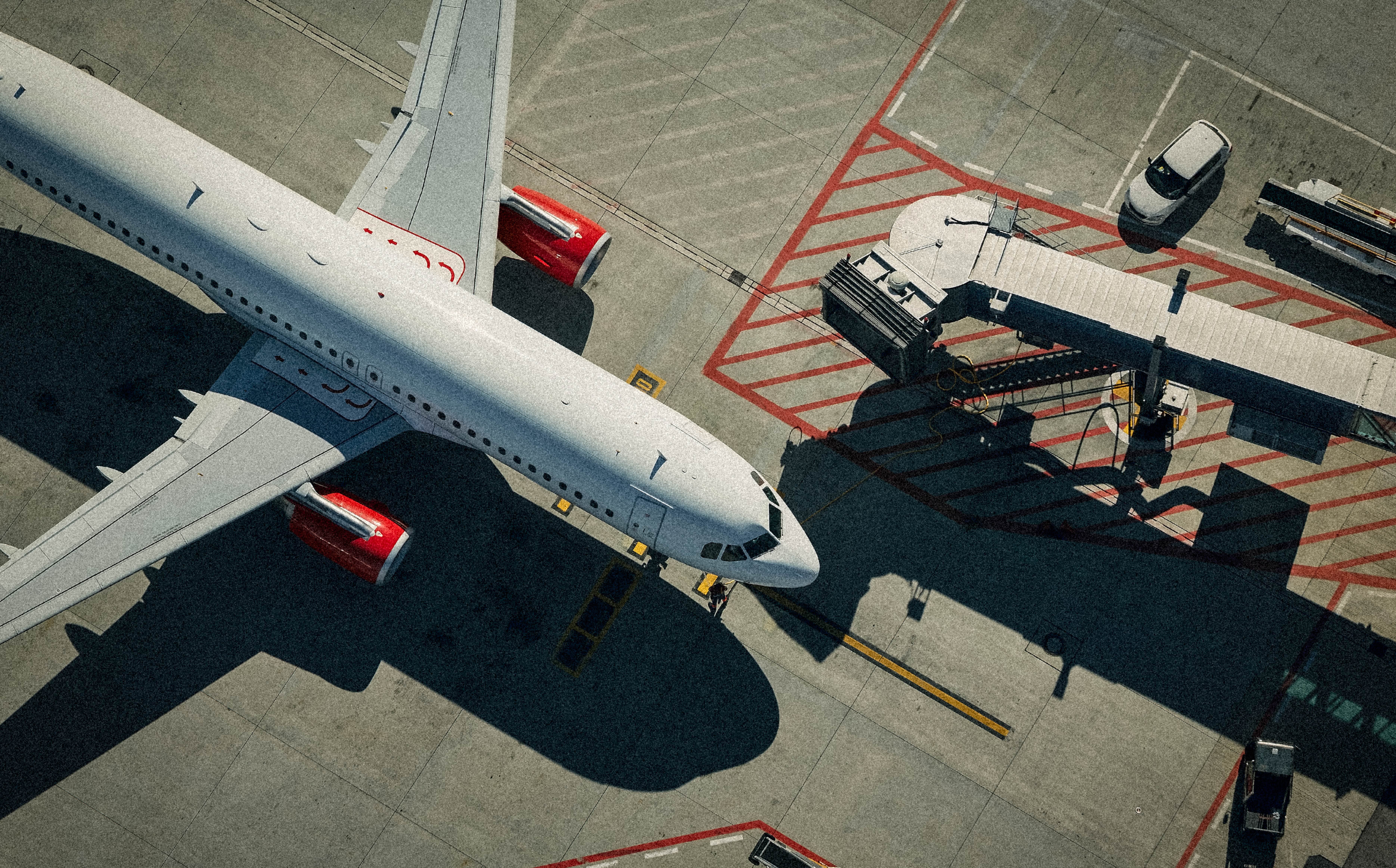
It was the one clear victory in what was otherwise a disappointing visit. After several days of talks in Beijing, there was no agreement on Taiwan, nor was the war in Iran settled. Still, at least President Trump managed to sell a lot of planes.
During Trump’s visit in May, China agreed to buy more than 200 Boeing aircraft, marking the company’s first sales to the world’s fastest-growing aviation market since 2017. The deal “will drive high-paying, high-skilled U.S. manufacturing jobs and enable the Chinese people to fly on American-made planes for decades to come,” according to the White House.
On the surface, it sounded like a big win for the United States. After all, America is a global leader in commercial aerospace, an industry which provides the type of well-paid, high-skill, sophisticated manufacturing jobs the president‘s MAGA movement is meant to champion.
But if you dig a little deeper, a different story emerges. First off, the Boeing deal was for far fewer than the 500 planes Wall Street analysts initially hoped for. Meanwhile, reports emerged within days that China was slowing down approval of Airbus planes unless the European Union accelerates its own purchase of Chinese-made COMAC planes.
These developments clarified what was really happening. Sure, China does not mind buying a few more Boeing planes. It needs the kit as its airlines expand. And yet, China’s long-term goal is to build up its own aerospace industry, breaking the European-American duopoly that has dominated the market for the last 50 years.
The wider lesson—and one that should be better understood—is that aerospace is a microcosm of everything that is going wrong with the president’s approach to rebuilding American industry with tariffs. The strategy is to protect U.S. industry from foreign competition, but so far nothing is being done to rebuild it. Unless that changes, the project will end in failure.
No one disputes that Trump’s tariffs have been controversial. Depending on your political persuasion, they are either a bold reassertion of American economic sovereignty or a reckless, self-indulgent act of self-harm. We have already witnessed angry retaliation from trade partners. The panels at Davos have been filled with angst-ridden warnings about the collapse of the “rules-based order,” and the lawyers have already managed to reverse many of them.
And yet amid all the fury, it is remarkably easy to miss the most important point of all.
Tariffs only make sense if they are part one of a plan—a strategy for rebuilding the industrial base that made America the dominant economic power of the twentieth century. What should always have been part two. The strategic deployment of the revenues raised has yet to materialise. Without it, America is not protecting its industries but merely building a wall around an empty lot.
A Conflict of Visions
For the better part of three decades, America told itself that manufacturing didn’t matter anymore. Let the Chinese make the steel and the semiconductors and the toys. Americans would do all the clever stuff—the design, the branding, the intellectual property. There would be a clean division of labor, and everyone would win.
The results of that approach are clear for everyone to see. Taiwan now dominates advanced chip manufacturing, while American domestic capacity remains a fraction of what it should be. Beijing and Shanghai had more biotech laboratory and research space under construction at the end of 2024 than any other hub on earth. Boston—long the undisputed global capital of life sciences—is now a distant third. China now accounts for 53% of global shipbuilding tonnage. The United States—which built the armadas that won World War II—produced just five ships in 2022.
And then there is aerospace, perhaps the most significant example of all.
Of all the strategic industries America needs to defend, aerospace may be the one that matters most. For much of the post-war era, it was taken for granted that the U.S. would dominate commercial aviation, with Boeing and McDonnell Douglas carving up the market between them.
Europe’s Airbus eventually arrived as a serious competitor—one backed by generous government subsidies—and the industry became a duopoly. There was plenty of tension, but it was a duopoly America could live with. Europe, whatever its rivalries with Washington, was an ally.
China is a different matter entirely. COMAC—the Commercial Aircraft Corporation of China—was founded in 2008 for the explicit purpose of breaking the Boeing-Airbus duopoly and giving the Chinese Communist Party a domestic commercial aircraft industry. For years, Western observers treated COMAC with polite skepticism. The planes were old-fashioned, the supply chain was unreliable, and the certification hurdles seemed insurmountable. It was largely dismissed as an irrelevance at best and a joke at worst.
But that is starting to change. COMAC’s C919, a narrow-body jet roughly comparable to the Boeing 737 MAX and Airbus A320, has entered service with Chinese domestic carriers. It might be a while before it is certified to fly into London’s Heathrow Airport or New York City’s John F. Kennedy International. But with enough pressure on the EU, and enough Airbus delays, Europe could buckle.
The U.S. may not be far behind. For one, China can afford to wait. Its domestic aviation market is already one of the largest on earth, and it is growing faster than almost anywhere else. COMAC has a guaranteed captive market of hundreds of millions of passengers. Non-aligned nations in Africa, Asia, and South America may well start buying COMAC planes, especially if they owe China money. Every C919 that takes to the skies is a Boeing or Airbus that does not get sold.
Boeing, meanwhile, is struggling in ways that would have seemed unthinkable a decade ago. Following the 737 MAX crisis of 2024 and subsequent production slowdowns, quality control failures, and management turmoil, the company that put men on the moon has spent the better part of five years fighting for basic credibility. Its market capitalisation has slumped, while its order book has slowed. The once-unassailable American champion of commercial aviation is visibly wobbling.
The real problem, however, is that there is no serious American plan for what comes next. The U.S. has no credible next-generation passenger jet program. Where is the Apollo-style national commitment to supersonic or hypersonic commercial travel? There is no strategic vision for what American commercial aviation might look like in 2040 or 2050.
Meanwhile, China’s aviation ambitions do not end with the C919. The CR929, a wide-body jet being developed in conjunction with Russia, is in the planning stages. COMAC has signaled it aims to produce a full family of commercial aircraft. China’s five-year plans, of the sort that Washington used to dismiss as a weak throwback to the Soviet era, include ambitious targets for aviation manufacturing output.
That isn’t to say that state-directed economies are superior. They have plenty of inefficiencies and distortions of their own, as China’s recent property crisis amply demonstrates. But in strategic industries with long lead times, enormous capital requirements, and deep national security implications such as aerospace, the ability to take a 20-year view and fund it lavishly is a genuine competitive advantage that Western market economies have consistently underestimated.
Correcting Course
So what should America actually do to protect its own industry? Tariff revenues, assuming they survive legal challenges, represent a significant pool of capital. The question is whether Washington has the strategic vision to deploy them effectively, or whether they will simply vanish without a trace in the vast federal budget.
A serious industrial strategy for aerospace starts with a properly funded next-generation aircraft program. It would not be another defense contract but an initiative aimed at developing the propulsion systems, materials science, and avionics for the aircraft that will dominate the 2040s and 2050s. Commercial aviation requires long planning. After all, Boeing’s 737 has been in continuous production in various forms since 1967, and Airbus’s A320 family dates to 1988. The decisions taken in the next five years will shape the industry for the next 50.
America needs to be the world leader. To make that happen, the U.S. also needs a serious commitment to supersonic and hypersonic commercial transport. There is a market for faster travel. A properly funded American program, along the same lines as the British-French Concorde of the 1970s (but better managed) could establish a decisive lead in a segment that China has not yet entered. Concorde was not ultimately profitable, but that was half a century ago, and the science, to put it mildly, has improved.
Thirdly, the U.S. needs a strategic aerospace manufacturing cluster modeled on what the nation got right with its Silicon Valley and Research Triangle technology clusters. This will mean co-locating the supply chains, research universities, skills pipelines, and regulatory infrastructure to create genuine network effects. Germany has done this with automotive manufacturing in Baden-Württemberg. South Korea has done it with semiconductors. America has done it before with software technology. Washington should replicate the model for hardware.
Finally, and perhaps most fundamentally, the U.S. needs to decide what Boeing is actually for. Is it a national strategic asset, like the nuclear deterrent or the dollar? If so, decisions about its future should not be left to quarterly earnings calls and shareholder demands. This doesn’t mean nationalization, but there is a strong case for a structured strategic partnership between the federal government and the company, of the kind that has always existed in defense units but needs to extend more explicitly to commercial aviation.
None of that will be cheap. But nor should it prove impossible, or unaffordable for an economy the size of America’s.
The window for the U.S. to respond to China’s aggression is not unlimited. In aerospace, as in semiconductors, decisions that will determine who dominates the market in 2040 are being made right now, both in government planning sessions and in COMAC boardrooms. The question is whether equivalent decisions are being made in Washington.
There is something poignant about the spectacle of a once-great industrial power putting up trade barriers around industries it has spent 30 years neglecting. The tariffs have been imposed at a huge political cost. But the industrial strategy, the plan that gives tariffs their meaning, has so far failed to materialize.
A country that erects barriers without building anything behind them is not engaged in industrial policy. It is engaged in dreamy industrial nostalgia, guilty of sentimental attachment to a manufacturing past that, if it is to have any future, requires active, intelligent, well-funded public investment rather than the mere hope that keeping foreign competitors out will regrow domestic capacity.
America used to do that very well. The interstate highway system, the space program, the internet itself—none of them were products of the market alone. They were produced by a state that was willing to think strategically, invest long-term, and accept that some of the most important things a government can do will not show a return for decades.
The tariffs are on. Revenues are accumulating. But the next-generation aerospace program is still waiting to be funded, semiconductor clusters are waiting to be built, and biotech hubs are waiting for federal funding that will make them competitive with Shanghai.
Does Washington have the strategic intelligence to invest wisely while it still can? Or will the tariffs wind up meaningless—leaving the United States with no strategic industries left to protect?
 | A guest post by
|
While I agree with the main point here that the Trump Admin actions are too limited with too much reliance on tarrifs, there is a missing acknowledgment of the US leading in the space part of aerospace. However, no big capital investment in innovation will help while China steals US IP and ignores patent rights. As Palmer Lucky points out, we need to cut off China from patent information access, and prevent all the industrial espionage.
Perhaps all of the money/capital that is going into Elon Musk’s venture for colonizing space would better be directed to developing improved commercial aircraft. I don’t know how to achieve that, although a tariff on Chinese aircraft would help.
In any case, I don’t regard either space exploration or faster commercial aircraft travel as allocations of resources that have much benefit for the vast majority of people. (I do, however, support the U.S. and its allies devoting resources to space based defense.)