

The Adult Side of the Tech Exit
What school phone bans can teach the grown-ups.

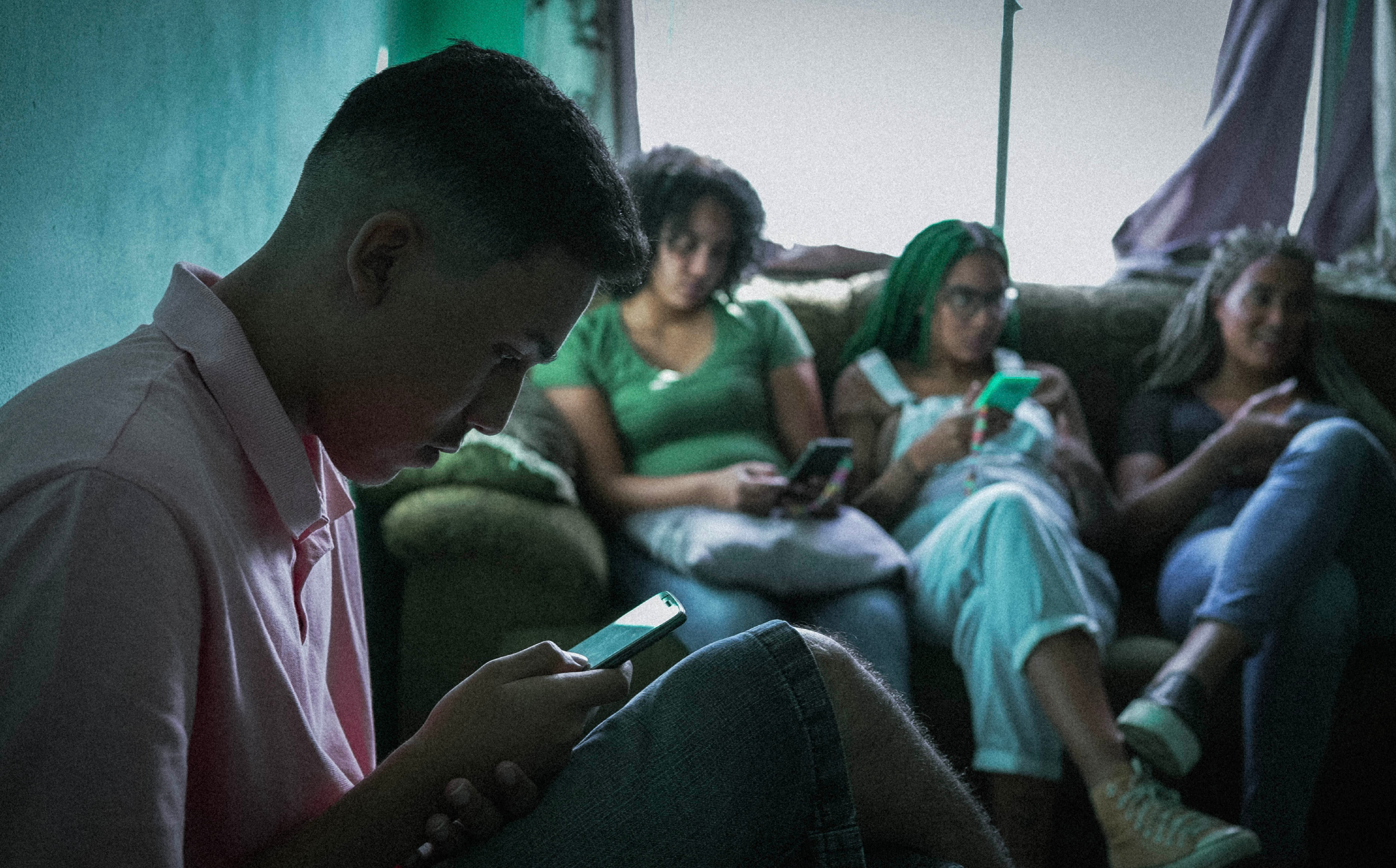
A revolution is underway to save childhood from the tyranny of the smartphone as school phone bans have swept across the United States and the globe over the last few years. The vast majority of states have passed laws limiting phone use in the classroom, and 18 states plus Washington, D.C. have enacted full “bell-to-bell” bans. Momentum is growing to take back childhood from the virtual world.
But not all parents are enthusiastic. Despite the proven success of phone bans in improving academic outcomes, test scores, and mental health, there are still parents pushing back, insisting their children need to have access to a phone or a smartwatch during the school day.
Given the evidence, why would parents object? Some might argue they need to reach their child in an emergency. Others object for convenience, wanting to text their kids as needed for various reasons. But perhaps there is a deeper, unspoken reason behind these concerns.
A recent survey found that the average American adult spends five hours and 16 minutes per day on their phone. That equates to 80 days a year. Nearly half of the surveyed adults said they’re addicted to their devices. Another survey found that on average, Americans check their phones 186 times a day. A majority use it while they watch TV (87%) or eat dinner (56%), and 75% would be uncomfortable leaving home without it. The reality is that most adults are constantly tethered to our phones—no wonder some are uncomfortable with depriving their children of the same privilege.
Despite most of us feeling that we are on our phones too much, we as adults struggle to effectively say “no.” Smartphones offer convenience, instant access to information, the ability to connect and communicate, and an app for every need—health tracking, banks, airlines, parking, restaurants, rewards programs, Uber, and so much more. Many phone activities are highly enjoyable and so we are happy to operate at a less-than-optimal level in exchange for the ease and comfort they provide. The short-term gains are obvious; the longer-term costs to our well-being less so.
The widespread evidence that phone bans are beneficial for children indicates that limiting smartphone access would similarly benefit adults. This leads to a kind of cognitive dissonance where parents are aware of the addictive pull of the phone and its detriments but continue to use it anyway, and in some cases that inner tension may lead them to resist phone bans for their kids as well.
One way to resolve this tension, rather than giving in, may be to apply the logic behind phone bans to ourselves.
The Hidden Costs of Smartphone Use
School phone bans work. A 2024 study of middle schools in Norway found that banning smartphones significantly decreased doctors’ visits for psychological symptoms and diseases among girls, reduced bullying among both boys and girls, and improved grade point averages and test scores.
A similar study in Britain found that in secondary schools with effective bans (phones handed in or in lockers for the day), national exam results were one to two grades higher than in schools with laxer policies. Most encouraging of all, the test score increase happened in spite of the fact that the schools with strong bans also tended to have more students from lower socioeconomic households.
One survey found that employees waste, on average, more than two hours per day using their phones to access digital content unrelated to their job. Other research shows a relationship between smartphone addiction and a decrease in workplace productivity due to time spent on the smartphone during work. These devices don’t just undermine student learning and academic outcomes, they also zap productivity for adults.
The positives of limiting devices could thus accrue to adults as well, though of course staying off your phone is much easier said than done. So how do we change? What can adults do to free ourselves from our smartphone addictions?
First, in order to make meaningful changes to any habit, we have to shift our cost-benefit analysis by realizing the hidden costs of inaction that we incur each day. From there, one can “test drive” a smartphone-free lifestyle to see the difference firsthand. And lastly, the test drive will hopefully lead us to take sustainable steps toward freedom from our devices, including potentially giving up the smartphone for good. I promise it’s not as crazy as it sounds.
While school phone bans are a growing phenomenon to be celebrated, the costs of smartphones on adult brains are worse, and come on faster, than you may realize. Within three months of obtaining a smartphone, users experience a significant decrease in mental arithmetic scores (indicating a reduction in their attentional capacity) and a significant increase in social conformity, as shown by experiments with 25-year-olds using randomized controlled trials.
In addition, brain scans show that heavy users have significantly reduced neural activity in their right prefrontal cortex, a condition also seen in ADHD that is linked with serious behavioral abnormalities such as impulsivity and poor attention span. A systematic review found several negative impacts on brain structure and function from compulsive smartphone use, including difficulties in language processing, emotional, auditory, and visual information processing, poor self-control, memory issues, and difficulty regulating impulses.
The brain area responsible for emotional processing, decisionmaking, and social behavior shows lower gray matter volume in heavy smartphone users, and that decrease in volume has been connected to several mental health conditions including addiction, anxiety disorders, and depression.
It is no exaggeration to say that smartphone use degrades adult brains in many of the same ways it impacts children. In fact, the mere presence of a smartphone is distracting even when we aren’t actively using it.
Another study divided college students into three groups and had each participant take the same two cognitive tests. None of the participants could use their phones during the tests, but each had the devices in a different position. The first group had their smartphones face down on their desks. The second group was allowed to have a phone in the room but out of sight. The third group couldn’t have phones in the room at all.
As you might expect, the first group, with the visual distraction of a phone right on their desks, scored significantly poorer relative to the the third group. But the surprising finding was that the second group did nearly as poorly as the first. Just having the phone physically near them was distracting enough to reduce their cognitive capacity.
Even doing “good” things on a smartphone aren’t that good for us. For example, it’s much worse to read on a smartphone than a paper book. Reading on a smartphone leads to overactivity in the prefrontal cortex that results in reduced comprehension. And the truth is that most adults spend much of their phone time on social media. Bingeing TikTok reels is especially hazardous to our well-being and can lead to brain rot. A meta-analysis of over 98,000 people across 71 studies found that the more short-form videos teens—and adults—watched, the more they struggled with attention, cognition, self-control, stress, and anxiety.
These problems are especially acute for parents. A growing body of “technoference” research shows that when parents stare at their phones, they are worse for it. They interact with their children less. They are less sensitive and responsive both verbally and nonverbally to their children’s bids for attention. When children do manage to interrupt their parents they are often met with hostility rather than engagement and affection. One study even found that parents are more likely to ignore children’s bids for attention when on a device than when reading a book or preparing a meal.
Clearly, kids and teens aren’t the only ones who need separation from the tyranny of smartphones. It’s time for us adults to take more extreme measures to put our own phones down.
Detoxing
For those who are theoretically on board but wondering: can I live without my smartphone? The answer is you have to actually try it out for yourself. Dr. Anna Lembke explains in her book, Dopamine Nation, that most of us can’t see the full extent of our addictions while we’re still using. “High-dopamine substances and behaviors [including smartphones] cloud our ability to accurately assess cause and effect,” she says.
Lembke’s recommendation: abstinence. We have to stop completely for a period of time to see the true cause and effect. Lembke explains that at least a month of dopamine fasting is necessary to free us from addiction.
And addiction is the proper word when it comes to smartphones. They are like a digital drug, activating the same reward pathways as alcohol and illicit substances. Unless we start thinking of digital media this way, we won’t appreciate the extent to which it robs us of our agency.
I’m sure you’re skeptical about the feasibility of giving up your smartphone. That’s fine. But try it out for a month and see how it goes. Pick a day to start and then do it. Cut off access. Get a dumb phone. Make a plan and stick to it. I can tell you from personal experience that setting up a dumb phone was not as hard as I expected. There are programs that make it easy to transfer all your contacts. And you can also keep your old smartphone, with everything still on it, if you decide to switch back after 30 days.
The reality is that apps designed to limit screen time are often ineffective at permanently changing habits because users frequently ignore, bypass, or reset limits. Screen-time management apps often fail to overcome the inherent addictive, engagement-first design. Every swipe on your phone or new notification you receive provides a burst of dopamine, a neurotransmitter that releases pleasure into the brain, similar to addictive substances.
Prolonged consumption of high-dopamine substances or activities leads to a dopamine deficit state in the brain, which means a decreased sensitivity to natural rewards. In effect, we become desensitized to real-world pleasures. The good news is that by taking a break, we can readapt and reestablish our baseline homeostasis to a normal level. Once our baseline stabilizes we are able to take pleasure in everyday rewards again.
Studies also confirm that digital detoxes work. In one recent study, adults who blocked internet access on their phones (making it a non-smartphone) for just two weeks reported significant improvements on several metrics. In fact, 91% felt better afterward. These are the same types of positive results we are now seeing in our phone-free schools.
Taking a Break
If you are still unsure of committing to a month-long detox or don’t think you could sustain smartphone abstinence over the long term, start by taking smaller steps first, like committing to one device-free day a week, maybe Saturday or Sunday. This means turning your device off or leaving it in a phone box for the entire day. Use this time to rest and relax and be with your family rather than being distracted by texts and notifications that induce anxiety and pull you away.
One famous proponent of this practice was Charlie Kirk, who managed to spend 24 phone-free hours every weekend while managing a $50 million organization and 300 employees. He would turn off his phone and put it in a drawer on Friday night, and wouldn’t turn it back on until Saturday night. If he could do it, surely others can follow his example.
Practically speaking, if you need to leave the house for an extended period of time and must have a phone for emergencies, you can bring it, but turn off notifications and leave it in the car.
I recommend also committing to other daily device-free times, like family dinner. Leave your phones off of your person in a phone box. My family also often takes device-free walks after dinner, where we leave our phones at home and go for a walk in our neighborhood with our kids on bikes and scooters. Don’t sleep next to your phone. Let the bedroom be a phone-free zone and leave it downstairs while using an old-fashioned alarm clock instead. Another practical tool that makes smartphone-free time more manageable is installing a landline phone in your house. Newer landline options like the Tin Can or Family Phone are great.
Taking a break echoes the approach of school phone bans. Having children and teens take a complete break from the phone during the set period of the school day, when their attention and focus is at a premium, is extremely beneficial.
The smartphone detox study mentioned above found that even those adults who did a partial detox experienced improvements in mental health, well-being, or attention. Taking steps to establish device-free times and rhythms in your week can still do a lot to improve your health.
Taking the analog route when possible can also help you spend more time free of devices and include your children and family members in the practice. Hang a family calendar on the wall. Use a notepad and pen to jot notes to yourself or place to-do lists in your purse or on the counter. Make paper grocery lists. Get an alarm clock for each bedroom. Wear a watch so that you don’t need your phone to check the time. Buy a family camera for pictures and videos so your phone isn’t your camera. And on that note, fight the urge to take pictures of everything.
The Photo Habit
Instead of watching your children through a phone camera, enjoy the moment in real life and create and store the memory in your brain. When we record everything, we outsource our memory to the phone, experiencing less as we record more.
Psychologist Linda Henkel, who researches human memory at Fairfield University in Connecticut, began an experiment by sending groups of students to the university’s art museum. The students observed some objects and photographed others. Then, back at the laboratory, they were given a memory test. Henkel found what she called a “photo-taking impairment effect,” in which students remembered fewer details about the objects they photographed than the ones they simply looked at.
Henkel says her students’ memories were impaired because relying on an external memory aid means you subconsciously count on the camera to remember the details for you. “Any time we ... count on these external memory devices, we’re taking away from the kind of mental cognitive processing that might help us actually remember that stuff on our own,” she explained. So leave your devices behind, take less photos and remember more.
Dumb Down Your Phone
After a detox, if you do return to your smartphone, consider ways of permanently dumbing it down in order to make it less distracting. This includes turning off notifications, hiding apps away in folders, and putting your phone in grayscale. Ruthlessly eliminate apps. Ask yourself: “Can I do this on my computer instead of my phone?” If so, delete it. Have your spouse or a friend be your password holder for settings so you can’t change them yourself in a moment of weakness.
Apps like Freedom or tools like the Brick can also help block access to distracting apps or websites, or even the entire internet, from your phone for periods of time. My husband leaves his iPhone in grayscale as a reminder that the phone isn’t real life. When he looks up at the world it is in vibrant color—this is what’s real.
Going Dumb for the Long Haul
Even these steps may not be enough to free you from the addictive digital pull. I found that to be the case myself.
After a year of trying different techniques to dumb down my smartphone, I found it just wasn’t working out for me. And I can say from experience that it’s not as crazy as it sounds to give up your smartphone entirely (or give it up as your personal phone if you need to maintain a smartphone for work) and adopt one of the many non-smartphone alternatives available today. The final step on the path toward smartphone freedom is to give it up for good.
For me, the research I did on the addictiveness of smartphones and the negative impacts of devices on parenting kept leading me to ask: Would I be a better mom to my child without a smartphone? Increasingly, my answer was “yes,” but it still felt unrealistic.
Then I went and spoke to a group of college students who had all given up their smartphones for dumb alternatives as part of an “Unplugged” scholarship at their school. Their stories were inspiring. They shared how their attention spans had come back, how they were happier, how they spent more time with friends and focused better in school.
I was there to give a talk on the dangers of smartphones and social media, and so they asked me, do you have a smartphone? With embarrassment, I sheepishly answered “yes.” I asked one of the students how he knew he was ready to give up his phone and he said, “I wasn’t. I was addicted to it up to the moment I gave it up.” He rejected the idea that people would ever be “ready” to give a smartphone up and viewed it instead as something you had to choose to do in order to free yourself of its power.
As Dr. Lembke explains, “high-dopamine substances and behaviors cloud our ability to accurately assess cause and effect.” We have to choose to first free ourselves before we can see clearly the negative impacts we were experiencing and the positives of going without.
That conversation was the moment I changed my mind. I had to at least try it out and see if there was a difference for myself. In April of 2023, I gave up my smartphone and I’ve never looked back. It’s been three years now.
There were of course pain points in the initial transition, and it is certainly not more convenient per se. But it is amazing to see the freedom this decision has given me and the difference it makes not to have the temptation of the online world in my pocket, especially while I’m with my children. No longer do I have to fight myself (which was exhausting—no one can exercise perfect self-control, you get worn down by the end of the day). The temptation is simply gone.
It’s amazing now what I observe and notice and pay attention to in the world while out with my kids because I am not looking down. Letting go of my smartphone has slowed down my brain and my life. I feel unhurried and less distracted, more focused and happier.
In case you’re curious, I use a Wisephone. It has all the practical tools that I need like Google Maps, Uber, Venmo, my bank app, ParkMobile, a camera, even Spotify and messaging apps like Signal and WhatsApp, but no internet browser, no social media, no games. Only tools you choose to use intentionally are available (no one is going to binge on Venmo or ParkMobile). The interface is simple and boring, and I still turn off notifications from almost everything save for text messages.
I am not perfect, and thoughts about whose email may be waiting in my computer inbox or that I need to order new socks and gloves for my toddlers when I get back home can still intrude. But I am getting better at pushing them away and living in the moment. I can honestly say I wouldn’t be as present with my children or able to sustain my attention as long on books or other real-life activities if I hadn’t given up my smartphone for good.
There is a growing consensus that smartphones are bad for us and our children, but we still struggle to control them because they offer convenience, connection, and entertainment—at the root they are appealing and addicting to our brains.
As we wrestle with these internal tensions between the convenience of the phone and the desire we as parents have to be in touch with our children, it’s clear that the solution is not in placing a phone in our kids’ hands throughout the day, but rather in pushing ourselves to be as phone-free as possible alongside them. School phone bans are best for our kids, and as adults it is time for us too to join the growing anti-smartphone revolution ourselves.
 | A guest post by
|
I've talked about this in my homeschool technology seminars for years. The parents come to hear how to limit technology with their kids. They want filter software and strategies for offline socialization. I give that to them. but then I tell them the best way to get buy-in from their teens is to adopt the same rules for themselves: time limits, no phones from 8P-7A, etc... Then it's not a "these things are bad for you because you're a kid" but it's "these things are bad, period."
We have a reproduction candlestick phone with an attached bluetooth device, so you can link your cell phone to the landline phone and park it on the shelf, while still being able to receive calls at home.