


Mark Carney is quite the leader. Frustrated by U.S. demands for participation in a North American trading block, which would purportedly sacrifice too much of Canada’s sovereign right to make its own decisions about trading relationships, Carney is pivoting instead to… joining the EU? Perhaps he is not familiar with the premise of the EU, and is just hoping to skip passport control on his frequent jaunts across the pond?
In his speech to the European Parliament yesterday, the Canadian prime minister acknowledged that “sovereignty and openness are now difficult to reconcile,” but also argued that “deepening and widening our relationship will strengthen our sovereignty.” This seems… undertheorized. The Wall Street Journal’s overview of the bizarre gambit captures its incoherence well:
“Wouldn’t it be lovely if Canada was the 28th state of the European Union rather than the 51st state of the United States?” asked Finnish President Alexander Stubb, who speaks regularly with Carney.
I have been sympathetic to Canadian complaints that President Trump’s constant efforts to insult their country are inappropriate and unhelpful. At the same time, Carney’s determination to elevate himself to some anti-Trump hero of the globalist pearl-clutchers is at this point obviously causing far more harm to our northern friends.
As the Financial Times, which rather better understands the EU, reports on consecutive days: EU capitals rebuff Mark Carney’s ‘unique alliance’ with Canada and Why Mark Carney’s romance with Europe can only go so far.
Canada also faces the awkward problem that 70% of its exports go to the United States and only 6% go to the EU, notes Peter Harrell. And it’s unclear what Canada could hope to gain anyway, notes Nicholas Phillips. For instance, “there’s nothing to gain on competitiveness: regulatory alignment can only go in one direction, toward the EU, which is a proven formula for economic stagnation.”
And then there’s the question of who would ever look to the EU as a functional example of strengthened sovereignty through deeper and wider relationships. Its inability to address the China wave now crushing its own industrial base is a glaring weakness (and contrasts helpfully with the sort of robust confrontation the Trump administration is insisting on for USMCA).
Speaking of which: Imports of Chinese autos into Europe continue to skyrocket. The latest plan? EU asks China to voluntarily limit car exports (Financial Times). “Brussels is seeking a commitment from Beijing to restrict sales of China-made hybrid vehicles to about 15 per cent of the EU market compared with more than a third today.” Good luck. Meanwhile, in the real world, “President Xi has called for China to make its advanced manufacturing sector ‘bigger and stronger’ and strengthen control over key industrial supply chains, official news agency Xinhua said Thursday” (Reuters). Oh, and Michael Pettis points out that “China has unveiled a sweeping five-year plan for its electronic information manufacturing sector, aiming to boost the industry’s annual revenue beyond 30 trillion yuan ($4.5 trillion) by 2030.” (For reference, the combined value of the entire global consumer electronics and semiconductor markets is today around $3 trillion.)
There is no economic future for Canada in a free-trade zone unable to protect itself from China, which will in turn mean its own goods will face increasingly robust exclusion from the American market. The longer it pretends otherwise, the less leverage it will have when it comes back to the USMCA table, and the funnier President Trump’s jokes will become.
In other USMCA news, U.S. Pressures Mexico to Box Out China’s AI Hardware Exports (Wall Street Journal). “Mexico and the U.S. are discussing the so-called rules of origin proposal as part of negotiations around revising the U.S.-Mexico-Canada Agreement… In addition to AI equipment, the U.S. could also propose rules to lower Chinese content and increase North American components for a litany of consumer products, such as medical equipment. While cars, auto parts and high-end computer chips are subject to tariffs from the Trump administration, more commonplace semiconductors used in the AI buildout can enter the U.S. largely tariff-free.”
Keeping Chinese supply chains out of North America is the core of the USMCA renegotiation and, further underscoring Canada’s strangely unreasonable position, Mexico seems perfectly comfortable going along with it. Peter Harrell has more on the importance of reworking rules of origin. I also wrote about this in the Financial Times last year: “A USMCA premised on balanced trade and the exclusion of non-market economies would represent a revolution in trade law and international relations”
GOOD, BAD, and UGLY READS FOR YOUR WEEKEND
Good: The Federal Government Subsidizes Professional Daycare. It’s Time To Fund The Family. (Leah Sargeant in The Daily Wire.)
Following nicely on last week’s discussion in TRE about the Day Care Dustup, Sargeant writes: “In 2022, Governor Spencer Cox of Utah petitioned the Biden administration for exactly this kind of flexibility. Cox cited surveys of Utah residents that found 81% of them preferred to have a child too young for school watched by a parent or guardian. Cox was frustrated that a program intended to help poor families rise made that help contingent on overriding their better judgment about their children’s needs.”
Bad: Republicans’ Familiar Fight Over Big Government (Matthew Continetti in the Wall Street Journal.)
Continetti’s framing of the day care debate is another reminder of why the Wall Street Journal’s editorial page has ceased to be a serious source of policy commentary: “Limited-government conservatives point out the potential cost of the program, its perverse incentives (that $9,000 vanishes as soon as dad gets a raise) and its reliance on social engineering.”
The potential cost of the program is… $0. There is no proposal to appropriate any additional funding.
The perverse incentives… already exist in the program, which, again, is not being expanded. The description of the perverse incentives is also incorrect. The $9,000 does not vanish as soon as dad gets a raise.
The social engineering is… reduced if the program becomes more neutral in its treatment of different family arrangements. Just imagine the counterfactual. If existing law made both family structures eligible and someone came along and said “we should provide subsidies only to people who put their children in paid day care,” would that be less social engineering?
Continetti quotes Doug Holtz-Eakin making the same mistake: “Who works or does not work; who takes care of a child; or who takes a child to childcare is the family’s business. It is certainly not the place of the federal government to put its thumb on the scale using taxpayer dollars.” Which policy puts a thumb on the scale—the one that makes eligibility dependent on who works or does not work and who takes care of a child, or the one that does not?
(And of course, note that these same conservatives are fine with “social engineering” and “who works or does not work” when the subject is work requirements. It’s hard to make sense of these objections, except as opposition to the idea of providing support to families raising kids. That’s an objection they’re entitled to have… but perhaps not an effective one. They seem awfully determined not to focus on it.)
Ugly: Worried About Your College Kid? Now You Can Hire a Local Mom. (New York Times). Submitted without comment:
“Sometimes people think that we’re coddling students,” Horwitz said, “and I just don’t think that anything could be further from the truth. … Horwitz, for her part, brings students balloons on their birthdays and chicken soup when they’re sick, sits with them in the emergency room and picks up their prescriptions if they’re busy. She bakes homemade challah, coordinates with the bedbug exterminator, texts photos and updates to faraway parents and doles out recommendations on the best local doctors and landlords.
HERE COMES XI
President Xi Jinping arrives in Washington next week for yet another summit with President Trump. On the agenda? Who knows. Will anything be accomplished? Probably not. And here’s hoping not. To quote the conclusion of my Financial Times column on the May summit: “The best plausible result is simply no deal, beyond efforts to smooth any decoupling that might proceed, giving the US time to come to its own terms with the irreconcilable differences of its great-power competitor. Only then can we hope to succeed in one of the decoupled spheres towards which the world now hurtles, whether we like it or not.”
Perhaps the biggest question on the table is how long the two sides will extend their “truth,” with the U.S. postponing its blacklisting of Chinese firms and China promising to keep supplying critical minerals (a promise it’s already not keeping). The shorter the truce the better, lest U.S. firms relax on getting alternative sources of critical minerals online as quickly as possible.
Discouragingly, President Trump continues to insist on floating the idea of having Chinese automakers set up plants in the United States. This week he told Fox News, “if China wanted to come in, and open a plant to build their cars here, I’d be okay with it — Japan does it — but they hire our people. The big thing is they hire our people, they use our people.” Encouragingly, his cabinet sees things differently.
As noted last week, Transportation Secretary Sean Duffy has just sent an angry letter to Ford, warning it against “intertwining its future with Chinese state-backed enterprises” and choosing “to deepen operational dependencies on strategic competitors.” Those warnings would apply to welcoming Chinese manufacturers into the U.S. market.
Earlier this year, Treasury Secretary Scott Bessent discussed the issue at a Semafor event:
Ben Smith: “There are people in China who would like to have one of the outcomes of these talks be some form of joint-venture, BYD factory setting up in the United States. Is that on the table?”
Scott Bessent: “I think we’re going to maybe end up with two boards, a board of trade and maybe a board of investment. I’m not sure — we have a 100% tariff on Chinese EVs, and there is a rule to do with autonomous-driving cars that they cannot have foreign components or Chinese components.”
Ben Smith: “Just to be clear, you don’t like the idea of a BYD factory in the US: American workers, Chinese investment?”
Scott Bessent: “There are things; I would think maybe the auto-industry isn’t one of them…”
While Ford pursues its China partnership, General Motors is working on developing its own batteries and supply chains:
“We’re developing a supply chain such that, two years from now, three years from now, it will be domestic,” Kurt Kelty, GM vice president of battery and sustainability, told CNBC during an exclusive interview. “That’s what we’re aiming for — when we get into market, we’ve got a domestic source for that.”
And blueberry grower Driscoll’s is getting its own lesson in what happens when you go to China. The Wall Street Journal tells the all-too-familiar tale:
About 15 years ago, executives from U.S. fruit grower Driscoll’s went to China with a goal of turning blueberries into that country’s next big food trend. The California company dispatched one of its experts to scout farmland in southwestern China’s Yunnan province, contracted with global blueberry-genetics firms to lock up the best varieties and brought in high-tech growing technologies to mass produce a fruit few Chinese people then ate. By 2020, it was cranking out thousands of tons of blueberries for Chinese supermarkets. Then it became the latest U.S. company to encounter the buzzsaw of Chinese competition.
As tales of blueberry fortunes spread, Chinese entrepreneurs rapidly built farms of their own. They adopted high-tech growing techniques similar to Driscoll’s, even allegedly copying greenhouse designs used by farmers growing for Driscoll’s. They also swiped the company’s patent-protected varieties, a Chinese court has ruled. State banks fed the rush, offering a special category of loans for blueberry growers.
Production in China has shot up 25-fold since 2010. In 2021, China overtook the U.S. as the world’s top blueberry grower, and by 2025 its annual production was double what it was in the U.S. For Chinese consumers, it was a blueberry bonanza. Prices dropped so low—often $3 or less for a 9-ounce container—that state media trumpeted an era of “blueberry freedom,” in which even ordinary people can gorge on a once-exotic fruit. For just about everyone in the blueberry business, though, it has been a knife fight, plagued by intellectual-property theft and tanking profits.
It’s OK, though. China may do that on a truly critical product like blueberries, but I’m sure they want Jensen Huang to succeed with advanced AI chips in their market for as long as possible.
But making Jensen look serious by comparison, China’s trade diplomats are complaining at the WTO that departing from its most-favored nation principles would lead to “power-based trade relations” and protectionism.
And a final item: Congress just passed the first new tariff authority since the 1970s, giving the president authority to level tariffs on importers of Russian oil and gas (Wall Street Journal). Guess who, per PunchBowl’s Andrew Desiderio, is the number one target? China.
REPLACING CHINA
New data from the JPMorganChase Institute shows that small- and mid-sized firms have shifted their mix of spend from international to domestic payments since imposition of tariffs last year. One interesting question: to what extent does declining international spend reflect a tariff-induced shift toward domestic sources of supply, and to what extent does it reflect declining prices on imports as foreign sellers absorb part of the tariff cost? Presumably, the answer to some extent is “both.”
The industrial policy drumbeat proceeds apace.
Former Australian Prime Minister Scott Morrison writes in the Wall Street Journal that China Overplayed Its Hand on Critical Minerals:
The virtue of the Trump administration’s measures is that they can’t be easily reversed by China’s market manipulation. Floor price and durable offtake agreements boost resilience and provide guardrails for Western participants and tie in end users. These measures change the economics, enabling Western competitors to challenge China’s dominance. Counterintuitively, we have China to thank for it.
Progress: Elmet Group wins $2 billion US tungsten stockpile contract (Reuters). The U.S. takes a particularly large equity stake of nearly 20%.
Progress: US aims to issue deep-sea mining permits within months, Interior Secretary Burgum says (Reuters).
Though not progress everywhere. On the defense front, Pentagon Sees Strategic Inventory Munitions Shortfalls, IG Says (Bloomberg). And, the Iran war is raising doubts over Trump’s “America First” foreign investment goal (Peterson Institute). Pledges from Gulf states represented the majority of the investment commitments secured by the Trump administration in its first year. Enthusiasm and capacity for following through is, er, waning.
AI AND THE LABOR MARKET
Who wants to see a robot pick cherry tomatoes? That would replace “jobs Americans won’t do,” of course. Nonetheless, More U.S. Workers Fear Losing Their Jobs to Technology according to Gallup. The share has has risen substantially, to more than 25%, in the past year.
This is presumably about AI, and there the Center for State Labor Innovation had a very good piece by MIT’s Thomas Kochan on potential avenues for worker influence on AI deployment. This is a theme I emphasized in my recent New York Times essay, arguing:
As for the threat these models pose to the job market, greater worker power is the strongest defense. So long as management alone gets to choose the tools it deploys, it will always prefer those that decrease or eliminate the need for actual human employees, with all their tiresome expectations of living wages and basic respect and so on, or that at least minimize their autonomy and keep them closely monitored. But if workers must also approve the use of these models, that equation would flip on its head. Management would have to find approaches that make workers’ jobs better; A.I. companies would have to develop tools that they could expect workers to approve.
That essay also discussed legal liability for A.I. labs, which is now squarely on the front burner. I wrote:
Lawmakers at both the state and federal levels should make the developers and deployers of A.I. strictly liable for harms that they cause. Where so-called agentic A.I. is acting autonomously, it should be treated as an agent of whoever provides and whoever controls it, leaving them liable just as employers are for their employees, including criminally liable if the agents commit crimes. The concept of an “attractive nuisance” should also apply.
Andrew Ross Sorkin headlines today’s DealBook, The A.I. Industry’s New Worry: ‘Liability Exposure’. Yeah, no kidding. Sorkin focuses on tort liability if models run amok. That’s an obvious worry.
But the labs may already be on the hook for potentially trillions of dollars of liability, it seems to me, given the harm they are already causing. One good example is the damage to public education, where effects of the rampant cheating and cognitive offloading are undermining schools in ways that may make COVID look like child’s play. Look at what’s happening even at an elite and tech-capable university like MIT, which just published an in-depth report that Alex Veremeyenko summarizes:
Study groups are disappearing. Office hours are emptying out. Problem sets and take-home exams no longer prove anything, because AI can produce credible solutions to almost any written assignment in the undergraduate curriculum. Students who lean on chatbots lose mastery and confidence, and some slip into what the report calls cognitive surrender, reaching for AI at the first hint of struggle.
Meanwhile, the hacking capabilities of the models now being released are imposing enormous costs on all of the institutions across society that must upgrade their own tools and revise their own processes in response. Who should pay for that? So far, the labs are imposing far more cost on society than they are providing benefit. Future uses of the technology will hopefully provide benefits far in excess of costs, but that is no defense against the costs in the meantime. The labs need to proceed in a way that avoids those costs, or else expect that the first claim on that future wealth will go to those who are bearing them.
YOUR BAD TWEET OF THE WEEK
It would be too easy to just pick a David Sacks tweet every week, or a Jensen Huang quote every week, but seeing as we’re already talking about AI liability, and we have David Sacks quoting Jensen Huang, let’s take a moment to appreciate:

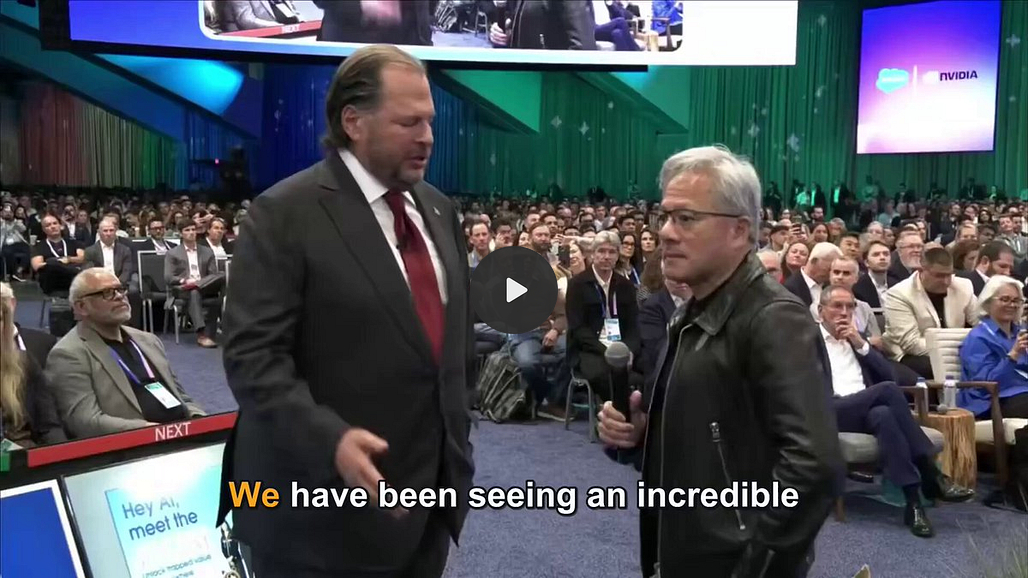
It’s not clear if Jensen and David are saying that robust tort liability solves for the market failure, or that there is no market failure and the profit-maximizing strategy is always to prioritize safety. The latter would be… untrue. The former might be true in theory, but it’s safe to assume that if anyone ever tries to hold these companies liable, the same tech leaders will be arguing that’s unfair. Tech leaders like David Sacks. Who rejects tort liability for Meta: “I think in the case of social networking, it’s much more unclear what the harms are and what the benefits are. And I think it’s much more subjective and it’s much more of a personal choice for adults and also for parents. … You said, the harms of this are immense and well known and understood. If that’s the case, then let’s just ban it for under 13 or under 16 or whatever it is.” So no tort liability, or if there would be tort liability then we need new laws and regulations.
It’s quite the shell game: oppose regulation because the market will fix it, or count on liability to fix the market; then when that doesn’t work, oppose the liability and say we should have regulated.
Enjoy the weekend!
Understandably, I am not an economist. But there is something fundamental about integrity, truth, service and compassion…that defy the” bottom line” While I can’t argue policy, I will always support the man or woman who is in the crucible trying to do what is right.
Perhaps they don't want to become a part of a corrupt, capricious, incompetent country that is dismantling its democracy, supporting Russia against Ukraine, thinking it can get its way by bullying its former allies, and demonstrating its much vaunted armed forces to be a paper tiger in Iran. The EU has many, many faults but it is far superior to the US at the moment. I can't decide whether Commonplace is propaganda for MAGA trying to give it a veneer of intellectual credibility or just incredibly naive about the depths of Trump's corruption and the contempt the rest of the world now has for the US.