


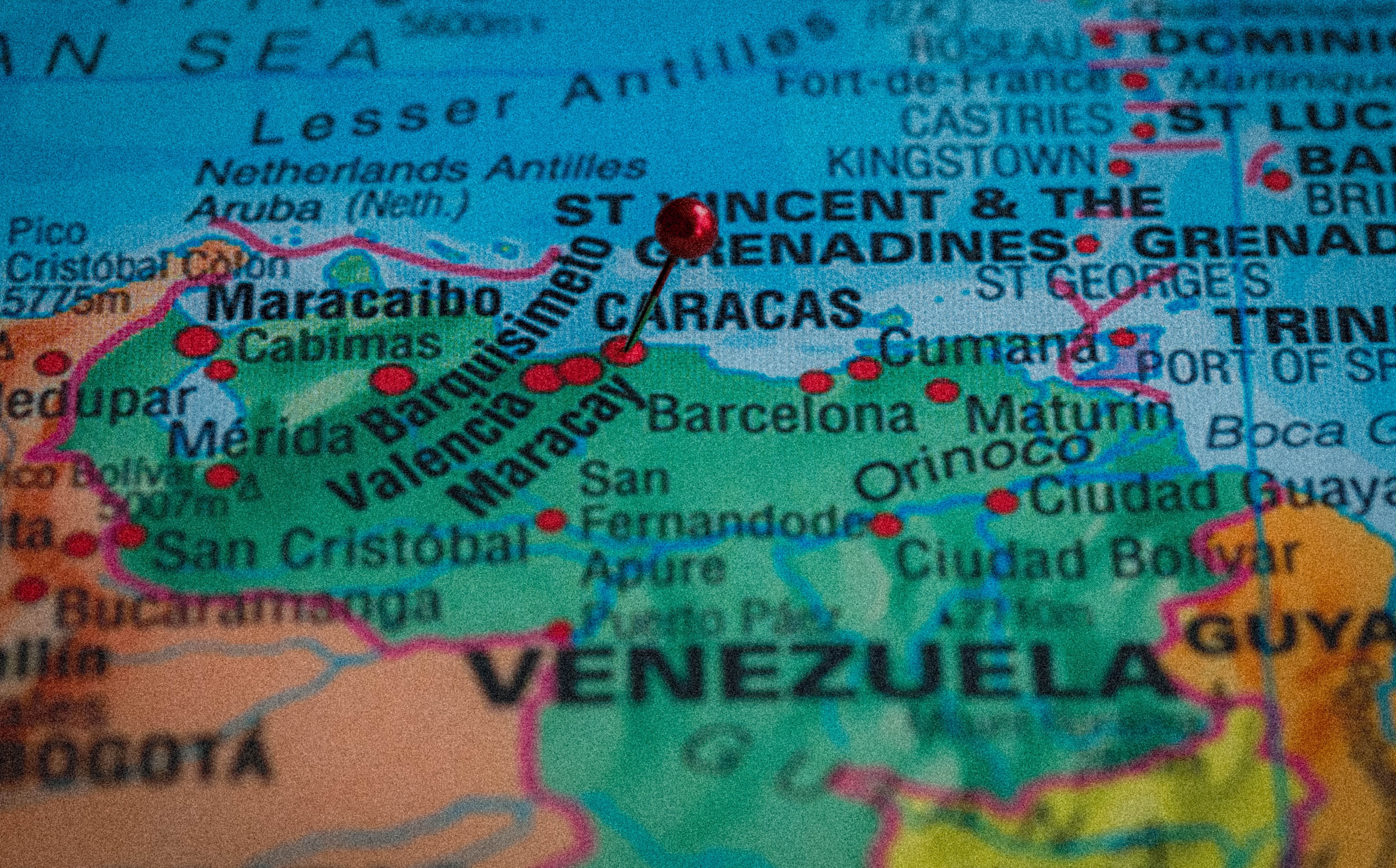
Earlier this month, the New York Times published a remarkable article describing how the United States has been running Venezuela as a de facto colony, with Secretary of State Marco Rubio playing the role of Roman proconsul. Per the Times:
Mr. Rubio now effectively controls Venezuela’s finances, the distribution of its natural resources, and its government. … The direct control over Venezuela’s public revenues, in particular, distinguishes Washington’s influence there from most other countries beholden to its military and financial might.
The U.S. Treasury receives the revenue from most of Venezuela’s exports, then disburses it to Venezuela through the country’s banking system, a relationship akin to parents handing out allowances to children. Mr. Rubio and his team set the conditions on what that money can be spent on, and by whom.
Nor is this control limited to purse strings. The U.S. reviews appointments to key government positions and writes the rules for Venezuela’s economy; we tell their high officials when they can appear in public, with whom they can meet, and even what they can post online.
The last time the United States exercised such direct, comprehensive power over the destiny of a foreign people was during the early days of the Iraq War. But even the occupation of Iraq, as sweeping and viceregal as it was, had a timeframe baked in (L. Paul Bremer’s Coalition Provisional Authority gave way to a transitional Iraqi government after just over a year). One must go back to the turn of the twentieth century to find a true parallel.
In Venezuela today, as in the Philippines following the Spanish-American War, there is no real indication of how long America will be running the show. The Trump administration has spoken vaguely of a three-phase plan to restore the country to its citizens’ control, without offering any details on timing and procedure. More than six months after former Venezuelan President Nicolás Maduro’s removal, no date for a new election has been set. President Trump himself has said it may be “years” before we hand back the reins to Caracas.
Despite the unprecedented nature of this arrangement, it has so far failed to raise much of a stir among voters. One reason is no doubt the relentless flood of events. Since Operation Absolute Resolve went down in the wee hours of January 3, the United States has gone to war with Iran, negotiated a ceasefire, and gone to war with Iran again. We’ve seen a partial government shutdown, the first crewed deep-space mission since the 1970s, a World Cup, and countless mini-scandals (each of which might have, in more ordinary times, commanded a weeks-long news cycle of its own). Little wonder Venezuela is no longer top of mind.
Another explanation is that the material costs have been minimal, especially when compared to our ongoing Middle Eastern adventure. Controlling Venezuela, a country of 29 million souls, does not require an army of occupation, nor are we on the hook to fund a massive reconstruction effort (although the recent earthquake has led us to ship out more aid). In fact, by taking over management of Venezuela’s large oil reserves—and, apparently, spiriting away some of its gold—we may well stay in the black.
But America has not gotten off scot-free. Rather, the costs we are incurring have less to do with our pocketbooks and more with our understanding of what it means to be citizens of a free republic.
The Law of the Jungle
Consider the justification for our domination of Venezuela.
The seizure of Maduro, it may be recalled, was framed as a police action rather than an act of war. “This was a law enforcement operation,” United Nations Ambassador Mike Waltz told the UN Security Council shortly after the raid, “in furtherance of lawful indictments that have existed for decades. The United States arrested a narcotrafficker who is now going to stand trial in the United States in accordance with the rule of law for the crimes he’s committed against our people for 15 years.”
That initial rationale has all but disappeared. In May, the Justice Department quietly dropped a long-running investigation into acting Venezuelan President Delcy Rodríguez for her suspected involvement in the drug trade. Later, it was reported that Diosdado Cabello—the ruthless head of Venezuela’s internal security, who was indicted with Maduro for narcotrafficking and has an enormous bounty on his head—has become a close U.S. partner and is helping us manage his country. And other than the odd offing of a cartel leader or boat sinking, the war on drugs is hard to discern as a driving force in America’s Venezuela policy (this is in one sense unsurprising, considering how exaggerated the narcotics threat from Venezuela was—though that’s a separate issue).
Other justifications have surfaced: development and democratization; keeping China, Russia, and even Iran out of the Western Hemisphere; recouping alleged losses taken by big U.S. oil companies. But they change with the day and the speaker, and often come across as slapdash, post hoc rationalizations.
What this increasingly resembles is main force, the law of the jungle. It is the strong doing what they will, and the weak enduring what they must.
Of course, there’s nothing new in the domineering application of American power, a temptation to which we often succumb. But there is something different about completely disregarding even the pretense of a consistent moral or legal rationale. As noted earlier, the assumption of outright control—not to mention the open exploitation of our vassal’s natural resources—goes far beyond our usual conduct.
One can argue about the strategic benefits of all this. But it is clear that there are ramifications for our republican institutions.
Republican Citizenship
In a healthy republic, we ask citizens to impose limits on their appetites and their interests, and we embrace those limits as in some sense defining us. The American system, rightly understood, does not have a universal ambit; our polity is made for, by, and of a particular people.
To play the game of empire is to cast aside those limits. It is to look far beyond our own political community, to prioritize aims other than the welfare of ourselves and our compatriots, and to enter a sphere of action in which the ordinary rules of ethics do not apply. It is, in other words, for the nation as a collective to act in a way that would be abhorrent for any of its individual members.
Indeed, it is worth asking a bit more pointedly how American imperium is being wielded in Venezuela today. The highest priority appears to be helping oil and mining companies get their cut of that country’s natural bounty. “The oil companies are going to go in,” Trump said the day after Absolute Resolve, “they’re going to spend money. We’re going to take back the oil that, frankly, we should have taken back a long time ago. A lot of money is coming out of the ground. We’re going to get reimbursed for all of that.”
He has been as good as his word. A flurry of energy and mineral agreements are clearing the way for U.S. companies to swoop in and rev up operations in earnest. This past week, the Financial Times reported that the Trump administration has collected over $13 billion from sales of Venezuelan oil so far, while providing next to no information on what it’s doing with the money.
The whole affair has a certain grubbiness, involving as it does the use of public power for private gain. Doling out another country’s mineral resources to the likes of Chevron and Exxon seems a far cry from the public-mindedness and rejection of narrow self-interest that authentic citizenship requires.
Membership in a republic—or at least, in our republic—also demands a single, common standard that applies equally to all. It seems to be the case, as U.S. diplomat and historian George Kennan once observed, that America “is really capable of knowing only the quantity which we call ‘citizen,’ that it debauches its own innermost nature when it tries to deal with the quantity called ‘subject.’”
Stray Truth Social posts aside, no one is seriously suggesting that we should put Venezuela on the road to statehood. So long as we continue to exercise functional sovereignty over their country, there are 29 million Venezuelans who could, with some justice, be called subjects.
The consequence is that American political power is being exercised on a basis other than the consent of the governed. In some sense, we are opening the door to multiple categories of civic personhood. This strikes at one of the core tenets of our political order: that we are an association of self-governing equals, forming a polity, to quote William Jennings Bryan, “in which every citizen is a sovereign, but no one cares to wear a crown.” (This is also why the presence in our country of large numbers of illegal immigrants is as much a political problem as an economic or social one.)
Then there’s the effect of this imperium on the officials who exercise it. Handing down orders to subjects is very different from governing free citizens, and a government which grows used to the ease of managing the former eventually comes to resent dealing with the difficulties of the latter. Already we catch glimpses of this; consider the administration’s reluctance to provide Congress or the public with information on the opaque funding mechanisms used to handle Venezuelan oil revenues—which themselves seem to subvert Congress’ constitutionally guaranteed power of the purse.
For all of these reasons, the rule of territories we do not intend to incorporate into the body politic on terms of equality has always been understood, at least by our most perceptive statesmen, as a danger to the nation’s republican character. “If there be one principle more deeply rooted than any other in the mind of every American,” Thomas Jefferson wrote in 1791, “it is that we should have nothing to do with conquest.”
Authentic citizenship demands a patriotism and a love of a particular community that is fundamentally incompatible with empire. It is high time we recognize this and end our imperial experiment in Venezuela.

Are the citizens of Venezuela better off under Maduro or Rubio, is the bottom line. Am betting if they were asked, the would overwhelming say the later is preferable. It is also, undoubtedly, temporary.
The temptation for many to assume every Trump action must be evil, is hard to overcome, but even a blind squirrel finds the occasional nut. Besides, Trump is a temporary President with nearly 75% of his terms behind him.
Many seem to forget, in the time it takes for a new born baby to legally buy a beer, Venezuela went from the wealthiest nation in South America, to citizens shedding, on average, 18lbs, due to a government caused starvation, not GLP1s.
Once well educated ,Venezuela has lacked a functioning school system for 2 decades. Millions of its' most ambitious and young, fled to the US. Maduro carried on Chavez's plunder. Maduro's death would have surely brought the 3rd dictator, in the unfortunate trilogy.
Venezuela, could be the sunnier, larger version of Norway, free and crazy wealthy. All, while helping stabilize neighboring nations and providing the world with energy, data centers will demand.
Much can still go wrong, but this isn't imperialism. This is a transition back to a free and prosperous nation. Venezuelans will return to rebuild their country and reclaim their oil wealth birthright. Venezuela has 2 potential leaders that appear to be honest, and enough eventual oil revenue to finance their return to stability, and then maintain it. There are more reasons to be hopeful then not, but change will take awhile.
This is all very high-minded, but it refuses to engage seriously with most pressing strategic challenge of Maduro's Venezuela, namely that it was well on its way to becoming a huge Chinese vassal state in the Western Hemisphere. Academic arguments and appeals to abstract principles for the most part, as here, fail to contend seriously with the very real threats this represents to long-term American interests.