

But Who Monitors the Baby Monitors?
Team Compass on the tragic trend toward toddler-tracking technology.

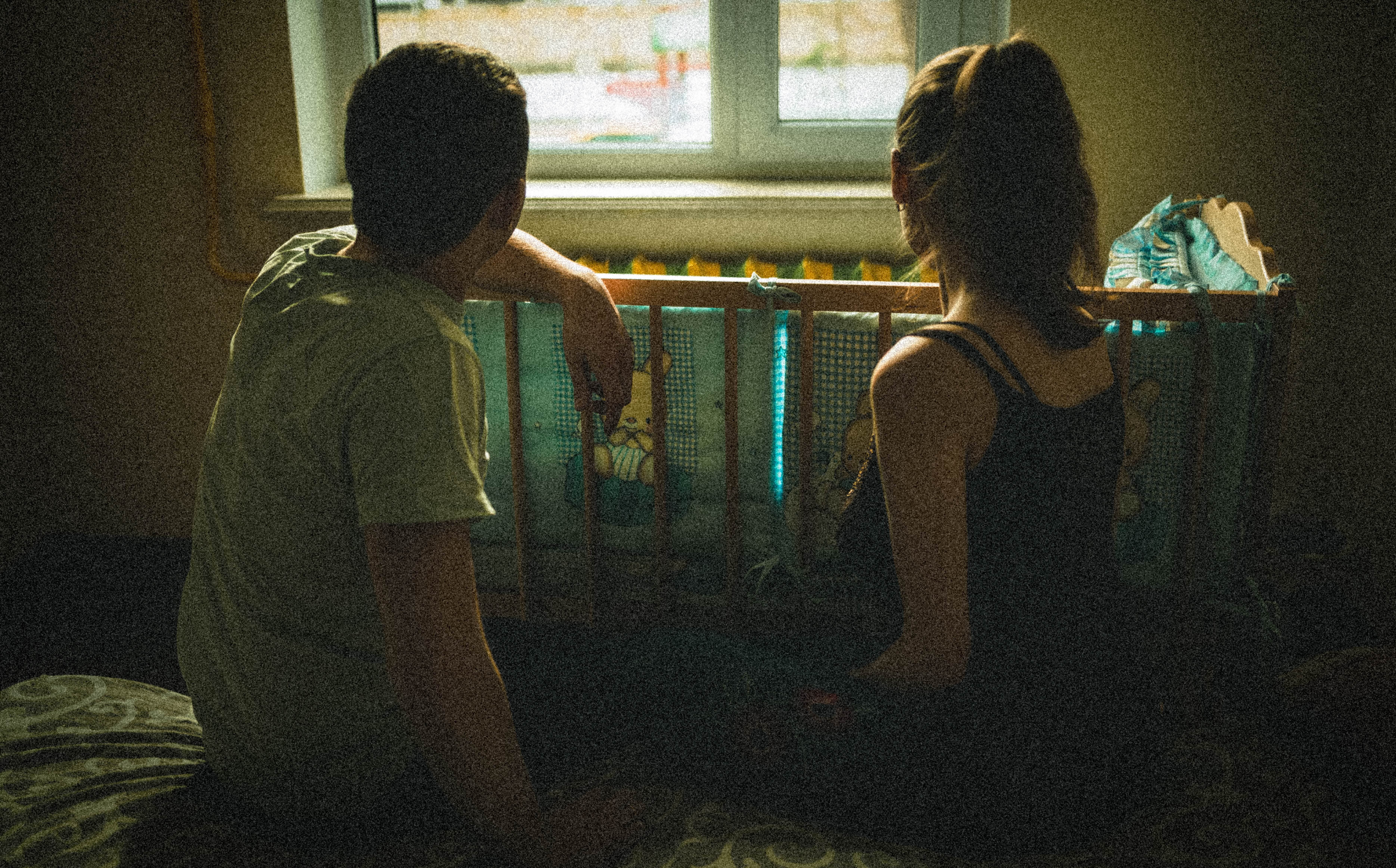
Perhaps the oddest thing about Sunday’s New York Times feature on the “Nanit” baby monitoring system was that all of its arguments in favor of the trend toward hypervigilant technology for babies kinda seemed more like arguments against. “I’ve gotten a little unnerved by how easy it’s become to outsource daily parenting decisions to technology,” writes Times reporter Sapna Maheshwari. “The downsides of this rush are manifest: sneakily high costs; the erosion of parents’ autonomy and self-confidence; giving sensitive data to corporations. But…” [Oh good, there’s a “but.”] “…there may be no stopping the growth of babytech as a category.”
The story’s simultaneous publication with the Wall Street Journal’s Helicopter Parents Are Co-Piloting Their Adult Children’s Careers (“mom and dad are calling up hiring managers, applying for jobs on their kid’s behalf, and even lurking just off-screen on Zoom calls”) provided a helpfully clarifying set of bookends for how a toxic approach to parenting in the professional class seems undoubtedly to be malforming a generation and, with its disproportionate influence on the wider culture, working directly against the commitment to “agency, competence, self-determination, and the use of technology to enrich lives rather than monetize their decay” that is fundamental to citizenship.
Nanit’s slogan, turn second-guessing into: I’ve got this, traffics nakedly in the double-lie that (a) parents are right to doubt their own abilities and live in fear, and (b) relying on obsessive monitoring and outsourced decision-making represents “getting it” and will make them feel better. The American Compass Slack is a pretty lively place most days, but it really springs into action at moments like this. We had enough to say that we wanted to share it with all of you, so here, a discussion with three members of the team currently raising young children.
Oren Cass: Let’s start with the Nanit story and your reactions to reading it. Do you use Nanit or Owlet or something similar? Do you know people who do? How much did the story feel true about the direction of parenting in professional America, as opposed to an exercise in finding something that would seem dramatic and get clicks?
Theresa Braid, Communications Director: I actually thought this piece captured a real parenting trend (unlike a lot of what passes muster in the NYT Style section). These devices, along with apps like Huckleberry, promise that with lots of data collection they will be able to offer an optimized parenting approach—sleep schedules, when and how to introduce solids, and so on. In my own parenting “peer group,” mostly D.C.-area professionals with one or two children, that optimization impulse is very strong.
We have two young kids (3 years old and 10 months old) and started with a closed-circuit dumb video monitor but often opt for just “keeping an ear out.” The original impulse to avoid higher tech was just budget related, because we didn’t want to pay $15 per month for my phone to tell me to put a kid to bed when he’s sleepy. But as I’ve grown more confident in my own parenting, I see how freeing it is to rely on your own instincts first. I feel badly for first-time parents who might be losing a chance to genuinely connect with their kids because they’re focused on doing things the way the app says to.
Abigail Ball, Executive Director: I do have a Nanit, but only use it as a baby monitor (albeit one that I can access with my phone, fancy!). I knew it came with some sort of band for tracking the baby’s breathing, but we never took it out of the package. We were also given an Owlet that I set up once and then promptly forgot about before ever putting it on my baby’s foot. (Editor’s note: if you are the one who gave Abby the Owlet, she wants you to know she really likes it.) All of which is to say I am precisely in the demographic for this stuff and have almost entirely opted out, without even fully realizing I was doing so.
That said, I know tons of moms who are obsessed with tracking. The Huckleberry app is super popular and lots of moms end up tracking every single nap, feed, and dirty diaper for months, for no clear reason. For first-time parents (read: moms), it’s a major source of anxiety at an already high-stress time. Only adding to this is that now every single nice baby-tech item has an AI component—if the reams of data isn’t enough to stare at in the middle of the night, you can now ask your white noise machine’s AI “sleep coach” for advice.
Haisten Willis, Commonplace Editor: I’ll have to defer to the moms on some of this (dads may be less likely to talk with each other about baby devices), but I’m not sure I know anyone other than Abby who has one of these things. My wife and I don’t use a baby monitor at all, instead simply waiting for the ancient call of a screaming one-year-old to let us know she has stopped sleeping. Regardless, the story feels true directionally, and not in a good direction, as just another outlet for everyone’s drive to find new ways to use data and phones and apps in everyday life. As an editor myself, it did also catch my eye that the Times quotes three different executives from the companies in question extolling their products before getting to the more skeptical pediatrician.
Oren: Haisten, no baby monitor, that’s impressive! Or extreme? Is that just because you never got around to it, or are you opposed on principle? And for everyone, to what extent do you see these choices as matters of cost and convenience versus holding broader and longer-term implications for both parents and kids?
Haisten: Yes indeed, no baby monitor. I’d like to think it’s extremely impressive rather than impressively extreme, but really we just found it extraneous. I think the number of children in the family makes a big difference. We have three now and are expecting our fourth. We used a low-tech baby monitor with our first child ten years ago, and maybe a little with our second. By the third we thought, “we can hear the baby crying, we don’t need this thing.” The Times writer said she bought a second Nanit for her second child, but how far would she take this? Would she continue to maintain this level of tracking for four separate children? That would be quite a bit of data to digest in any given night.
Theresa: Yes! I feel like the more kids you have, the less time you have to fiddle with tech. Also, the confidence level is just higher.
Abigail: See, I’m about a decade behind Haisten, and for new parents in our demographic it’s now just the default. The Instagram algorithm, the Babylist suggested purchases, and so on all show you the same products: Nanit baby monitor, Owlet sleep sock, Hatch sound machine, Huckleberry app. It’s a glide path. You have to choose intentionally to seek out a different option like a low-tech baby monitor and be able to answer the question implicit in the marketing: why don’t you want the best for your baby?
It creates a sense of hypervigilance, or even paranoia. The Times talked about how the first baby monitor was developed after the Lindberg baby kidnapping, which isn’t exactly the sort of thing the typical parent should be worrying about, then or now. But we are all living as if serious risks lurk around every corner. It’s impossible to disconnect and relax if you’re constantly checking that your baby is still breathing—and if you have the ability to check, why wouldn’t you? Don’t you want to be sure your baby is still breathing?
Partly, this is just a question of risk tolerance, and I think a big challenge is the fact that when we’re talking about little babies, even toddlers, it’s really hard to countenance any risk to their health or wellbeing. So, when given the chance to mitigate risk, parents tend to jump at it, without considering the downside. And those downsides are very, very real. These things mediate our relationships with our children in meaningful ways—if you’re talking to your kid through the baby monitor from the other side of the house, well, the medium is the message, I suppose.
Theresa: To Abby’s point, when my first kid was born, I was on Instagram and the feed relentlessly fed me information about products with the thinly veiled threat that the well-being of your child relied on the purchase of whatever garbage was on offer. I got sick of the algorithm and quit Instagram cold turkey before the birth of my second, which has been a hugely welcome reprieve from the horde of mom-fluencers.
To be clear: just because I don’t use a monitor all the time doesn’t mean I don’t sneak into the nursery a few times a night to check on my younger kid’s breathing. I think that’s just a mom habit as old as time. I would actually be interested in exploring what digitizing that experience—why creep into the bedroom if you can just check your phone?—actually steals from parents. Those early nights, feeling my hand rise and fall on my infants’ chests to check their breathing, are some of the most tender moments of my life.
I’d also put a different harm on the table, which is that maintaining a parenting panopticon is bound to burn folks out, which means parents are likely to have fewer children overall. And I suppose the causation runs both ways. As people start having kids older, as they tend to have fewer kids, it seems to follow that they are more likely to be in this demographic and parent more intensively and obsessively.
Abigail: The older-parents piece of this is really interesting to me. Delayed families mean smaller families, and also that the parents are more likely already professionally successful and therefore prepared to view their family as another thing to be optimized, and the fact that if you’ve waited so long for kids, you feel an even more heightened protectiveness when they arrive. The challenges of IVF for many older parents compound the challenges further and pre-program a—quite necessary in that case—focus on tracking, optimizing, and reliance on technology.
Oren: What Abby and Theresa are both describing, that this style of parenting is what people now fall into, or perhaps get a shove into, speaks to the basic reality of communal life that there is always going to be some standard parenting culture. And in the abstract that’s good, as opposed to expecting each family to fend for itself and make it up as they go. The problem seems to arise when that culture is entirely divorced from tradition and commercialized as technological safetyism. How did we get here? Any advice for getting out?
Theresa: I think what parents are trying to purchase with these devices is a way to offload some of the overwhelming responsibility. I don’t mean that unkindly. When you bring home a newborn from the hospital you don’t, like Mrs. Mallard in Make Way for Ducklings, “know all about bringing up children.” Or at least you don’t think you do. Modern life is built on learned expertise and practiced skills, not instincts.
Parents want to know that there is some better authority out there, some expert who can tell them if they’re doing this very difficult job correctly. I think there’s a reason that professional-class parents especially gravitate toward this model, beyond just that they can better afford it. We are determined to get the A, even when the only test is basically keeping your kid alive. And the flipside is that the potential costs are so much larger than anything you’ve ever had to consider—genuinely catastrophic, life-or-death. The mistakes you could make seem so arbitrary (leaving a teddy bear in the crib?!). It’s terrifying. Why wouldn’t you purchase anything that could make a tragic outcome feel less likely?
Haisten: That’s a much better explanation than the often-cited “generation gap” (the Times story has the obligatory grandmother who thinks moms these days are “crazy”). This technology simply was not available in previous eras. What evidence do we have that parents and especially moms haven’t always wanted as much information about their children as they possibly could get? Basic baby monitors emerged soon after radio technology became common, just as AI-assisted monitors are emerging now.
But what may be different, where cost does come in, is that we now have a large set of parents with the resources to just start with everything and then (maybe? hypothetically?) see what they don’t need. But once it’s your routine, you take for granted that you need it. My advice would be to forgo the gadgets, at least at first, and see how things go with your little one. Theresa already spoke to this exact moment, because it is so powerful: Nothing beats looking down at your sleeping child to check on her, seeing her tiny chest rise and fall, and knowing that she is okay. Squinting at your screen with one eye on the TV so you don’t have to get off the couch is not the same.
Theresa: My age (I was 27 when my first kid was born) definitely impacts my parenting style, but more because of my stage of life than because of my generation. A lot of the more advanced tech just wasn’t in our budget. I remember when my oldest was born, it seemed like everyone we knew had purchased a Snoo. We couldn’t afford a $1,200 bassinet! We couldn’t even afford to rent one! I don’t think my kids are worse off for not having it.
If anything, I think having our $100 bassinet (my coworkers on Capitol Hill bought it for us as a baby gift, thanks again guys) made us more in-tune with my son’s needs and cues when it came to sleep. As an older infant, he slept better than a lot of his Snoo-coddled peers. I don’t know if not having the Snoo is to thank for that, but we just reused that gifted bassinet with our second kid and it worked like a charm. It’s in the basement, on deck for (hopefully, someday) kid number three.
Abigail: Oh my God, the Snoo. How have we not mentioned the Snoo? I’ve heard it called Saint Snoo. Extremely helpful for some, but this is one of those things where my perspective is very similar to what Haisten was saying about using technology to solve problems: meet your kid, if they suck at sleeping, try the Snoo, but you do not need to prewire everything!
Haisten: “Meet your kid first.” That is the perfect advice.
Abigail: And people do need different things—I’d like to defend the basic baby monitor if your home layout requires it! In a D.C. rowhouse, I can’t always hear my husband call me from upstairs, much less a newborn.
Haisten: Fair point! The layout of your home certainly makes a difference here. Anyway, I reject the label “anti-Baby Monitor.” I’m more “pro-No Baby Monitor.”
Oren: There seems to be some sort of odd collective action problem where parents generally aspire to a different parenting experience (and experience for their kids) than they are choosing to in fact pursue. But it’s hard to make the case that it’s an actual collective action problem. Nothing stops anyone from just going a different route, and it doesn’t even seem like an area where social pressure is doing a lot of work (presumably there isn’t a lot of negative judgment for not having a Nanit, letting your kid walk to the library, whatever…). How do you explain that dissonance and what if anything can be done about it?
Haisten: I actually think there is some social pressure at play here. You want to provide the best for your children even if it is something that can seem silly from a 30,000-foot view like a high-tech baby monitor. And perhaps there’s a keeping-up-with-the-Joneses aspect as well: Can you afford to buy these devices along with a nice bassinet and crib? Your friend down the street did! Letting your kid walk to the library is another one: We’ve let our older kids play by themselves outside a few times and have actually had adults stop and ask them where their parents are. There is some fear of being judged in either case.
Theresa: People are going to follow the trends of their peer group, period. Social media really expands that perceived peer group, and it also slants the consensus towards whatever corporations want to put in front of you. Tech makes constant surveillance possible-ish, and that comes with revenue and an ad budget. You’re getting at the question of what parents really want, both for themselves and for their kids. With the goal of a larger family in mind, I think it’s easier to sand off the edges of these high-cost, high-surveillance technologies as the standard of good parenting. Haisten, I think your kids’ independence reflects that in a great way.
Haisten: Thanks Theresa. I’ve felt less peer pressure on the monitor front with my younger kids, so maybe that will happen on the independence front with them as well when they get older.
Abigail: When it comes to the tech, it’s not quite a collective action problem, because there is zero social sanction against not using any of this stuff. But the “nice” version of whatever baby item is now the “smart” version. You will set it up, and you will get notifications about your baby’s sleep score.
And it’s a very distinct market because it’s largely selling to first-time moms, who, before having the baby, will likely assume that more data is better, because they can’t imagine what it’s like to be newly postpartum with a newborn, and then, once they are home with the baby, are extremely sleep-deprived and hormonally primed for anything aimed at keeping their baby safe and healthy. Many new moms today lack support from other women who have older children who could keep this all in check. A huge part of being able to MGTOW (moms going their own way) is seeing a model of it being done differently. Intergenerational communities go a really long way in providing this.
These companies are definitely predatory and probably verging on criminal, and I think they’re the source of a meaningful amount of postpartum anxiety.
Oren: Maybe charge them with consumer fraud? There’s always the tort of intentional infliction of emotional distress. But what if, for all its faults, it, you know, works? Maybe it just makes parenting better?
Abigail: This is where, to Haisten’s earlier point, it’s very important to read past the marketing pitches to the part where the person with actual responsibility caring for children weighs in. The most important part of the story was when the pediatrician says “Parents are losing a little bit of the muscle of their own confidence and decision-making. What would you do if you didn’t have this app that said your baby needs a nap? You’d look at your baby. And see that they look tired.”
I find this the most compelling critique of this type of technology. Much like our use of GPS to get everywhere, “nap prediction technology” is an outsourcing of our innate human capabilities. But instead of offloading our ability to navigate Route 50, we’re offloading our ability to understand our own children. I can’t imagine a more depressing indictment of the state of modern technology.
Haisten: This is what jumped out to me in the story as well. The writer herself admits, “I’ve gotten a little unnerved by how easy it’s become to outsource daily parenting decisions to technology.” There is some self-doubt here, that the technology has to be consulted before taking action, and also some misplaced faith that if you’re doing things right you won’t have problems. Being a parent and especially a new parent is very difficult and I think a lot of people second-guess themselves when it’s 2 a.m. and the baby has been screaming for half an hour. An AI-assisted monitor adding to that anxiety while filming the event, collecting data on it, and costing the parents money each month is, well… appalling.
Equipping parents to handle the challenges of parenting is one thing, encouraging them to outsource their own decisions is quite another, and probably leads to the opposite result.
Theresa: Right. The issue is how far they’ve taken it, and clearly are planning to. The head of Nanit told the Times that, at least hypothetically, “the app could flag a delay and offer parents tips for improvement, like reading more bedtime stories.” What are we doing here? You can’t abdicate the core responsibilities of parenthood to something literally inhuman. Trust yourselves, parents! How are you going to help a kid talk through her first crush if you’re relying on an algorithm to listen for her first words? Parenting doesn’t get easier, we just get better at it over time. If you’re not putting in your reps when little ones are still little, I don’t think you’ll miraculously pick up these skills when they’re 13.
As a father of a 5 year old and 21-month old, I do not get the barrage of parent-tech advertising that moms do, so I was not aware of some of these products. I can't imagine needing an app to tell me when my kid is sleepy. However, after initially dismissing it, I came to love the Owlet! Nobody tells you that newborns don't breathe as rhythmically as the rest of us, so it was nice to have the app to assure us that their vitals were good - especially when ill (of course, it was also a potent defense against SIDS). Otherwise, we use dumb video or audio monitors.
My son is getting old enough to go outside on his own, but we've given him a walkie-talkie as a way to give him a degree of independence while still providing a lifeline for both parent and child. I hear about parents tracking their teenagers and even their kids at college through apps and I'm horrified.
As with nearly all tech at this point, we have to put in the work to discern what truly adds value from the stuff that, at best, is unnecessary, and at worst, feeds unhealthy habits, feelings, and dependencies.
Mothering replacing fathering. It is killing civilization.
I love my dear departed mother and my still alive and kicking wife. But if the two of them had dominated the parenting of the children after they hit about 15 years old, then the boys in the family would never have grown to the well-functioning strong men that we are.
Here is the fact pattern.
Females from evolutionary biology and general biology are wired to relate to children because their primary role has been to gestate and then raise children... young children. This makes females prone to both more infantile and childish impulses and behaviors and also causes them to be like children in their natural craving for being cared for.
But moving to adult the shift to craving care to giving care should happen.
It happens when females give birth. In that moment most of them shift from child to mother.
But mothers are supposed to care for the young children. Fathers are supposed to take over and take care of the older children. The lessons of the mother are care, nurturing, unconditional love and endless empathy and second chances. The lessons of the father are hard-work, responsibility, consequences, etc. The mother teaches care from others. The father teaches self-sufficiency and self-care.
When the mother holds on to the responsibility for the older children... basically cutting out the father's authority... the children end up stunted in term of their self-sufficiency and self-care capability. They don't get the responsibility and accountability requirement. The expect to be constantly helped, supported, bailed out and to live a softer life of comfort without the stress of normal life struggle.
It is the shift to a matriarchy and female dominance of the household that has led to this constant monitoring shift. Young people are not as resilient and self-sufficient as they have been. It is a doom loop as their lack of capability results in even more mothering and monitoring, and their adult development gets stunted even into their advanced years.
My parents never addended any of my sporting practices and few of the games. They did not hover over me for my schoolwork. They never got involved in my jobs and my career. My wife wanted to call my son's commanding officer one year when he was denied leave for the holidays. I stopped her from doing that. It is natural for mothers to want to mother. However, mothering adults is a mistake, and it has led to generations of weak, lazy, soft adult-age children that cannot cope with struggle and stress and expect others to mother them until their grave.