


Small towns are often defined by what they are not. They are not overcrowded, not overly industrialized, and not dominated by large corporate development. Instead, they are places where neighbors know each other, where families settle down for peace, stability, and a manageable pace of life.
Trenton, Ohio is one of those places. Located in southwestern part of the state, not far from JD Vance’s birthplace of Middletown, people are drawn to Trenton because it still feels personal—not yet overtaken by the large-scale development that defines bigger cities. Many families can trace their origins in the town back several generations.
That’s one reason opposition is so strong to a massive proposed data center in the city that will be used to power artificial intelligence. Area residents—myself included—are intensely skeptical of the project and don’t feel our voices are being heard either locally or nationally.
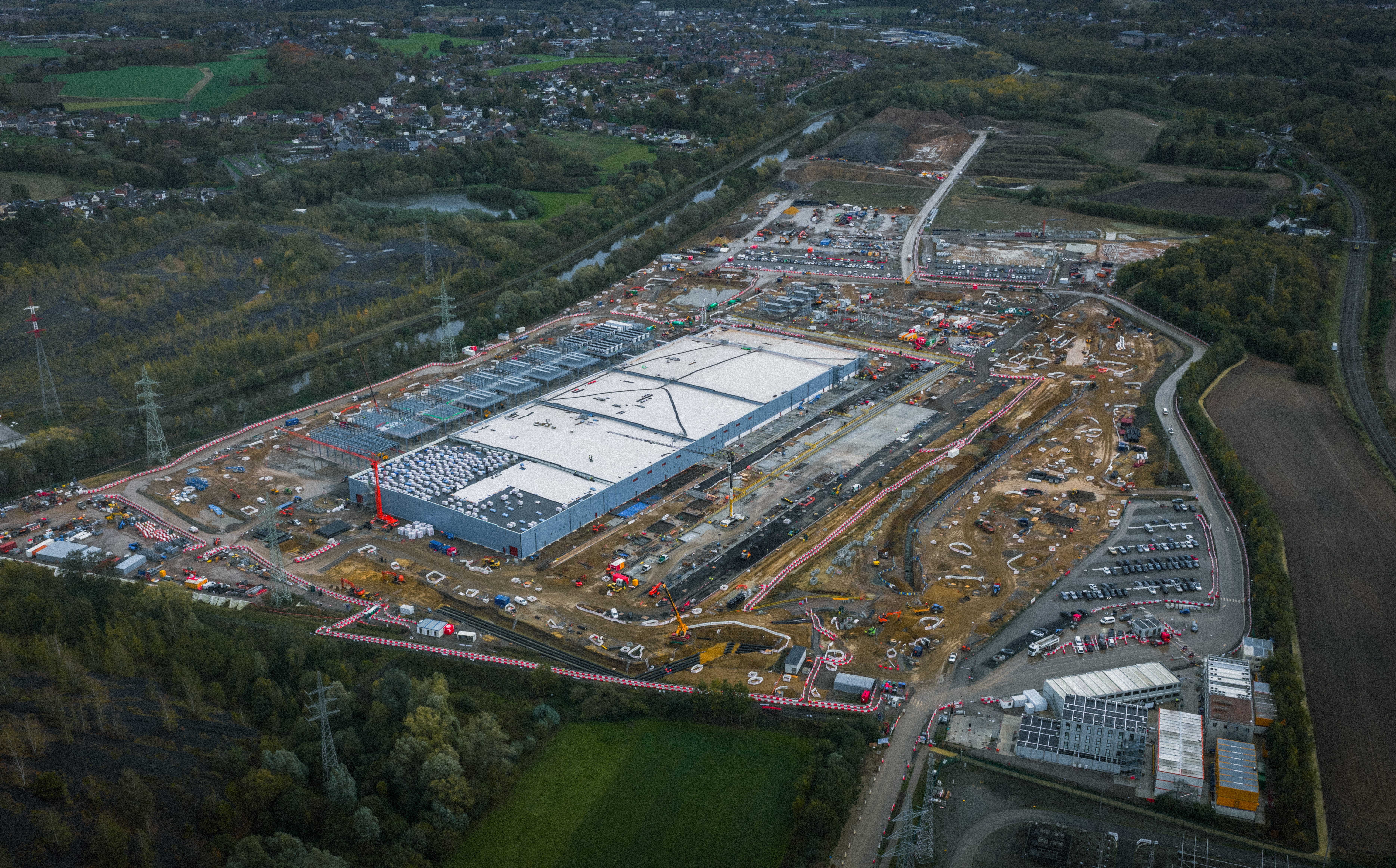
The data center, to be developed by California-based Prologis, will span 220,000 square feet and use 250 megawatts of electricity. But it’s not just the size of such projects that’s an issue, it’s the speed at which they’re being developed. Even while news of this massive project is rocking Trenton, another data center has been proposed over in Hamilton, just eight miles away. That one, proposed by a company named Logistix, could use another 240 megawatts if the developers have their way.
The rapid proliferation of these projects at the local level is why there are now efforts to ban data centers larger than 25 megawatts statewide in Ohio. It’s an issue that pits President Donald Trump and his administration against many of his biggest supporters. Trump is a big backer of both data centers and AI, which he says will create jobs and keep the United States ahead of China in a global development rate.
But that’s now how things feel to us. “I support President Trump, but I don’t support this,” is a common refrain around Trenton. For us, the town is more than just a point on a map or an investment opportunity, it’s a place shaped by the generations of families who have built their lives here. For just one example, take Marla and Michael Gorman, who are the sixth-generation owners of a local farm. The couple told news station WCPO they were offered $75,000 per acre for 110 acres of land by a data center developer last year. While that totals to a nearly eight-figure sum, they turned it down, saying they want to preserve what they already have.
Our community is built around local schools, small businesses, and community events. There’s the Barn-n-Bunk farmer’s market where my older kids are hoping to work this summer, the annual Pickin’ in the Park bluegrass festival, and a July 4th celebration held each year called Let Freedom BOOM. Neighborhoods are not just collections of houses, they are places where families put down roots and children play outside. You can still see plenty of farmland, open fields, and wooded areas easily, which are threatened by the massive new development built for a purpose—AI—that many locals are also not sold on.
AI entrepreneurs like Sam Altman and Elon Musk say the technology can be used to cure cancer or eliminate poverty, but what we see so far in our daily lives is much less promising.
“It’s creating a world where we don’t know if we can trust what we’re looking at,” David told me. An interviewee named Judy added, “my feed has been absolutely swamped with ridiculous AI-generated images.” Another local, Willard, works in programming and worries about being replaced by a bot.
“AI is going to ruin our future children’s perspective on the world,” a resident named Cassie told me.
My concerns hit closer to home. I have lived in the unincorporated community of Overpeck, Ohio for the past two years, just three miles from the proposed Trenton data center. Overpeck is quiet, with a small public school and a peaceful, rural atmosphere. It is the kind of place where families move to escape from noise and industrial expansion. My family chose to live here because of the strong local schools and clean air—especially important because I have five children at home, including one who suffers from asthma.
Now, that sense of security feels uncertain. Despite living only minutes away, I fall just outside Trenton’s city limits, which means I do not have a vote or a voice in decisions about the data center that could directly affect my family. “I live three miles away. My kids breathe the same air,” I keep thinking, “but I don’t get a say in what happens here.”
Concerns about the data center go far beyond politics or simple resistance to change. For many locals, including myself, the issue begins with health and environmental safety. With children who already struggle with asthma, even small changes in air quality can have serious consequences. I do support growth, but not at the cost of my kids’ health.
This concern is echoed by others in the community. Ashlynn, one of the residents I spoke with for this piece, expressed fear about contamination risks, worrying about environmental damage from the facility. “We are not stewarding our land with respect for wildlife,” she told me.
Other residents focused on infrastructure and economics. Wayne, a heavy equipment operator who has worked on data center construction projects, explained to me that data centers consume massive amounts of electricity and water, saying that “the grid gets pushed hard.” He warned that if infrastructure upgrades aren’t fully paid for by the developer, locals often end up footing part of the bill, and said that “99% of the work is temporary construction,” leaving few long-term jobs once the center is complete. Prologis says it will cover the cost for power upgrades and all utility costs, but many Trentonians remain unconvinced.
Leann, another interviewee, worries about noise pollution from the data center. “Are people going to be able to sit outside and talk?” She asked. “Open their windows? Listen to the birds?”
Growth Versus Long-Term Cost
While developers emphasize economic growth and job creation (Prologis says the Trenton project will create 140 jobs and bring in $120,000 a year in utility fees), many residents are skeptical about whether those benefits will truly stay within our community.
The Trenton area is largely conservative, and I and many other residents support Trump, who won nearly 63% of the vote in surrounding Butler County. Having Vance hail from our region is another tie that we have to the administration. But the proposed data center reveals a divide that is not strictly partisan.
Technology is already deeply integrated into everyday life, and it is reasonable to ask whether rapid expansion is actually needed now or is being driven more by ambition and greed than by necessity. As I see it, the issue is not opposition to new technology itself, but concern about the speed and scale at which it is growing. Yes, existing data centers already power the many online tools we use today, but that doesn’t mean we have to sign on for unlimited construction of new projects, especially when so many questions remain about how these massive projects will impact our town.
Ashlynn, for example, questioned whether increased reliance on AI will truly improve people’s lives, or if it mainly benefits large corporations which are headquartered in other states.
Other residents like Wayne and Leann were less focused on the role of AI itself and more concerned with direct impacts from the data center project. Even if technological expansion is accepted in a general sense, many residents are not convinced that this project is necessary—or worth the cost to our community.
Overall, I’d estimate that 98% of the people I spoke with oppose the new data centers, with only an occasional comment about new jobs weighing in their favor. A lot of people in town still don’t know about them at all, but when they find out, the most common reaction is, “I don’t want this.”
In recent months, opposition to the project has become more organized. Community members have begun signing petitions calling for delays, additional environmental studies, and greater transparency. One petition specifically calls for a moratorium on data center development until detailed evaluations can be completed regarding water usage, energy demand, farmland preservation, infrastructure strain, and public health risks.
While the Trenton planning commission has approved the center there, locals still hope the Ohio statewide ban being discussed could go into effect in time to halt it. In Hamilton, a feasibility study of the development has been paused, and there is optimism that the center can be canceled or at least built with more input from the people who live there.
Together, these efforts show a community that is not clinging to the past but actively trying to regain a voice in decisions that will shape its future. In some places, though thankfully not here, resistance has even turned violent, as people confront what seems to them like an existential crisis.
What Residents Want
Many Trenton residents say they actively want growth, just of a different kind. Trenton is already home to industrial facilities such as a Duke Energy substation and a MolsonCoors brewery. Some older factories in the area have closed and are in disrepair. Ashlynn suggested reusing that existing infrastructure and repurposing land that has already been developed, saying that we should take what’s already there and make it useful again. Wayne wants to see community-centered projects such as a park or sports complex, “something families can use.” Leann emphasized the need for “something more realistic and reasonable,” reflecting a desire for balance rather than outright rejection.
Data centers are often justified as essential for expanding AI development and digital services, but from a local perspective, that reasoning can feel distant at best when our community will face a massive new drain on electricity and, potentially, noise and environmental pollution while also losing green space.
The proposed data center is more than a construction project. It is a decision that will shape the identity and future of this community. For me, that reality is deeply personal. I chose this area because it was quiet, safe, and healthy. Now, I am faced with the possibility that all of that could change without my having any real say in the outcome.
This is not just about a building. It is about how a community defines itself, who gets a voice in that definition, and what is ultimately valued more—growth or preservation.

NIMBY brainrot
An interesting missive from the land of JD, he of multiple names, religions, and political ideologies. Sounds like a tough one two punch for the region on the heels of the pet eating Haitians JD exposed. But, the author should have known the tech bros would have MAGA's backing on data centers when they dutifully bought seats in the front row of Don's inaugural, followed by the gifts they have showered upon the dear leader in their successful quest for tariff exemptions...
Speaking of the VP, it seems he's gone awol after the launch of MAGA's Middle East war? He's been furiously leaking from the shadows over his supposed concern, but he's been mysteriously quiet on X, which is quite out of character. Perhaps he's been too busy lecturing the pope on the proper way to speak about theology.
He best be careful, lest he find himself wandering the wilderness with Mike Pence:)