

One Big Question: Hands-On Training or a Free Ride on Campus?
57% of American parents would prefer a three-year apprenticeship to a full college scholarship for their child.

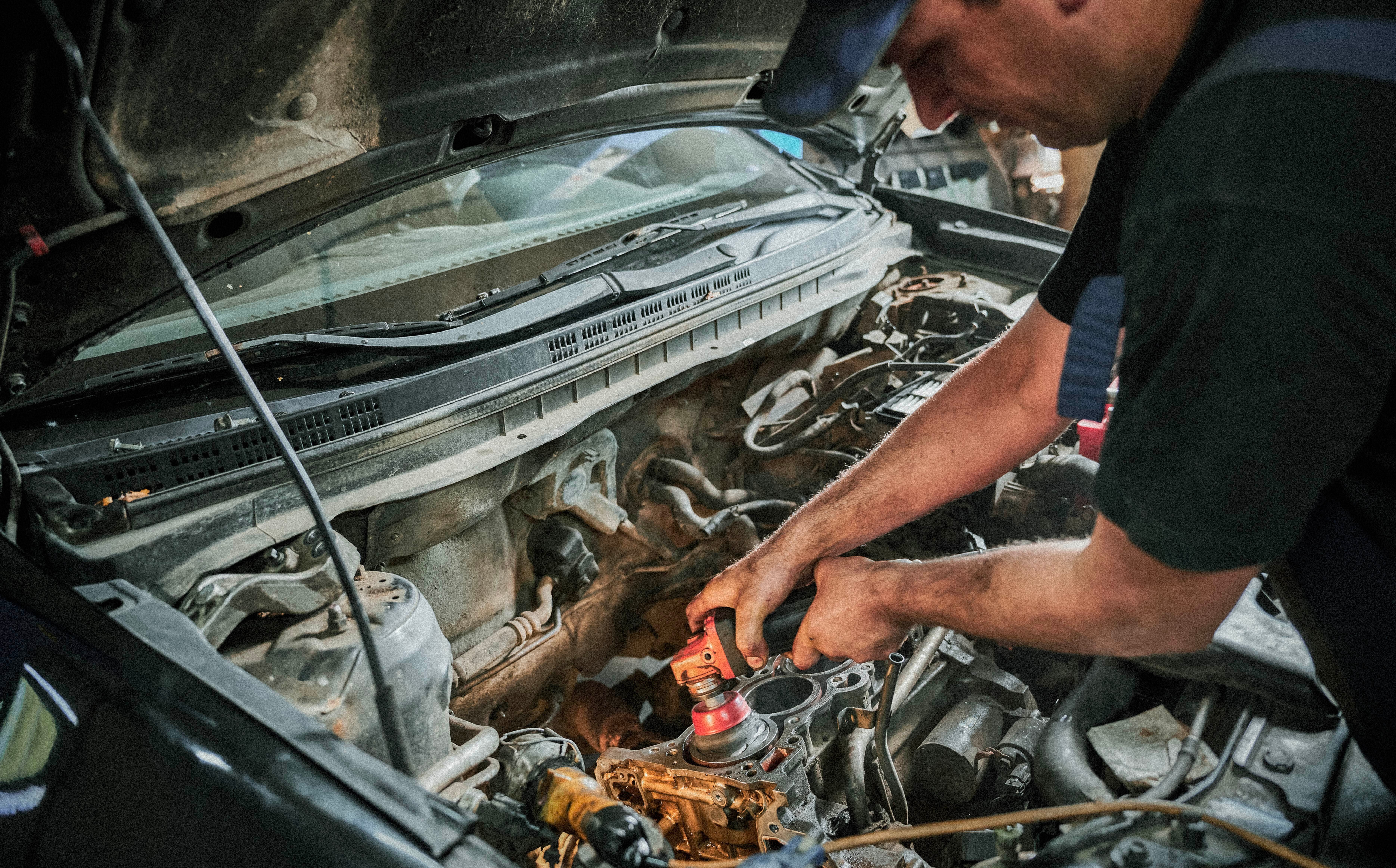
Conventional wisdom has long held that, while everyone likes the idea of vocational training in theory, everyone also wants their own child to go to college. But that’s no longer true, if it ever was.
Americans are more aware than ever of the importance of making things and enthusiastic about efforts to reindustrialize the economy. Big tech companies are laser-focused on the skilled trades, as their own growth suddenly depends on an unprecedented expansion of physical infrastructure. And the labor market data confirm: the college advantage is slipping away.
Two weeks ago, the Washington Post headlined a report, “For the first time in 50 years, college grads are losing their edge.” As the story explained:
The unemployment gap between workers with bachelor’s degrees and those with occupational associate’s degrees — such as plumbers, electricians and pipe fitters — flipped in 2025, leaving trade workers with a slight edge for six months out of the past year, according to the Bureau of Labor Statistics. It’s the first time trade workers have had a leg up since the BLS started tracking this data in the 1990s.
Nor is this simply the result of sudden demand for new skills. Colleges are also falling down on the job. As the Wall Street Journal’s Allysia Finley observed over the weekend:
Unemployment among college grads age 22 to 27 rose to 5.6% in December, roughly what it was in February 2009 during the financial panic. … The real problem is a mismatch between labor supply and demand. Government subsidies and public schools have funneled too many young people to credential mills, which churn out grads who lack the skills that employers demand. Many would be better off training in skilled trades, for which demand is enormous.
But is any of this news to families? Nearly five years ago, American Compass, in partnership with YouGov, surveyed 1,000 American parents with a child between the ages of 12 and 30. We asked:
If policymakers would have created, or would create, one of the following options for your child upon their graduation from high school, which do you most wish would have been, or would be, available?
Respondents were given two options:
3-year apprenticeship program after high school that would lead to a valuable credential and a well-paying job
Full-tuition scholarship to any college or university that your child was admitted
By 57% to 43%, parents chose the apprenticeship for their own child. But those results varied substantially by the education level of the parents. In families where both parents held college degrees, and especially where both parents held post-graduate degrees, the full-tuition scholarship was more popular. In families where neither parent had earned a college degree, the apprenticeship was chosen over the college scholarship by almost two-to-one.

The political divide is as stark as the educational one. Whereas Democratic parents prefer college scholarships, Republican parents prefer apprenticeship by more than two-to-one. Nor is this simply a function of different education levels between the parties. Among families where both parents had completed college, Democrats were 25 points more likely than Republicans to prefer the college option. Among other families, the gap was still 23 points.

The system we have, with high schools focused almost exclusively on preparing students for colleges, and hundreds of billions of dollars in public subsidies dedicated almost exclusively toward enrolling them in colleges, is woefully mismatched to economic reality and people’s preferences. Fixing the problem will require both policy reform that reallocates resources to better career pathways and a cultural shift that ratifies what most families already know. The good news is that, rather than a tough pill to swallow, this is exactly what Americans want to hear and see.
For more on these themes, see:
Failing on Purpose: How We Forgot What Public Education Is For, American Compass, December 2021
A Guide to College-for-All, American Compass, January 2022
The False Promise of Good Jobs, Oren Cass & Richard Oyeniran, American Compass, February 2022
Retooling American Education: How to Move Beyond College-for-All, American Compass, June 2022
That is not a well written question. The outcome for the apprenticeship is stated, where it is not for the college. The college scholarship should have included a well paying job outcome or you should remove the well paying job outcome from the apprenticeship. My point is that we all want well paying jobs for our children. Neither are a guarantee of a well paying job. Framing the question so that apprenticeships get a well paying job will bias towards that answer. How you ask the question is important. I think the gap between who prefer college to apprenticeship is closing and maybe has closed. That is good. However, this is flawed data to support that, in my opinion.
“3-year apprenticeship program after high school that would lead to a valuable credential and a well-paying job”
It’s called the U.S. Military 😊🇺🇸