

The Next Foreign Misadventure
Trump’s pressure campaign against Maduro has failed on its own terms. Why do we want more of it?

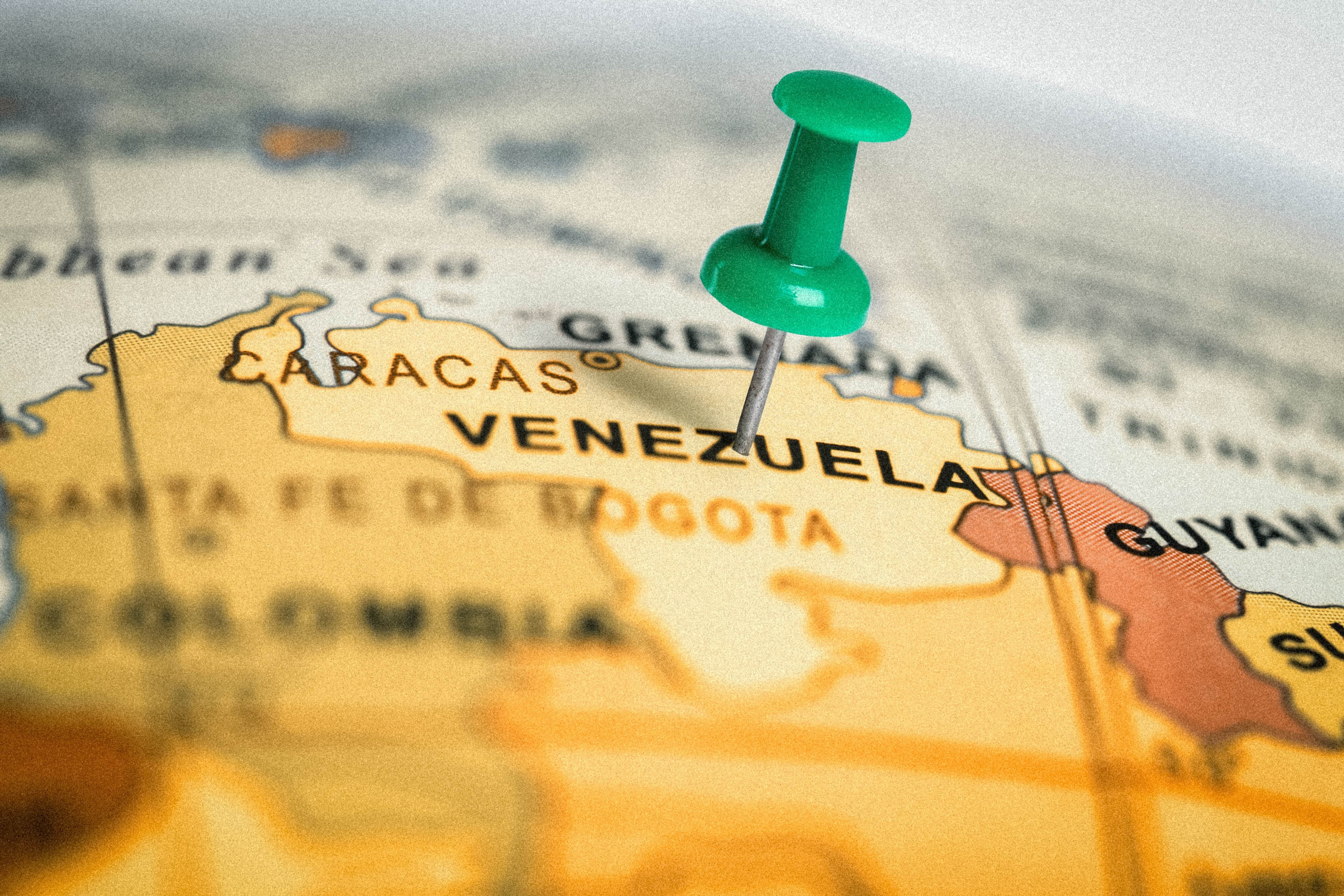
“Venezuela is completely surrounded by the largest Armada ever assembled in the history of South America,” President Trump wrote Dec. 16 on Truth Social, announcing “A TOTAL AND COMPLETE BLOCKADE OF ALL SANCTIONED OIL TANKERS going into and out of Venezuela.”
Suddenly, after a weeks-long tease, our Venezuela policy was revealing itself as a much larger project than initially advertised. Earlier that same day, Vanity Fair reported that Susan Wiles, the White House Chief of Staff, claimed that reliable intelligence informs the policy of blowing up boats from the sky, assuring readers that “these are not fishing boats.” But she also revealed that the strikes had a rationale that goes far beyond interdicting fentanyl. “[Trump] wants to keep on blowing boats up until Maduro cries uncle,” she said, noting, with detectable irony, “And people way smarter than me on that say that he will.”
Although Trump has always had a Jacksonian willingness to deploy what Bill the Butcher described as “the spectacle of fearsome acts”—the bombing of Iran’s nuclear facilities, the assassination of General Soleimani—his populist appeal stems from his repudiation of a bipartisan consensus that favored regime change wars. Americans voted for him fully conscious of the costs and blowback from our Iraq policy under Bush, our Libya policy under Obama, and our covert efforts to extend and manage the Syrian Civil War. Among those consequences were waves of refugees that destabilized the politics of Europe, and through which the mastermind of the Bataclan attacks in France traveled. Brexit, the death of the two major parties in France, and the rise of the AfD in Germany can all be traced to this event.
Trump campaigned constantly against what he called “endless wars” and negotiated components of the deal to exit from Afghanistan. He has said he wants his legacy to be that of a peacemaker. He has openly campaigned for the Nobel Peace Prize as his second administration inserted itself as a negotiator to rapidly end several conflicts, including those between India and Pakistan, between Thailand and Cambodia, and between Armenia and Azerbaijan. Trump put pressure on several parties to achieve a ceasefire between Israel and Hamas.
But, dating back to his first administration, the Trump administration seems to be walking backward into a regime change war in Venezuela, one mired in the same delusions that marked previous regime change policies. Beginning in 2017, Washington moved from targeted sanctions to a full-spectrum economic assault against Maduro, blocking access to U.S. financial markets, barring purchases of Venezuelan government debt, and then shooting at the heart of the economy by sanctioning the state oil company PDVSA. The U.S. then recognized Juan Guaidó as an “interim president” and urged other governments to follow suit. Suddenly, President Trump was saying “all options,” including military ones, were on the table.
What were the results? The sanctions layered on top of a crisis created by Chavista misrule and foreclosed paths to stabilization. Millions fled the country in a vast exodus, fueling northward migration. As the United States pulled the rug out from under Venezuela, Caracas turned to Beijing, Moscow, and Tehran. A more modest policy would have sought to stabilize a nearby oil producer and contain its worst abuses while keeping some influence over its economic orientation. Probably worst of all, the Trump administration and Western institutions influenced by the foreign policy blob have identified a new alternative leader for Venezuela, pumping up María Corina Machado. While no one doubts her bravery, the fact that the Guaidó option already blew up should caution us. National institutions have their own logic and even their own nationalistic pride. Maduro was able to keep the loyalty of his military officers and other government institutions, likely because those breaking with him would have trouble gaining native legitimacy, acting so openly—as they would have been—in concert with the U.S. State Department. Guaidó’s own allies ended his “interim presidency” because once it could not enforce its maximalist position, it looked like a legal fiction used to justify sanctions and asset seizure.
Wiles assured us in her interview, “Trump would need congressional approval for a land war in Venezuela.” But, for now, the administration is ramping up the rhetoric, and seems to be taking the position that the United States continues to have a real ownership stake in Venezuela’s oil industry—one that will be enforced at the barrel of a gun. The administration and its cheerleaders will say that this one exception to a broader peace-seeking strategy represents a return to the Monroe Doctrine. But so far, the policy fails the test: Maximum pressure on Venezuela instead created an opportunity for foreign powers to involve themselves more deeply in our hemisphere.
There is no doubt that it would be better for the U.S., geopolitically and economically, if Venezuela realigned toward us and became the kind of energy producer it seems destined to be.
But, by so openly and naively dreaming that governments can be made to fall with one set of policy options, the Trump administration has invited itself up the escalatory ladder of regime change. That ladder ends with a blind leap into a war that makes genuine democratic realignment in Venezuela harder and more costly, and would shoot energy prices through the roof in the meantime. Trump made the brave but correct political calculation to break with Bush-era foreign policy a decade ago. Ending his presidency with a Bush-style misadventure would be a disaster for his legacy. As he has done in other theaters, he should quickly assess what concessions maximum pressure can achieve, and then return to his best instinct of limiting American involvement in wars of choice.
 |
|
We need Maduro to do more than cry Uncle .. we want to make him dance and sing "Don't Worry, Be Happy".
I certainly don't want another war but Trump's methods involve rhetoric and limited strikes rather than boots on the ground. He always refuses to take military action of the table but compared to his predecessors has made limited use of it. Biggest deal was the strike on Iran and that probably prevented Israeli action that would have been a lot messier.