

On China, Our Trading Partners Have Only One Choice
When the trade burden is shared, it can’t be ignored.

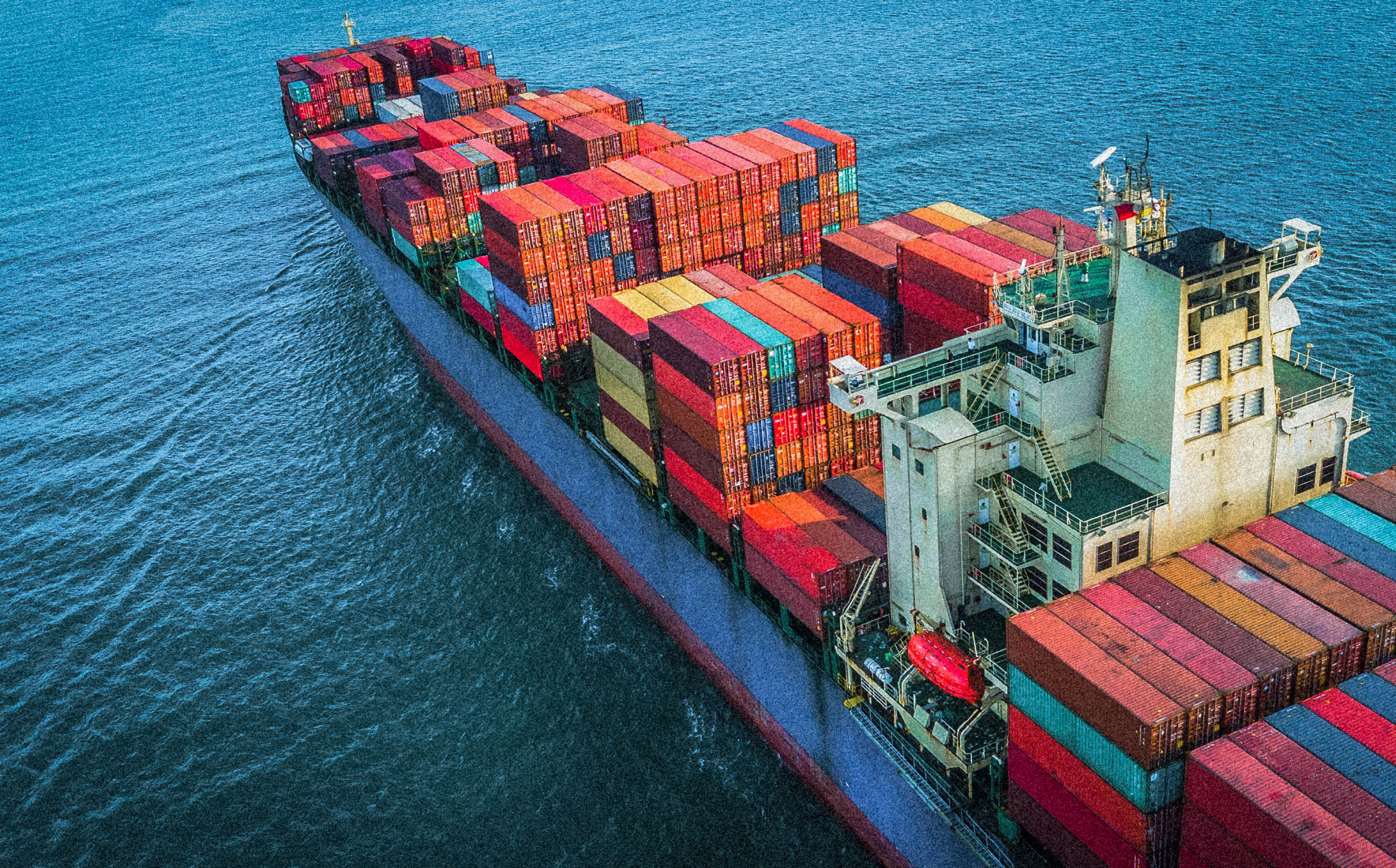
A blunt but clarifying tactic proved a turning point in the Biden administration’s immigration crisis. Border-state governors argued that national leaders were dismissing the costs of illegal crossings as a regional nuisance instead of a national emergency—and began transporting migrants to Democrat-led cities far from the border. Once the crisis was no longer confined to overwhelmed border states, political leaders elsewhere could no longer ignore it and started pressing the Biden administration to stem the illegal migrant flow. Whatever one thinks of the tactic, the political logic was unmistakable: concentrated costs create indifference—until someone redistributes the costs and forces shared responsibility.
Global trade is now entering its own moment of forced clarity, driven by the same logic: when one market says “enough,” the burden shifts. For years, the international trading system has depended on the United States running enormous goods deficits—including a record $1.2 trillion deficit in 2024—making America the global economy’s importer of last resort and allowing export-led economies to avoid tough internal adjustments at home. China has benefited most, but many of America’s closest trading partners—Germany, Japan, and Korea, among others—have also relied on U.S. demand to sustain their own surplus-driven growth models.
Those chronic imbalances are what President Trump’s reciprocal-tariff regime targets. No longer will the United States allow our trading partners to sustain their surpluses by protecting their own markets while relying on low-barrier or duty-free access to ours. Leveraging the sheer size of the U.S. market, the administration is now forcing negotiations, opening foreign markets, shifting demand back toward domestic production, and catalyzing investment in the industrial base, which, over time, will move the United States toward balanced trade.
No trading partner illustrates the problem more starkly than China. As American Compass senior political economist Mark DiPlacido and others have argued, China’s beggar-thy-neighbor growth model—suppressing consumption at home to sustain exports abroad—channels an outsized share of national income into investment and industrial capacity while keeping Chinese household consumption too low to absorb what Chinese workers produce. When domestic demand cannot keep up with industrial output, the surplus must be exported—often at prices and margins that firms in market economies cannot sustain. In other words, China’s subsidy-fueled industrial strategy makes its manufacturers globally “competitive,” at the direct expense of its trading partners’ industrial bases.
Americans have already paid the price for this model. The “China Shock” of the early twenty-first century eliminated millions of manufacturing jobs and tens of thousands of factories—a dislocation that hit particular regions and industries with brutal force. The damage went well beyond paychecks: communities faced long-term declines in opportunity and status, and the disruption helped fuel broader social distress, from lower labor-force participation to rising “deaths of despair,” weaker family formation, and higher rates of child poverty.
To combat China’s export-driven model and arrest and reverse the damage it has inflicted on the U.S. economy, the Trump administration dramatically increased tariffs on Chinese goods in 2025—above and beyond the levels imposed during the president’s first term. Trade data from the second half of 2025 suggested the strategy was working. This month’s full-year numbers confirmed it. China posted a $1.19 trillion surplus in 2025, up 20% from 2024, the largest trade surplus ever recorded, even when adjusted for inflation. It ran that historic surplus even as its bilateral surplus with the United States fell by 22% year over year.
Here’s the basic math many observers still miss: tariffs change where China’s excess output goes; they do not make it disappear. As Nicholas Phillips wrote in Commonplace late last year, when U.S. tariff rates on China remain meaningfully higher than those imposed by the rest of the world, China’s surplus production doesn’t decline; it reroutes. This pushes Chinese goods out of the U.S. market and toward markets with lower trade barriers. Indeed, in 2025, Chinese exports to Southeast Asia increased by 13%, to the European Union by 8%, to Latin America by 7%, and to Africa by 26%. That’s the world the Trump tariffs created: not less Chinese production, but Chinese production looking for new markets abroad.
This is textbook trade diversion—and it mirrors the logic of the Biden-era immigration story: when one jurisdiction takes action, the burden doesn’t disappear; it shifts onto another jurisdiction’s ledger. That brings us to the uncomfortable truth for U.S. trading partners: they may want to run surpluses themselves, but they are next in line to absorb China’s glut. China’s exports are now surging into markets that still depend on manufacturing themselves, and thus are least able to “soak up” China’s trillion-dollar surplus without sacrificing their own industrial capacity. Japan and Germany can’t just “accept” bigger deficits; absorbing China’s overcapacity would be a killshot to the foundations of their own economic models. And Beijing has no intention of easing off. The Financial Times reports that China’s next five-year plan will, to no one’s surprise, double down on export-led manufacturing dominance.
That basic dynamic hits hardest in the industries that anchor modern manufacturing. Autos underscore the stakes. A surge of underpriced vehicles doesn’t just threaten one company’s quarterly margins. It threatens the economies of scale that sustain an industrial ecosystem—suppliers, tooling, components, and workforce capabilities that take decades to build and remind policymakers of their value only after they’re gone. Chinese auto manufacturers—boxed out of the U.S. market because of tariffs imposed during the first Trump administration and expanded during the Biden administration—are now flooding into Europe’s auto market, accelerating job losses in the continent’s auto sector and forcing an existential reckoning that will threaten the foundation of the European industrial base. Manufacturers in Europe’s auto sector have raised the alarm of a “Darwinian transformation” and warned of more job losses to come unless the EU moves to protect the industry from Chinese competition.
Some observers look at China’s record surplus and declare it the winner of the trade war. But that logic gets the story backwards. A record surplus is not proof of strength; it is proof of systemic imbalance—an economy still dependent on foreign demand because it can’t generate enough consumption at home (or, in the case of the Chinese government, does not want to develop it). This is not a temporary export surge that diplomacy can mitigate, and its diffusion into our trading partners’ markets is no mistake. Instead, it is the predictable consequence when an economic strategy that systematically prioritizes production over consumption meets a tariff wall erected by the United States.
That is why the next chapter of U.S. trade policy toward China is not simply about imposing more tariffs on Chinese goods, an outcome that seems unlikely (at least in the near term) after Washington struck a delicate détente with Beijing last October. It’s about burden sharing—and, frankly, burden ownership—which means aligned tariffs across key sectors, tighter enforcement of rules of origin, and coordinated action to block transshipment and circumvention. The United States must continue refusing to absorb China’s manufactured goods and continue to strengthen reciprocal trade agreements to ensure our trading partners don’t serve as waystations for Chinese goods en route to the U.S. market, as we’ve done with Malaysia and Cambodia.
If we stay the course, our trading partners will face the choice of either absorbing Beijing’s overproduction or following America’s example: building their own tariff walls to defend their home markets. U.S. Trade Representative Jamieson Greer put it plainly in a speech at Davos last week:
The system that has operated for the past three decades required the United States to absorb the ever-rising trade surpluses of other nations. We bought ever-larger amounts of artificially cheap goods funded by constantly growing piles of debt. That approach was not sustainable—economically or politically… However, the people of Europe, the United Kingdom, Mexico, and other economies are also vulnerable to non-market practices and overcapacity. More and more, workers in those countries are seeing their own livelihoods disappear underneath them due to floods of cheap imports… If their politicians do not yet understand that they face the same pressures as America, then their voters will soon explain it to them.
Greer’s point accentuates the immigration analogy: once the burden spreads, the politics change. The United States no longer pretends that trade will balance itself under the “free market” assumptions of the so-called rules-based trading system. Even Paul Krugman now acknowledges his once-held belief in “self-correcting” trade deficits was “naive.” The question now is whether our trading partners will succumb to “China Shock 2.0” until the diversion overwhelms them—or whether they will choose to defend the industrial capacity they still have, or, in the case of developing countries, wish to build. The pressure has already shifted. The politics are about to follow, just as they did when a regional immigration crisis suddenly became national.
 | A guest post by
|
Imagine for a moment if you ran your family the way we run America: you consistently "import" (buy) more than you "export" (sell or earn). If your spending consistently exceeds your income, there are 3 things you can do:
1) put it on the credit card.
2) go to the pawn shop.
3) get a higher paying job.
Obviously, #3 is preferable, since #1 and #2 both lead to insolvency eventually.
It's no different for a country. When we run a trade deficit nationally (our imports exceed our exports), those 3 choices are the same:
1) borrow money from foreigners (usually as corporate bonds or T-bills)
2) sell assets to foreigners (usually real estate and shares of US company stock)
3) make more stuff to sell foreigners (exports)
Just like in your family, #3 is preferable since #1 and #2 eventually lead to insolvency.
Fredrich Hayek groupies (libertarians) will deny this and throw lots of FUD to confuse you because they have degrees in economics and you don't. I also have a degree in economics, and I assure you, they're lying. It really is this simple.
As Adam Smith says in Wealth of Nations: "what is prudence for a family could hardly be folly for a great nation."
Another outstanding article on Commonplace where I find so many clear, and "of course that is true" type of articles. I read articles like this and wonder how so many important things have been obfuscated for decades. Thank you so much for concise, clear thinking and the absence of silly and deliberately confusing jargon and mumbo jumbo!