

From Human Bondage to Open Borders
Americans must reject the Mudsill Theory of a two-tiered labor system.

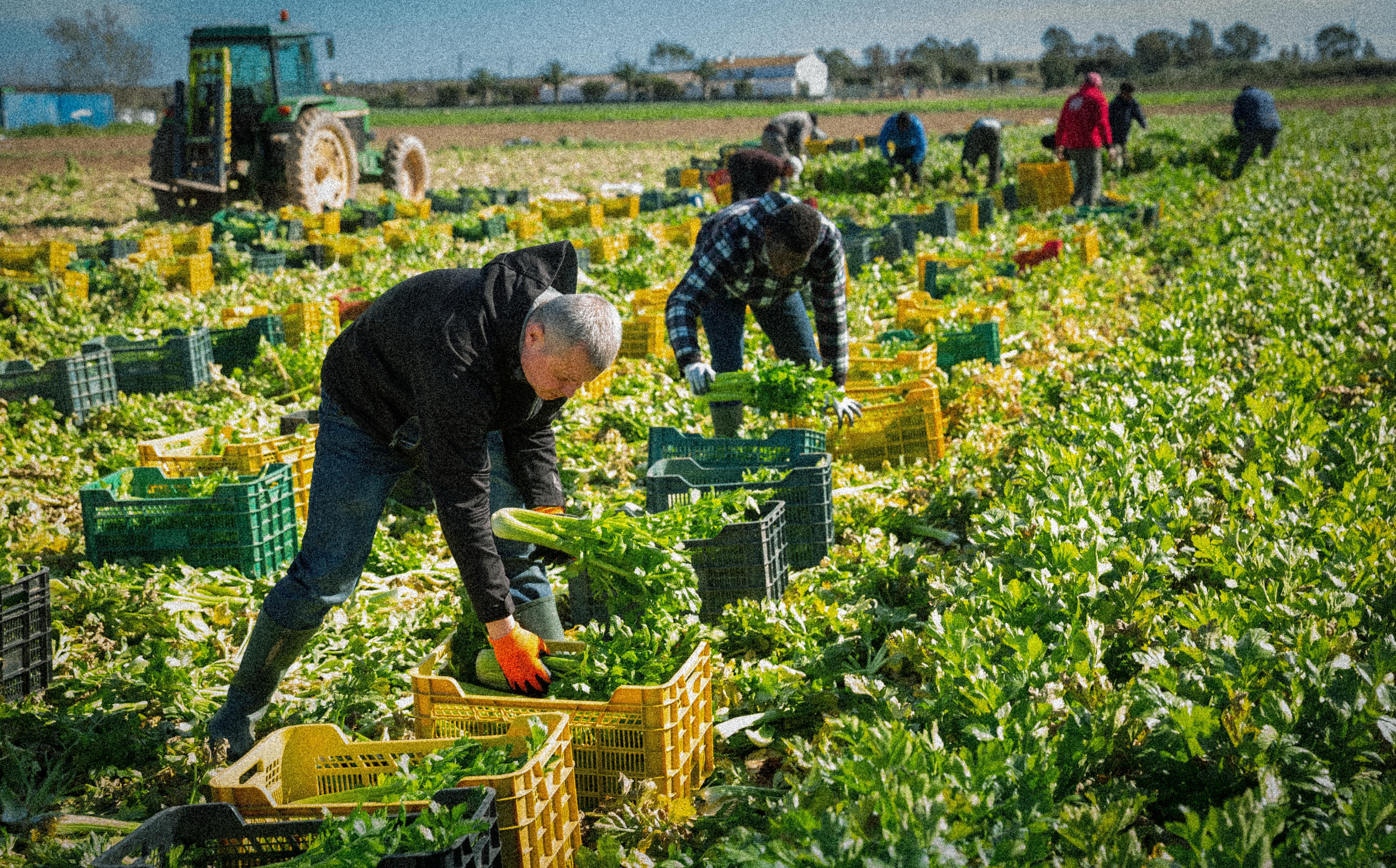
Speaking last spring at the 125th anniversary celebration of Grace Baptist Church in Waterbury, Connecticut, Democratic congresswoman Jasmine Crockett offered its historically black congregation a criticism of President Donald Trump’s immigration policy. Americans, she explained, need immigrants because U.S. citizens no longer want to do agricultural work. “The fact is ain’t none of y’all trying to go and farm right now,” Crockett said. “We done picking cotton. We are. You can’t pay us enough to find a plantation.”
Taken at face value, her argument is simple: the United States requires a class of laborers to perform work that Americans will not do, and employers must look beyond our borders to recruit them. She presented this as a progressive insight, but in fact it is one of the oldest arguments in American political economy. One of its most prominent proponents was not a champion of the oppressed but a slaveholding senator from South Carolina named James Henry Hammond.
In March 1858, Hammond took to the Senate floor and delivered what became known as the “Cotton is King” speech, in which he advanced his “mudsill theory” of social hierarchy. A mudsill is the lowest beam of a structure, the timber set directly on the ground that bears the weight of everything above it. “In all social systems,” he declared, “there must be a class to do the menial duties, to perform the drudgery of life. That is, a class requiring but a low order of intellect and but little skill. Its requisites are vigor, docility, fidelity.” This class, he continued, “constitutes the very mudsill of society and of political government; and you might as well attempt to build a house in the air as to build either the one or the other, except on this mudsill.”
The South, Hammond argued, was fortunate to have found a race “adapted to that purpose to her hand.” But his real provocation was directed northward. The mudsill, Hammond insisted, was universal; the North simply refused to acknowledge its own. “Your whole hireling class of manual laborers and ‘operatives,’ as you call them, are essentially slaves,” he told his Northern colleagues. “The difference between us is that our slaves are hired for life and well compensated; there is no starvation, no begging, no want of employment among our people.” His portrait of slavery was, of course, a self-serving lie. But the provocation about the North—that its economy also depended on workers without real alternatives—is the structural claim that survives, even though the conflation of wage labor with slavery does not.
Hammond’s speech drew a direct rebuttal from Abraham Lincoln, then a member of Congress, to which I will return later. What matters here is the structure of Hammond’s reasoning. His argument was not that hard labor exists—a condition of human life since the fall from the Garden of Eden—but that a higher class must assign it to a permanent underclass. The “mudsill theory” rests on three premises: that certain work is beneath the dignity of citizens, that a civilized society nonetheless requires someone to do it, and that the solution is to source a subordinate class whose legal status forecloses the possibility of refusal. That structure persists to the present day.
Substitute “immigrant” for “slave,” and a modern mudsill theory echoes Hammond’s in its core premise. It does not argue that agricultural work should be improved, mechanized, or made attractive to American workers with better wages and conditions. It argues that Americans are “done” with it, permanently, and that the nation must therefore allow for the importation of a labor force willing to do what its citizens will not. In other words, it does not call for the abolition of the mudsill, but for its outsourcing.
Crockett’s candor should not be mistaken for originality. The belief she stated so plainly has been the quiet consensus in both political parties, held by progressives who frame immigration enforcement as cruelty and by the business lobbies that fight that enforcement because they profit from cheap and compliant labor. In September 2022, then-Speaker of the House Nancy Pelosi said that “we need them to pick the crops down here.” In April 2006, President George W. Bush, pushing the Senate to pass immigration reform, argued the country must “recognize that there are people here working hard for jobs Americans won’t do.” Senator Lindsey Graham, defending the immigrant meatpacking workforce in a February 2013 hearing, told his colleagues that employers in South Carolina could “advertise all day long every day of the week” without finding domestic workers.
The phrase “jobs Americans won’t do” is the mudsill theory translated into the language of labor economics: the work cannot be transformed; the only question is where to find people desperate enough to do it. To accept that premise is to assert that such work is beneath the dignity of citizens by nature, and that someone else’s dignity is a lesser concern.
America’s agricultural labor market gives this logic institutional form. For decades, lax enforcement of our immigration law has supplied farms with a workforce of illegal immigrants who cannot complain about wages or report unsafe conditions, because any assertion of their labor and employment rights risks deportation. This is the logical end of the mudsill: a policy of vulnerability, maintained by employers who profit from it and a government willing to look the other way. The worker with no legal standing in the country he feeds is the mudsill itself.
Where public policy has formalized this arrangement, the structure is no better. The H-2A Temporary Agricultural Workers program ties workers to a single sponsoring employer. For all its wage and housing requirements on paper, the program’s basic design deters exit: leaving a job means losing lawful status unless a worker can quickly secure another sponsor. A worker’s presence in the country thus depends on continued compliance with whatever his sponsor assigns. This is a legally constructed dependency that creates the “docility” Hammond prized.
While America’s farms are the most visible example, the same logic runs through many segments of the low-wage economy. Construction firms and restaurant kitchens are staffed, in many places, by workers whose employers count on their silence as much as their labor.
Long-haul trucking shows something worse. The mudsill there was not inherited but built. Driving a truck was once a path to the middle class, a job that could support a family without a college degree. For years, the American Trucking Association insisted the industry nonetheless faced a permanent driver shortage, and used that claim to lobby Washington to dismantle barriers to entry. As the logistics executive Craig Fuller has documented, the industry won relaxed English-proficiency enforcement, self-certified training, and non-domiciled licenses for foreign nationals.
And yet, the shortage was always a mirage: the lobbying created a capacity glut that drove down rates for American truck drivers, pushed law-abiding carriers toward insolvency, and put inexperienced and vulnerable labor on American highways, imperiling public safety. A respectable trade was made into a mudsill job, one its own workforce could no longer climb.
The most revealing case is one that involves no hard labor at all. Tending the very young and the very old demands no great physical strength. It is not “drudgery” in the sense Hammond meant. Rather, it is the most basic form of human reciprocity—the work parents do for children, and children, in time, for parents. But once that work is moved out of the home and into the market, it becomes a paid task, often a low-paid one, to be assigned to whoever can be found to perform it. The mudsill cannot operate on labor that families do for one another out of love and obligation. It requires that the labor first be commodified, then handed off to a paid, and now often imported, class. That case strips the mudsill theory bare. The mudsill was never about the difficulty of the work, but about which work can be offloaded, and who can be made to do it.
Lincoln understood the stakes. In September 1859, just over a year before his fellow citizens elected him their president, Lincoln traveled to Milwaukee to deliver an address to the Wisconsin Agricultural Society in which he rejected the mudsill theory. Lincoln began by restating Hammond’s logic. The mudsill theorists, he said, “naturally conclude that all laborers are necessarily either hired laborers, or slaves. They further assume that whoever is once a hired laborer, is fatally fixed in that condition for life.” This, Lincoln argued, was wrong as a matter of fact and dangerous as a matter of principle.
Against it, Lincoln posed the vision of “free labor.” “Labor,” he declared, “is prior to, and independent of, capital. In fact, capital is the fruit of labor, and could never have existed if labor had not first existed.” Work was not a caste but a condition—one the worker could leave because he had the skills and the legal standing to choose otherwise. As Lincoln described it, “The prudent, penniless beginner in the world, labors for wages awhile, saves a surplus with which to buy tools or land, for himself; then labors on his own account another while, and at length hires another new beginner to help him.” This was “free labor—the just and generous, and prosperous system, which opens the way for all.”
Then Lincoln named what made the mudsill theory not merely wrong but destructive. Under that doctrine, he said, “a blind horse upon a treadmill, is a perfect illustration of what a laborer should be—all the better for being blind, that he could not tread out of place, or kick understandingly.” The mudsill theory assumed “that labor and education are incompatible” and that the laboring class must never acquire the agency, knowledge, and leverage to demand something better. Lincoln’s answer was the opposite. The path to prosperity ran through education, innovation, and what he called “thorough work,” rather than the exploitation of a captive labor force. He was describing, in the language of 1859, what we would now call workforce training and capital deepening, the critical ingredients that make labor more productive and better paid.
The subsequent century vindicated his logic, if unevenly. American agriculture did not collapse when it lost access to its mudsill. The end of slavery produced severe disruption. Cotton exports plummeted during the Civil War, and the plantation system that had sustained them disintegrated. The slaveholders who had sunk the majority of their wealth into human property found themselves bankrupt, and the freedmen who had constituted their labor force now possessed the power to refuse, to negotiate, and to leave. Every premise of the plantation economy—that the work was too degrading for free men, that only a captive workforce could sustain it, that abolition would result in economic ruin—was tested at once.
And then reorganization came. The crop did not vanish: within roughly a decade, growers had reorganized the system that produced it, and the South began, in fits and starts, to diversify into the kind of manufacturing that slavery had suppressed. But where the region found new instruments of coercion—convict leasing, debt peonage, the crop-lien system—it replicated the mudsill, and the regions most dependent on coerced labor were slower to modernize. The pattern held into the next century. When the Great Migration finally drained the sharecropping labor force, the mechanical cotton picker arrived—not because the technology was new, but because the mudsill was gone. The lesson runs the length of history. Where public policy dismantled the mudsill, adaptation followed, and adaptation meant the technological and organizational modernization that coerced labor had made unnecessary.
The modern mudsill theory espoused by Crockett and others argues that the field still needs picking, that it will always need picking, and that the nation’s task is to find people willing to pick it. The irony is that cotton, the very crop Crockett names, is a textbook example of work Americans stopped doing by hand. The machines came when the captive labor force was gone. The premise—that work is fixed and only the workforce is negotiable—is not liberation theory but mudsill theory. Updated for a new century, Hammond’s theory survives intact.
The alternative is to reject the premise—to ensure that all jobs on offer in the U.S. labor market are those that Americans would do. Not every job that exists today must exist in its current form. As with cotton, not every task performed by hand must always be performed by hand. The question ought not be “who will pick the crops?” but rather “why are we still picking them by hand?” and “what combination of incentives and investment would allow us to stop?”
A nation that insists on maintaining a two-tiered labor class—whether through slavery, sharecropping, the tacit acceptance of illegal employment, the relocation of production to wherever labor is cheapest and least protected, or temporary visa programs that bind labor to a single employer—has made a political choice. It has chosen the mudsill. But it can choose otherwise. Lincoln’s answer, and the right one, is to build an economy that does not need one.
 | A guest post by
|
For an extreme case of the mudsill theory of social organization, look at Dubai. The entire native population does only white-color work. Everything else is done by imported foreign labor, who are effectively near-slaves.
Bravo. Decades ago a Constitutional Law professor who authored one of the definitive textbooks on the Civil War, noted the entire bloody conflict could be summarized with the phrase, "but who will pick the cotton?"
Now that flawed economic theory, that should have long ago been relegated to the dustbin of history, is meeting ever improving tech.
Last fall a new neighbor purchased a home and arrived with a Roomba type lawn mower that mows his entire 1/2 acre lawn, dotted with trees and bordered with numerous flower beds, perfectly. It never hits a tree or causes a plant to inadvertently drop a flower. It was an oddity, but has since been joined by a handful of others at nearby houses. All as the army of foreign gardeners that tend to large lawns, shrinks noticeably.
Homeowners are catching up to US grain farmers that have never utilized foreign labor. They do need them, having long ago modernized. With tech and ever larger machinery, they now farm exponentially more acreage with ever fewer bodies.
US produce growers refuse to join them, because it is cheaper for them to hire exploitable undocumented labor, pay them peanuts and allow taxpayers to make up the difference with ever growing welfare rolls, free healthcare and NGOs who disguise their taxpayer financing.
These people, treated as beast of burden adjacent, dwell in near abject poverty, unacceptable by any Western living standard, while their nations of origin lose any chance at development when their young and ambitious flee in large swaths to take low paying jobs, doomed to be replaced by tech sooner, rather than later.